

Guide
Rough Grading vs. Fine Grading: What's the Difference?
Rough grading shapes the site; fine grading finishes it. What each stage covers on Columbia clay, and why both matter.
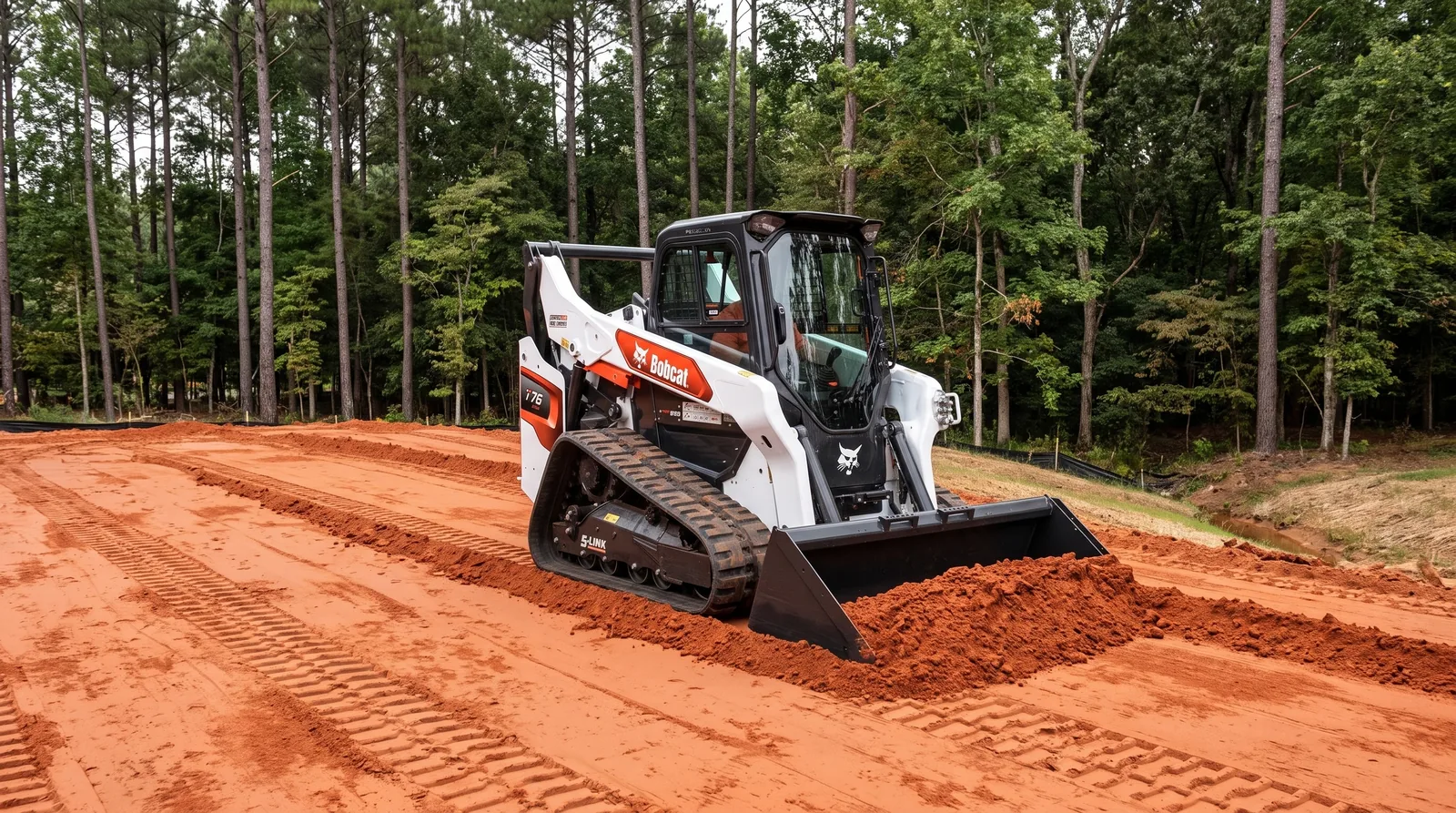
Short answer: rough grading shapes the land; fine grading finishes it. Rough grading moves dirt in bulk to set the site's basic levels and drainage; fine grading dials the surface to its final smooth profile, ready for concrete, sod, or seed. As a licensed South Carolina home builder (license #52210) running site work across the Midlands, here's the difference in practice, and why both stages matter on Columbia clay.
Rough grading: the heavy lift
Rough grading happens right after clearing and grubbing. Machines cut the high spots, fill the lows, and establish the subgrade, the shaped, compacted dirt profile a few inches below where everything will finish. This is where the big calls get made:
- Building pads get cut or built up and compacted in lifts (thin layers, each compacted) so the slab never settles.
- Drainage is set here, not later. Water is told where to go, away from the future foundation, into swales, toward culverts. If rough grading gets this wrong, no amount of landscaping fixes it.
- Driveways and access get their base profile.
On our red clay, compaction discipline is everything: clay that's pushed into place wet and unconsolidated will move, and the slab or footing above it moves with it.
Fine grading: the finish pass
Fine grading comes after the heavy construction traffic is done. It is the front half of what we call final grading and site restoration, the stage that hands the lot back finished. Smaller equipment, and hand work at the edges, brings the surface to its exact final elevations:
- Under concrete: the pad gets trued so the slab pours at a uniform thickness.
- For lawns: topsoil is spread and smoothed, rocks and debris raked out, and the yard sloped gently away from the house so rainwater sheds without gullying.
- The last check: positive drainage everywhere, no bird baths, no water parked against the foundation.
Why the two stages get confused
Because from the road they look like the same activity: machines pushing dirt. The tell is timing and tolerance. Rough grading is measured in feet and happens early; fine grading is measured in inches (or less) and happens last. Skipping fine grading leaves you seeding into rutted subsoil; skipping disciplined rough grading leaves you with a wet crawlspace and a cracked slab, years later, when it's expensive.
What it costs
Grading is priced by the dirt moved, the slope, the access, and how far material travels. A flat lot needing a touch-up and a sloped wooded lot needing cut-and-fill are entirely different jobs, and the price reflects it. We itemize rough and fine grading separately in the written scope so you can see exactly what each stage covers.
Frequently asked questions
Do I need both rough and fine grading? For new construction, yes, they're two stages of one system. For a lawn or drainage fix on an existing home, fine grading alone may be the whole job.
When in the project does each happen? Rough grading right after clearing/grubbing, before foundations. Fine grading at the end, after the trades are done driving over the yard.
Does grading require a permit? Once you disturb enough area (about half an acre in most Midlands jurisdictions), yes, a land-disturbance permit, with a SWPPP at an acre. We handle that as part of the scope.
Planning site work in Columbia, Lexington, or the Midlands? Book a free phone consultation. We'll scope both grading stages, the drainage, and the permits in writing.
Have a project in mind?
See the full scope and pricing, or book a free phone consultation. No estimate pressure.