

Guide
Which Outdoor Projects Need a Permit in Columbia, SC?
Deck, patio, pergola, outdoor kitchen, fence. What triggers a permit in Columbia, Richland County, and Lexington County, and what it costs you to skip one.
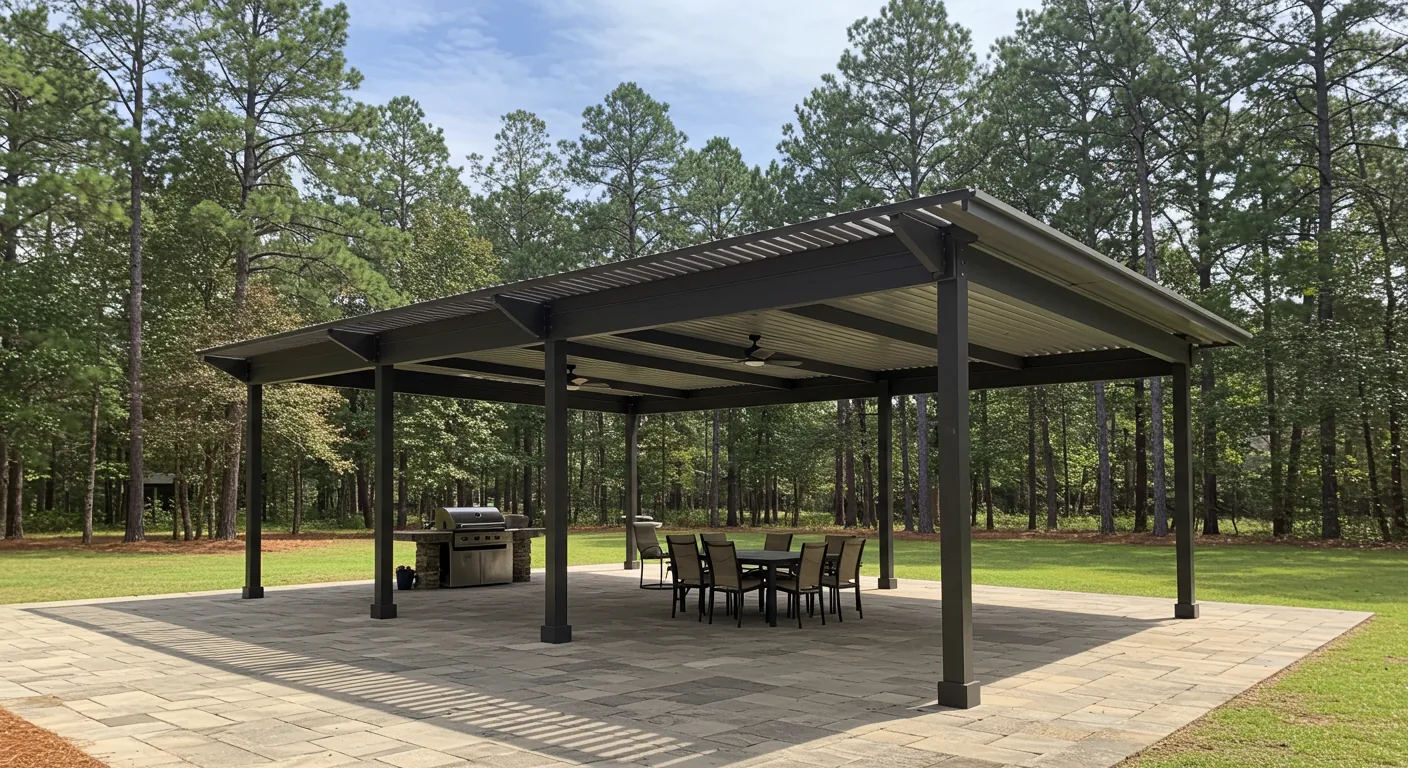
Short answer: if it is attached to the house, elevated, roofed, or connected to gas, water, or power, assume it needs a permit. Ground-level flatwork usually does not. The part homeowners get wrong is thinking the answer is the same everywhere in the Midlands. It is not, and the thresholds are what decide it.
As a licensed South Carolina home builder (license #52210) building outdoor living across Columbia, Lexington, Irmo, and Chapin, here is the working version.
What needs one
Decks. An attached deck almost always requires a building permit. A freestanding deck typically triggers one once it exceeds about 200 square feet or sits more than 30 inches above grade. Small ground-level freestanding decks are often exempt, but that exemption is local and worth confirming rather than assuming.
Covered structures. Attached pergolas, screened porches, and covered patios need a permit. A freestanding pergola on real footings usually does too, because the footings are the trigger.
Outdoor kitchens. The structure itself may be simple. The moment you run gas, electrical, or plumbing to it, you are into trade permits, and those have to be pulled by licensed trades.
Fences. Height and placement decide it. Setbacks, corner-lot sight lines, and easements matter more than the fence itself here. HOA approval is a separate track and does not replace the permit.
Flatwork. Ground-level pavers and concrete generally do not require a permit unless the work changes drainage. Change where water goes and it becomes a different conversation.
It depends on who has jurisdiction
| Jurisdiction | How it runs |
|---|---|
| City of Columbia | Permits for decks, screened porches, and covered structures. Zoning setbacks enforced. |
| Unincorporated Richland County | Broadly similar thresholds to the city. |
| Lexington County | Similar thresholds, with more communities carrying HOA overlays on top. |
Two houses a mile apart can sit under different rules. That is the whole reason this question keeps getting answered wrong.
What skipping it actually costs
- Demolition at your expense. Enforcement can require the structure come down. That is the worst outcome and it does happen.
- The sale falls apart. Unpermitted structures surface in the closing process, and lenders can refuse to fund until it is resolved.
- A denied claim. If something goes wrong involving the structure, the insurer can decline the claim on the grounds the work was never permitted.
Retroactive permitting is available and it is worse in every dimension: more expensive, more invasive, and sometimes it requires opening up finished work so an inspector can see what is underneath.
Timeline
A straightforward residential outdoor project in Richland County generally runs two to four weeks from submittal to approval. Build that into the schedule rather than treating it as a delay, because it is not the part you can compress.
Who pulls it
A homeowner can pull a permit on their own primary residence in most cases. Gas and electrical work still has to be performed by licensed trades. Any legitimate contractor pulls the permits in their own name for the work they are doing. If a contractor asks you to pull the permit for their work, that is worth stopping over.
We put the permit scope in writing on every job, including which permits, who pulls them, and what they cost, before anything gets built.
Planning a deck, porch, patio, or outdoor kitchen in the Midlands? Book a free phone consultation and we will tell you exactly what your project triggers in your jurisdiction.
Frequently Asked Questions
Do I need a permit for a deck in Columbia SC?add
An attached deck almost always requires a building permit. A freestanding deck generally triggers one above roughly 200 square feet or more than 30 inches above grade. Small ground-level freestanding decks are often exempt, but confirm it locally.
Does a paver patio need a permit?add
Ground-level pavers and concrete flatwork usually do not require a permit on their own. If the work alters drainage or how water leaves the property, that changes the answer.
Do outdoor kitchens require permits?add
Any gas, electrical, or plumbing connection requires trade permits, and those have to be pulled by licensed trades. The counter and structure alone may not, but almost no real outdoor kitchen is built without utilities.
How long do outdoor project permits take in Richland County?add
A straightforward residential outdoor project typically runs two to four weeks from submittal to approval.
What happens if I build without a permit?add
Enforcement can require demolition at your expense, unpermitted structures can stall a sale or a lender's funding, and an insurer can deny a claim tied to the work. Permitting after the fact costs more and can mean opening up finished work.
Have a project in mind?
See the full scope and pricing, or book a free phone consultation. No estimate pressure.