

Guide
Do You Need a Permit to Build a Fence in Columbia, SC?
Fence and wall permit rules in Columbia: the 4 ft front / 6 ft corner / 8 ft side and rear limits from Table 17-5.8(D)(3), when a wall needs a building permit, overlay districts, HOAs, and the business license your contractor needs.
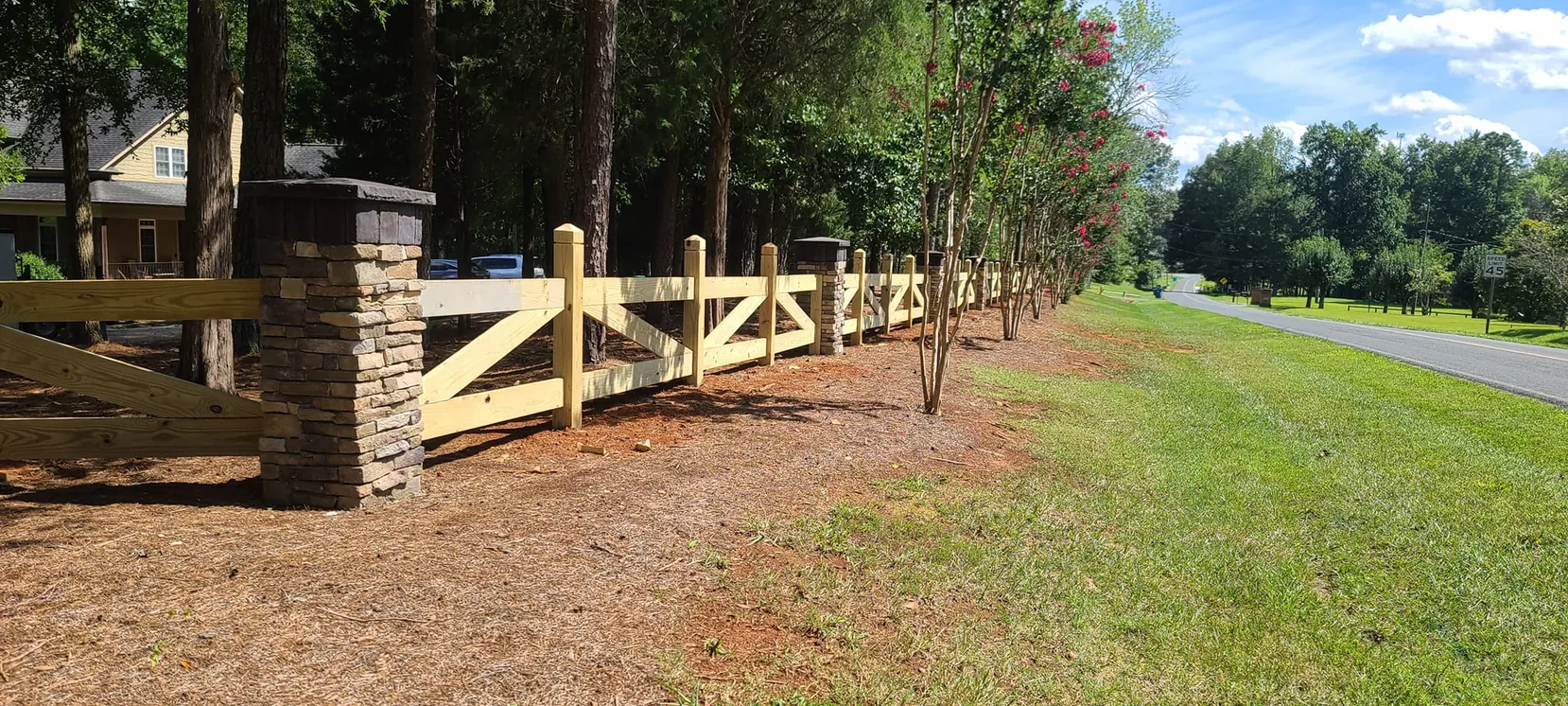
Whether a fence needs a permit in the Columbia area comes down to where you are, how tall it is, and whether what you are building is a fence or a wall. Inside city limits, a new fence needs a zoning permit. We are a licensed South Carolina home builder (license #52210), so the permit and the inspections are ours to carry rather than yours to chase.
Who regulates fences here
- City of Columbia. A fence or wall is reviewed under Section 17-5.8 of the Zoning Ordinance, on the City's Fence/Wall Permit Application. It is a zoning review, not a structural one: height, placement, and visibility. The City's zoning permits page lists fences and walls, decorative or structural, as work where a building permit is not required.
- Richland and Lexington counties. Outside city limits your rules come from the county, and they are not the City's rules. Height, setback, and visibility limits still apply, and the answer changes with the zoning district.
- The small municipalities around Columbia each have their own ordinance. Forest Acres, Arcadia Lakes, Cayce, West Columbia, Lexington, Chapin, Irmo and Newberry are separate jurisdictions, not neighborhoods of Columbia, and a rule from one does not carry to the next. We confirm the one that governs your address before anything is ordered.
One practical note that applies in all of them: the permit application asks for the contractor's city business license number, and a business license is municipal, so whoever pulls your permit needs one issued by the town the job is actually in.
How tall a fence can be in Columbia
These are Table 17-5.8(D)(3), printed on the City's own Fence/Wall Permit Application. They are limits for the required yard, not for the whole lot:
| Where it is | Maximum height of fence or wall |
|---|---|
| Side or rear yard | 8 feet |
| Secondary front yard on a corner lot | 6 feet |
| Front yard | 4 feet |
Two rules ride along with that table, both printed as footnotes to it on the same form:
- A fence or wall may not extend into a street intersection sight area (17-5.8(d)(1)). That is the corner-visibility rule, and it is about the area, not a height you can look up on a chart: what it permits depends on the intersection.
- Gates may not swing outward over a sidewalk or into the right-of-way (17-5.8(c)(3)). Worth knowing before you decide which way the gate opens.
Fences and walls are the same permit
In Columbia a fence and a wall go on one application. Section 6 of the form asks for a fence type (wood, metal, aluminum, vinyl) or a wall type (brick, masonry, stucco, block), and the height table above governs both. A brick fence is permitted the way a wood fence is.
Three things sit on top of that:
- A wall 7 feet or taller also needs a building permit and footing inspections. The application states it under section 6: "Walls 7 feet tall and taller - need a building permit and require footing inspections," and says on page 1 that the form is not to be used for walls 7 feet or over.
- A retaining wall is a different structure. It holds back earth, so it is judged on the soil load behind it rather than on the height table. IRC R105.2 exempts a retaining wall not over 4 feet measured from the bottom of the footing, unless it supports a surcharge. Above that, or with a load behind it, it is engineered.
- A fence enclosing a yard is a fence whatever it is built from.
The towns around Columbia are not Columbia
"Columbia" on your mailing address does not mean the City of Columbia writes your fence rules. Forest Acres, Arcadia Lakes, Cayce, West Columbia, Irmo, Lexington, Chapin and Newberry are separate municipalities, and outside all of them you are under Richland or Lexington County. The rules genuinely differ.
Here is what each one's own ordinance or permit form says, with the source:
| Jurisdiction | What its own rules say |
|---|---|
| City of Columbia | Fence or wall reviewed under Sec. 17-5.8 on the Fence/Wall Permit Application. Max height 8 ft side/rear, 6 ft secondary front on a corner lot, 4 ft front. A wall 7 ft or taller also needs a building permit and footing inspections. |
| Forest Acres | Zoning Ordinance Sec. 21.150: fences and walls up to 8 ft in the required yards of all districts, subject to vision clearance. Two rules you will not find in Columbia: no concrete block or cement brick fence or wall in a residential district (unless it is retaining), and no chain link or wire mesh in a required front yard. Its definition of "fence" expressly includes walls. |
| Cayce | The city's own planning FAQ is unusually blunt: "The City of Cayce does very little to regulate residential fencing." A construction permit is required if you build 7 feet or taller. Subdivision covenants may still restrict or prohibit fencing, and the city does not enforce those. |
| Irmo | Zoning Ordinance Sec. 3-5(C): fences, walls and hedges up to 8 ft, dropping to 4 ft in a front yard setback, and none of it may impede required visibility. Watch the corner-lot rule in Sec. 3-4.1: every property line abutting a street counts as a front yard, so a corner lot has two 4-ft frontages. |
| West Columbia | Zoning Ordinance §609.5: fences and walls up to 7 ft outright in side and rear yards, and anything taller needs a special exception from the Board of Zoning Appeals. The front yard is the strict one: §609.4 allows nothing above 36 inches that substantially impedes vision, and going higher is itself a special exception. One rule that catches people: no screening fence or wall over 5 ft within 6 ft of a neighboring house. |
| Richland County (unincorporated) | Land Development Code Sec. 26-172: front-yard fences max 4 ft; fences and walls in required side and rear yards max 7 ft, with retaining walls excluded from that limit. Vision clearance at driveways and roads applies, and gates may not swing out into a sidewalk or right-of-way. |
| Lexington County (unincorporated) | The county's own zoning FAQ is explicit: "The Lexington County Zoning Office does not address or regulate residential fencing." County zoning covers unincorporated areas only. Subdivision covenants recorded with the Register of Deeds may still restrict fencing, and the county does not enforce those. |
Two things fall out of that table. The front yard is where jurisdictions disagree most: 4 feet in Columbia, Irmo and unincorporated Richland County, but effectively 36 inches in West Columbia. And the county you are in may not regulate your fence at all, which is not the same as your neighborhood not regulating it.
Chapin, the Town of Lexington, Newberry, Arcadia Lakes and Blythewood each have their own ordinance too. We read the one that governs your specific address before anything is ordered, rather than working from the town next door's rule.
The line itself, and the survey that settles it
The permit tells you how tall and where in the yard. It does not tell you where your property actually ends, and that is the part that costs money to get wrong.
In practice there are three ways this gets settled, and they are not equally certain.
- Find the existing pins. Most lots were surveyed at some point and the iron pins are still in the ground at the corners, often a few inches under the sod. We look for them first, and when they turn up on all the relevant corners you can pull a string between them and lay the line out from that.
- Work off the existing fence line. If there is already a fence and nobody has ever disputed it, replacing it in the same run is usually the straightforward answer. Worth knowing that the old fence is not proof of the line: it was put in by somebody, possibly off, and a previous owner's mistake is how a line quietly drifts.
- Get a boundary survey. A boundary survey from a South Carolina licensed surveyor locates the corners and sets pins. It is the only one of the three that actually settles it, and it is the cheapest part of the whole job to be certain about.
One thing that catches people out: the survey in your closing file is probably not a boundary survey. A mortgage or location survey is drawn for the lender, and it neither determines the boundary nor sets corner pins.
Our own preference is simple. If the pins are there and they agree with the old fence, we work from them. If the pins are missing, the corners disagree, or the line is anywhere near a neighbor's structure, get the survey. A fence built over the line comes out at your expense however honest the mistake, and moving it means pulling posts and concrete and rebuilding the run.
Either way, the usual move is to set the fence a foot inside your own line so the whole structure, footings included, sits on your property. It costs nothing and it removes the argument permanently.
Overlay districts want to see a drawing
Page 1 of the application carries a second checklist, headed Fence/Wall Permit Applications in Certain Overlay Districts. A property in the OV-FP, OV-FW, OV-5P, OV-ID, OV-NMC, OV-CC or OV-HP districts must also submit a fence or wall rendering, minimum 8½ by 11 inches, with a color proof identifying materials and height.
Historic and design-review areas are where this bites hardest. If you are in one, the fence design is a submittal, not a decision you make at the lumber yard.
The HOA is a separate approval, and often the stricter one
The City reviewing your fence does not mean your neighborhood has. An HOA can dictate material, height, style, and which direction the finished side faces, and an HOA can require removal of a fence the City permitted. Start with the covenants, then the jurisdiction.
What it costs to skip it
An unpermitted fence is not a problem until it is, and then it is your problem rather than the installer's. A stop-work order halts the job where it stands. A fence built past a property line or into a sight area comes out at your expense. And the work follows you to closing: South Carolina's Residential Property Condition Disclosure Statement, S.C. Code § 27-50-40, requires you to disclose what you know about the condition of the property, including structural modifications and any notices from a government agency.
None of that is dramatic. It is just deferred cost, paid later, with less control over it.
Where these numbers come from
Every figure on this page is from the jurisdiction that enforces it, not from a roundup. If a number here ever disagrees with the source, the source wins:
- City of Columbia: Fence/Wall Permit Application and Checklist (Rev. Sept. 2025), which carries Table 17-5.8(D)(3) and the wall rules, and the zoning permits page.
- Richland County: Land Development Code Sec. 26-172.
- Lexington County: zoning FAQs.
- Forest Acres: Zoning Ordinance Sec. 21.150.
- Cayce: Planning and Development FAQs.
- West Columbia: Zoning Ordinance Section 609.
- Irmo: Zoning and Land Development Regulations Sections 3-4.1 and 3-5.
- Retaining walls: IRC R105.2.
- Disclosure at resale: S.C. Code § 27-50-40.
Ordinances change. These were read on 18 August 2026, and we re-check the governing one on every job rather than trusting a page we wrote.
Planning a fence? Book a free phone consultation and we will confirm which jurisdiction governs your address, what the height limit is on your particular yard, and put the scope in writing.
Frequently Asked Questions
Do you need a permit to build a fence in Columbia, SC?add
Inside Columbia city limits, yes. A fence or wall is reviewed under Section 17-5.8 of the Zoning Ordinance on the City's Fence/Wall Permit Application. It is a zoning review of height, placement and visibility rather than a structural one. Outside the city, the rules come from Richland or Lexington County, or from whichever small municipality your address actually sits in.
How tall can a fence be in Columbia, SC?add
Table 17-5.8(D)(3) sets the maximum height in a required yard at 8 feet in a side or rear yard, 6 feet in a secondary front yard on a corner lot, and 4 feet in a front yard. Those limits apply to a wall exactly as they apply to a fence.
Does a brick or masonry wall count as a fence?add
In Columbia it goes on the same application. The form lists wall types (brick, masonry, stucco, block) alongside fence types (wood, metal, aluminum, vinyl), and the same height table governs both. So a brick fence that looks like a wall is permitted the way a wood fence is.
At what height does a wall need a building permit in Columbia?add
Seven feet. The City's fence/wall application states that walls 7 feet tall and taller need a building permit and require footing inspections, and that the fence/wall application itself is not to be used for walls at that height. Below 7 feet a wall is permitted on the fence/wall application like any fence, at the heights in Table 17-5.8(D)(3).
What about corner lots and sight triangles?add
Section 17-5.8(d)(1) says a fence or wall shall not extend into a street intersection sight area. It is a rule about an area rather than a single height you can look up, so what it allows depends on the intersection. A secondary front yard on a corner lot is also capped at 6 feet by the height table.
Does my fence contractor need a business license?add
The permit application asks for one. Section 4 of the Columbia fence application has a field for the contractor's City Business License #, and a business license is municipal, so it is held per jurisdiction: a contractor working in Columbia and in Forest Acres needs one from each.
Can the HOA still say no after the city says yes?add
Yes. The two approvals are independent, and the HOA is often the stricter one. It can dictate material, height, style and which way the finished side faces, and it can require removal of a fence the City permitted. Read the covenants before you pick a material.
Do I need a survey before building a fence?add
Not always. Often the original iron pins are still in the ground at the corners and we can find them and work from those, and replacing a fence in an existing run that nobody has ever disputed is usually straightforward. A boundary survey from a South Carolina licensed surveyor is the only thing that actually settles it, though, and it is worth getting when the pins are missing, when the corners disagree, or when the line runs anywhere near a neighboring structure. Note that the survey in your closing file is probably a mortgage or location survey, which is drawn for the lender and does not set corner pins.
What happens if the fence ends up over the line?add
It comes out, and it comes out at your expense, however honest the mistake was. That is the whole reason to settle the line before the posts go in rather than after: moving a fence means pulling posts and concrete and rebuilding the run. If the survey comes back tight, the answer is usually to set the fence a foot inside your own line and keep the whole structure, footings included, on your property.
Can I build right on the property line?add
On your own side of it, generally yes, provided you are clear of easements and the sight area. Just be aware that a fence set exactly on the line is a fence whose footings and maintenance access are half on the neighboring lot. Setting it just inside your line avoids both problems and costs nothing.
Have a project in mind?
See the full scope and pricing, or book a free phone consultation. No estimate pressure.