

Guide
Open vs. Dense-Graded Paver Base: What Lasts in Columbia, SC
Why we build paver patios on an open-graded base in Columbia's clay and rain instead of traditional crusher run, drainage, freeze-thaw, lifespan, and our 10-step process. From a licensed SC home builder.
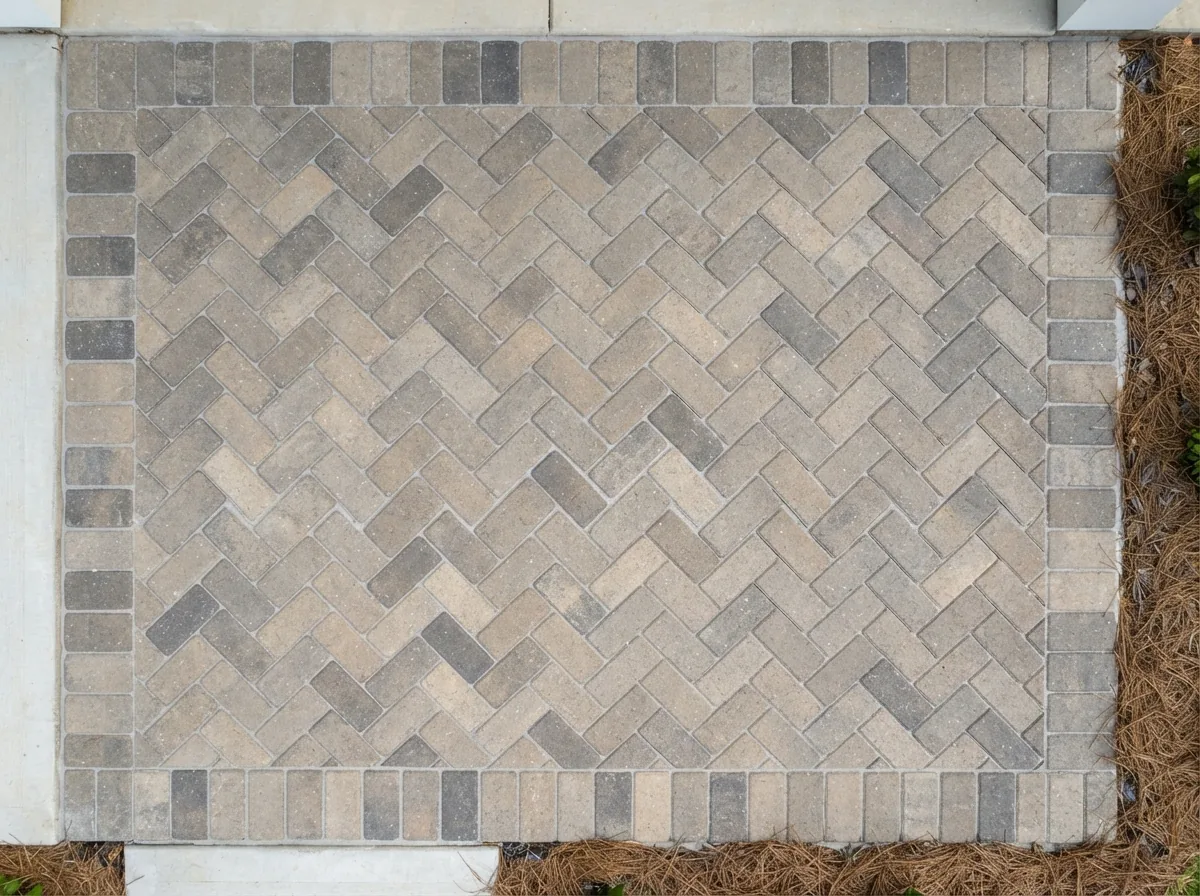
The base under a paver patio matters more than the pavers on top. In Columbia's clay soils and heavy rainfall, the base you choose is what decides whether your patio stays flat for decades or starts heaving and settling in a few years. We build on an open-graded base, and here's why.
Chonko Construction is a licensed South Carolina home builder (license #52210). We design and build paver patios across Columbia and the Midlands, with the base detail and drainage spelled out in writing before we dig.
Dense-graded vs. open-graded base
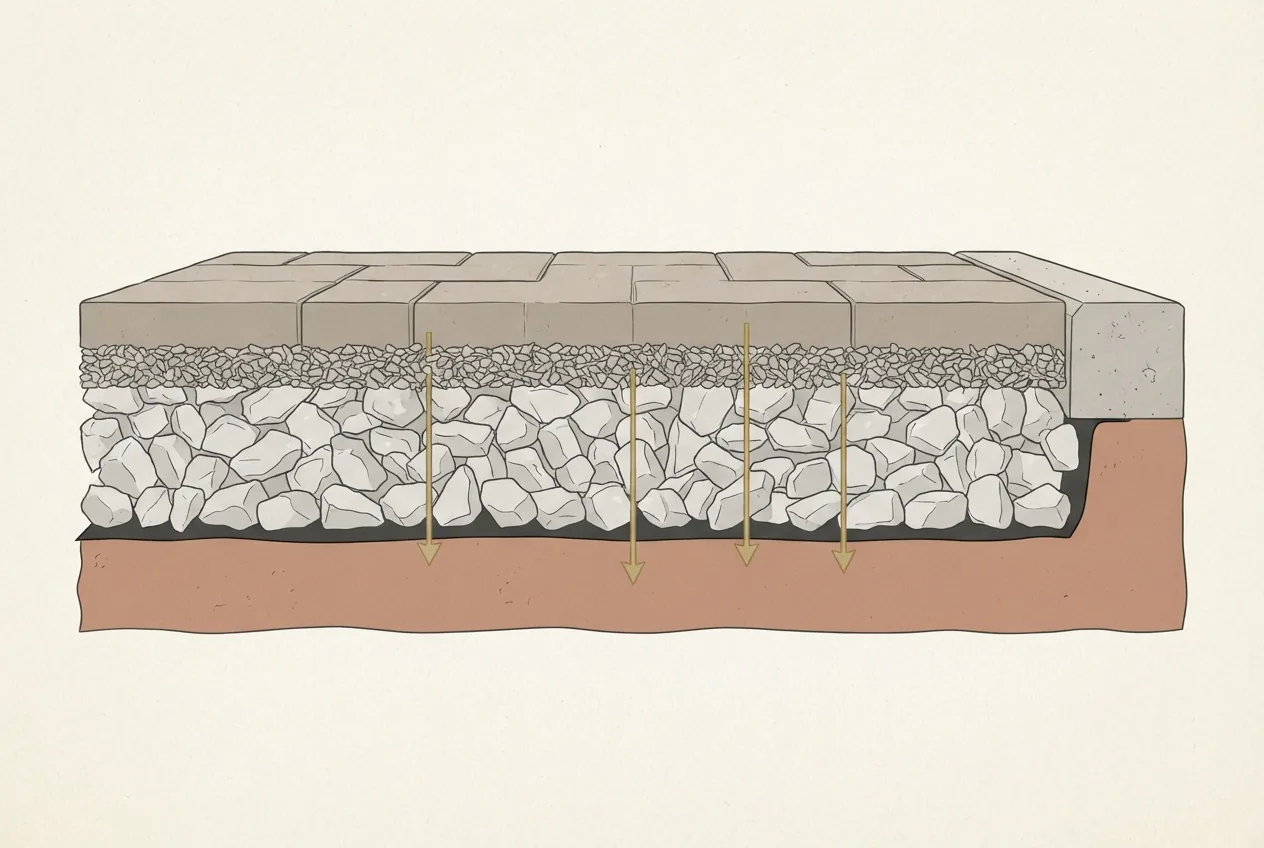
- Dense-graded base (DGB), crushed stone mixed with fines (dust, sand, silt) that pack tight. Also called "crusher run" or "ABC stone." It's stable when dry, but it traps water. In our humid climate and clay, that trapped moisture softens and shifts the base, and the pavers settle and crack at the joints.
- Open-graded base (OGB), clean, angular stone (typically ASTM #57, ¾-inch) with no fines, so water drains straight through the voids while the angular stone interlocks for strength. ICPI and the major paver manufacturers now recommend this system for standard installs.
Why open-graded wins in Columbia
- Drainage, water flows through instead of pooling.
- Less heaving and washout, no moisture buildup to drive frost heave or erosion through our wet winters and summer downpours.
- Cleaner, faster work, open stone stays firm after rain; crusher run turns to mud.
- Structural strength, angular interlock, with geogrid added under driveways and heavy loads.
- Longer life, 20+ years with minimal maintenance vs. a typical 10–15 for dense-graded.
- Stormwater friendly, permeability cuts runoff, which matters near Lake Murray and local drainage zones.
| Feature | Dense-graded | Open-graded |
|---|---|---|
| Drainage | Poor, traps water | Excellent, drains through |
| Freeze-thaw | Moderate to poor | Excellent |
| Workable in rain | Muddy, delays | Clean, stable |
| Maintenance | Higher | Minimal |
| Typical lifespan | 10–15 years | 20+ years |
Our 10-step open-graded install
- Plan & layout, call 811 for utility locates, set string lines and elevations, design a 1–2% drainage slope, and figure excavation depth (base 6–8" for patios, 10–12" for driveways, plus bedding and paver thickness).
- Excavate & compact subgrade, dig to depth, compact until firm, undercut soft spots or add geogrid.
- Geotextile fabric, nonwoven fabric separates clay from the clean stone so fines can't migrate up; overlap seams 2+ feet.
- Open-graded base (#57 stone), clean ¾-inch angular stone in 3–4" lifts, lightly moistened and compacted; geogrid between lifts for heavy loads.
- Bedding layer (#8 stone), 1 inch of ⅜-inch angular stone, screeded smooth.
- Lay the pavers, blend colors across pallets, check alignment and grade constantly.
- Edge restraints, a reinforced concrete collar or permeable edge system to stop lateral movement.
- Joint fill & final compaction, sweep #8/#9 stone (or polymeric sand) into joints, then plate-compact with a pad.
- Clean-up & inspection, sweep, recheck slopes, grade surrounding soil to drain, review with you.
- Maintenance guidance, minimal; top up joint material after the first season if needed.
Columbia context
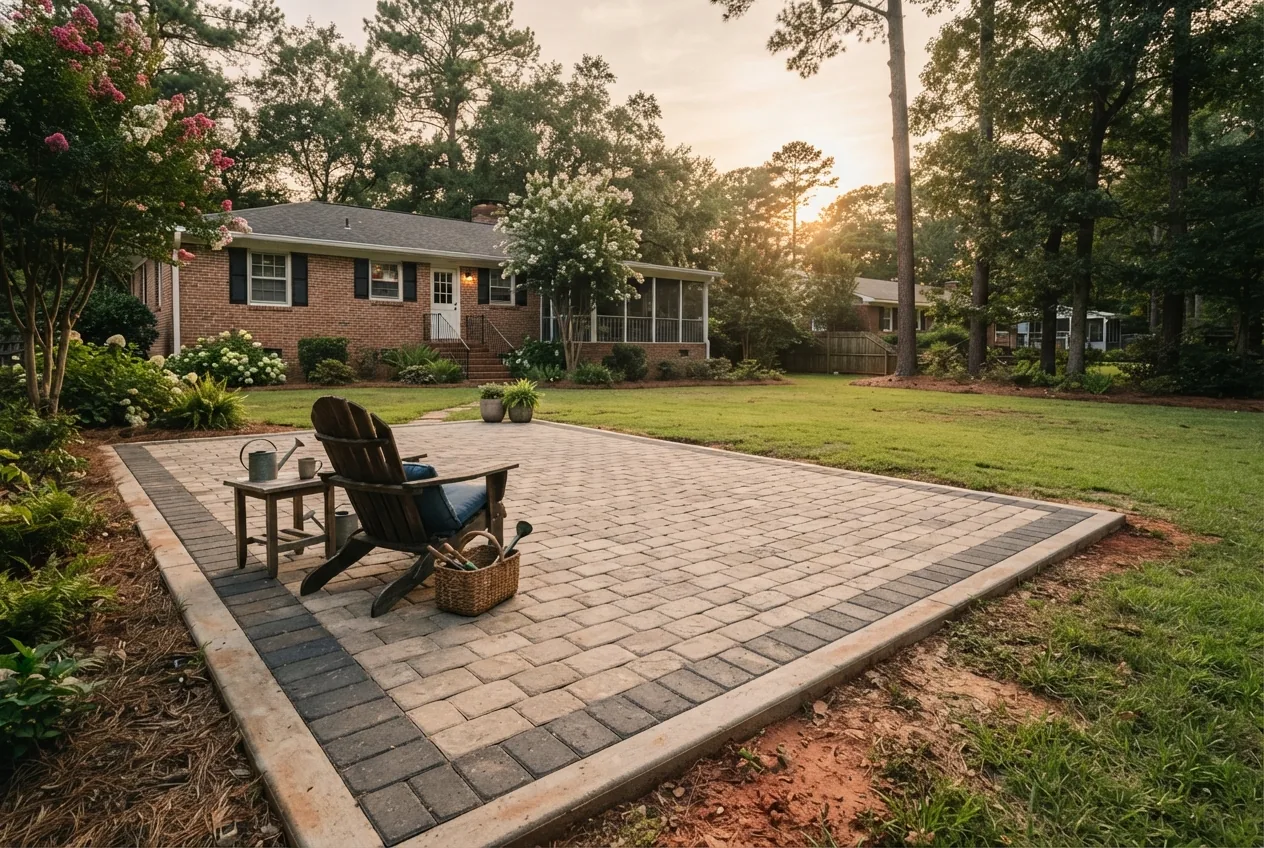
Columbia gets nearly 45 inches of rain a year, often in heavy bursts, and neighborhoods like Lake Carolina, Shandon, and Irmo often slope toward homes and driveways. The heavy clay common to Richland and Lexington counties holds water like a sponge, so a draining base beats one that traps water here.
Frequently asked questions
Is open-graded base better than crusher run for pavers? In Columbia's clay and rainfall, yes, it drains instead of trapping water, which is what causes settling and heaving. It's now the recommended standard.
Will it cost more? The materials are comparable; the difference is doing the base right. It costs far less than relaying a patio that settled on a wet base.
Planning a paver patio? Book a free phone consultation and we'll put the base, the drainage, and the price in writing before we dig.
Have a project in mind?
See the full scope and pricing, or book a free phone consultation. No estimate pressure.