

Guide
How to Measure for a Fence (Before You Call for a Price)
Measure your fence line in a few steps (linear feet, corners, and gates) so you can pull a real ballpark from our Columbia fence cost guide before you call.
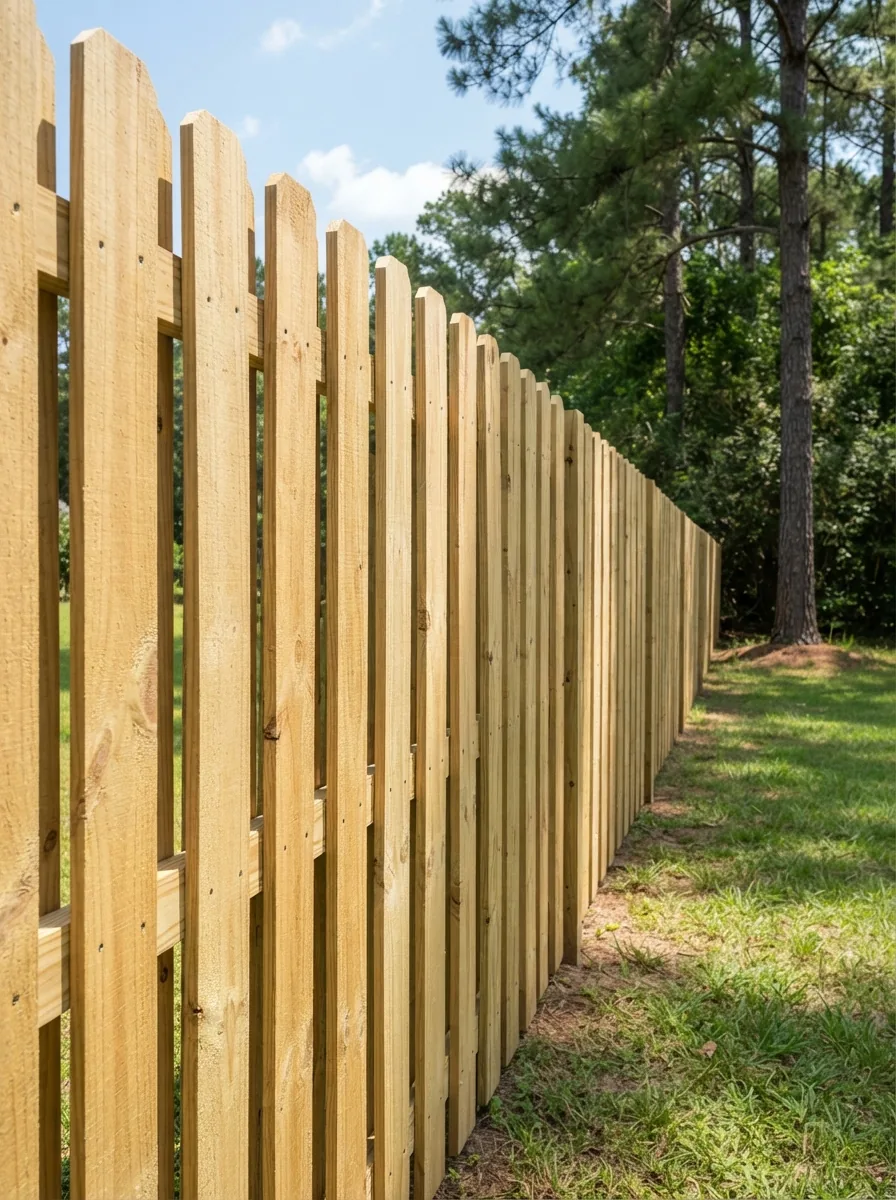
A fence is priced mostly by linear feet (the total length of the run) plus gates and corners. Walk your line, write down a few numbers, and you can check a real ballpark against our fence cost guide before you call.
A walk around the yard and a scrap of paper is all it takes. Here is exactly what to write down, and what each number does to the price.
1. Measure the linear feet
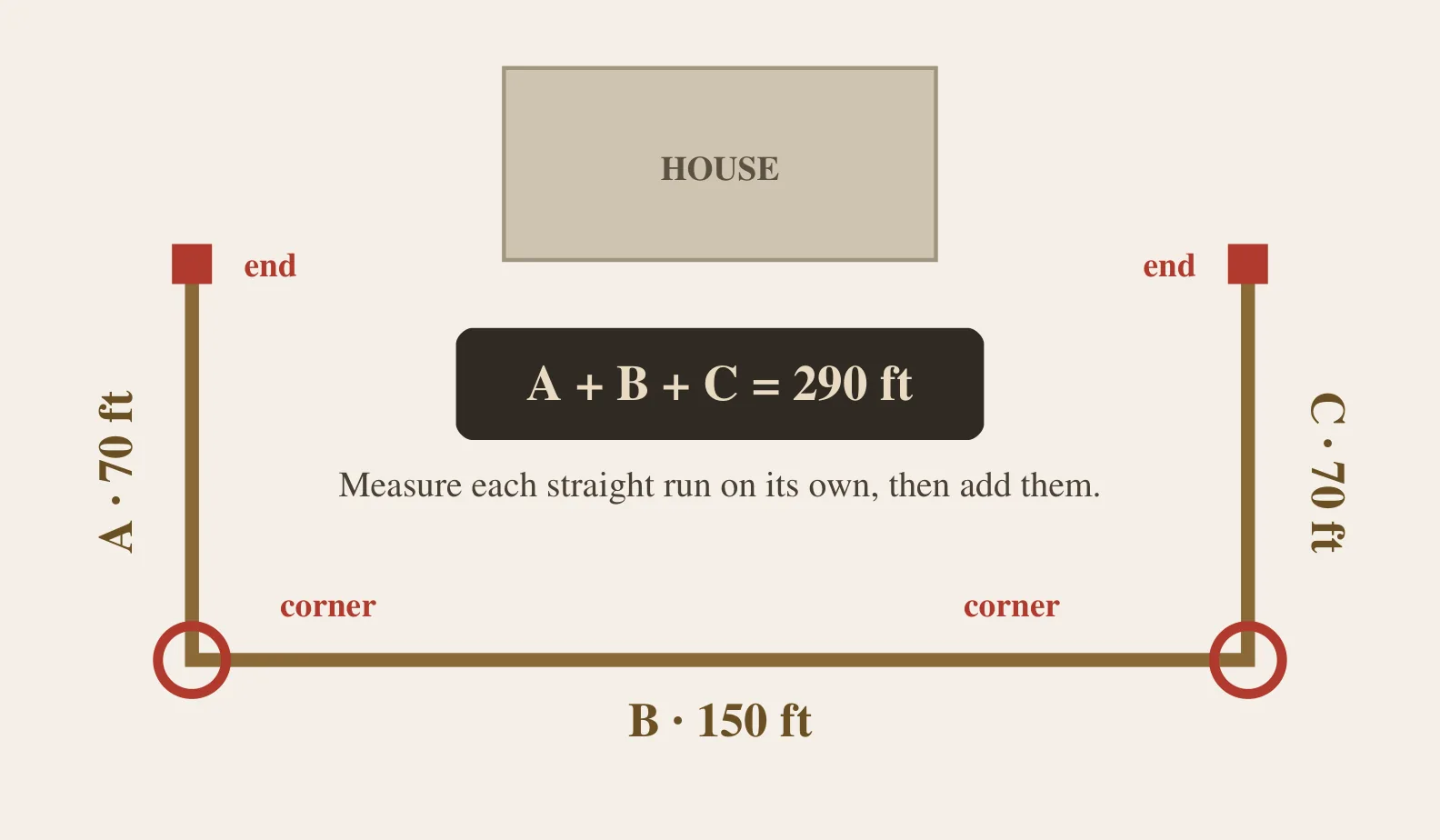
- Walk the line where you want the fence and measure each straight section in feet.
- Add the sections together for your total linear footage. A long tape, a measuring wheel, or even pacing it off (about 2.5 feet per step) gets you close.
Linear feet drives most of the price, so this is the big one.
Tip, measure from the sky. Google Earth is a great shortcut for a fence line. The free desktop version (Google Earth Pro) has a ruler tool that measures distance off the satellite image. Trace your property line or the run you want and it adds up the linear feet for you. It's an estimate, and it won't show slope, but it's a fast way to get your total before you ever pick up a tape.
2. Count the corners
Note each corner or change of direction, each place the fence ends at the house, and both sides of every gate. These are not ordinary posts. They are heavier, they go in a bigger footing, and on chain-link they are a different grade of pipe entirely, because they are what the fence gets stretched and hung against.
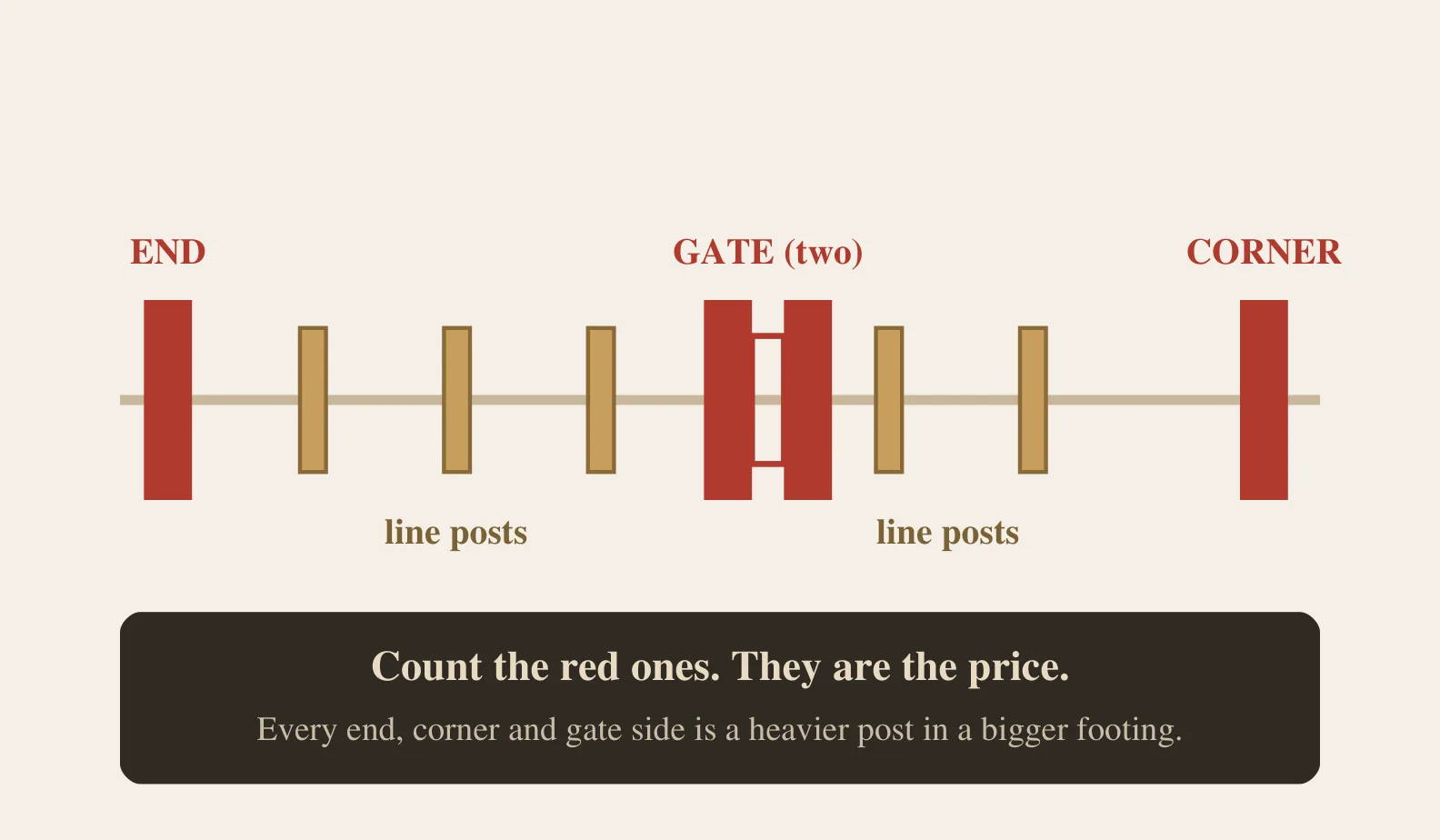
This is why a straight 200-foot back line is cheap and 200 feet wrapped around a six-corner yard is not.
3. Measure the gates
Gates are the priciest part per foot, so count them:
- How many gates?
- How wide does each need to be? A walk gate is usually 3 to 4 feet; a drive gate for a mower or vehicle is 10 to 12 feet.
4. Note the height and material
Price changes a lot with what you're building:
- Height, a 6-foot privacy fence costs more than a 4-foot picket.
- Material, wood, vinyl, aluminum, and chain-link all sit at different price points. Jot down what you're picturing.
5. Check the slope
Walk the line and notice if the ground rises or falls. Sloped ground means the fence either steps down in sections or racks to follow the grade. Both add labor over a flat run.
One caution: know your property line
Measure inside your line, not on it. If you're not sure exactly where your boundary is, a property survey settles it. Building a fence over the line is an expensive thing to undo. When in doubt, set it a few inches in.
What a finished measurement looks like
This is all we need to put a real number on a fence. A sketch of the runs, and five short answers:
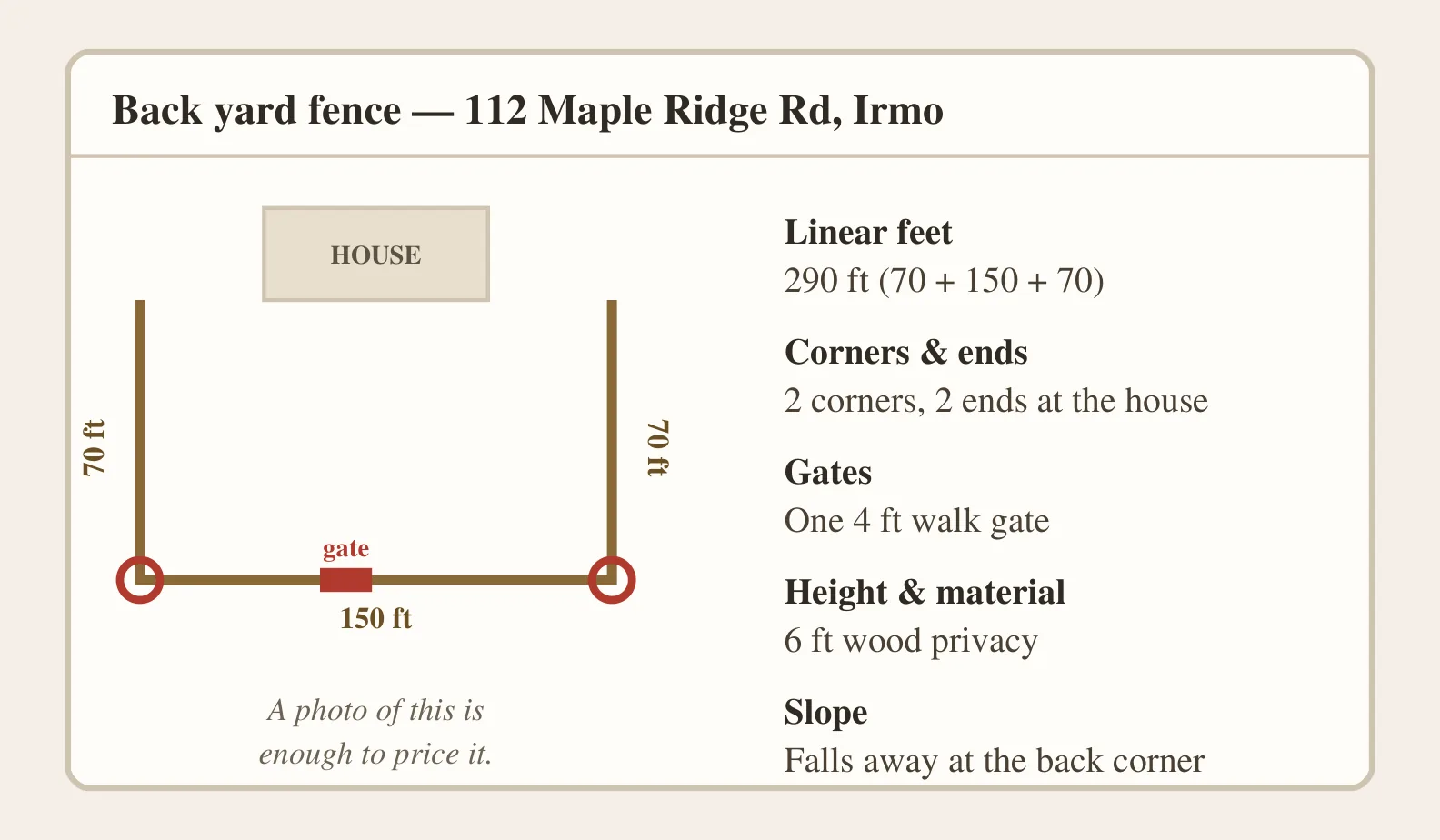
Turn your numbers into a ballpark
Linear feet times the rate in our fence cost guide, plus your gates, gets you a realistic range. Each material has its own guide underneath that one if you already know what you are building.
Then send us the sketch. A measurement gets you a ballpark; it does not get you a quote. The firm number depends on terrain, post spacing, what the ground does, and whether there is an old fence to pull out first, and it is only real once it is in writing. But a photo of your sketch is enough for us to tell you whether the ballpark holds, and that is a much shorter conversation than starting from nothing.
If the line is long or awkward, or you would rather not walk it with a tape, call us and we will come measure it ourselves.
Have a project in mind?
See the full scope and pricing, or book a free phone consultation. No estimate pressure.