

Cost Guide
Fence Cost in Columbia, SC (2026 Price Guide by Material)
Fence cost in Columbia, SC starts at about $24 per linear foot installed and climbs with the material, so a typical yard starts around $3,600. Six materials, priced one guide each.
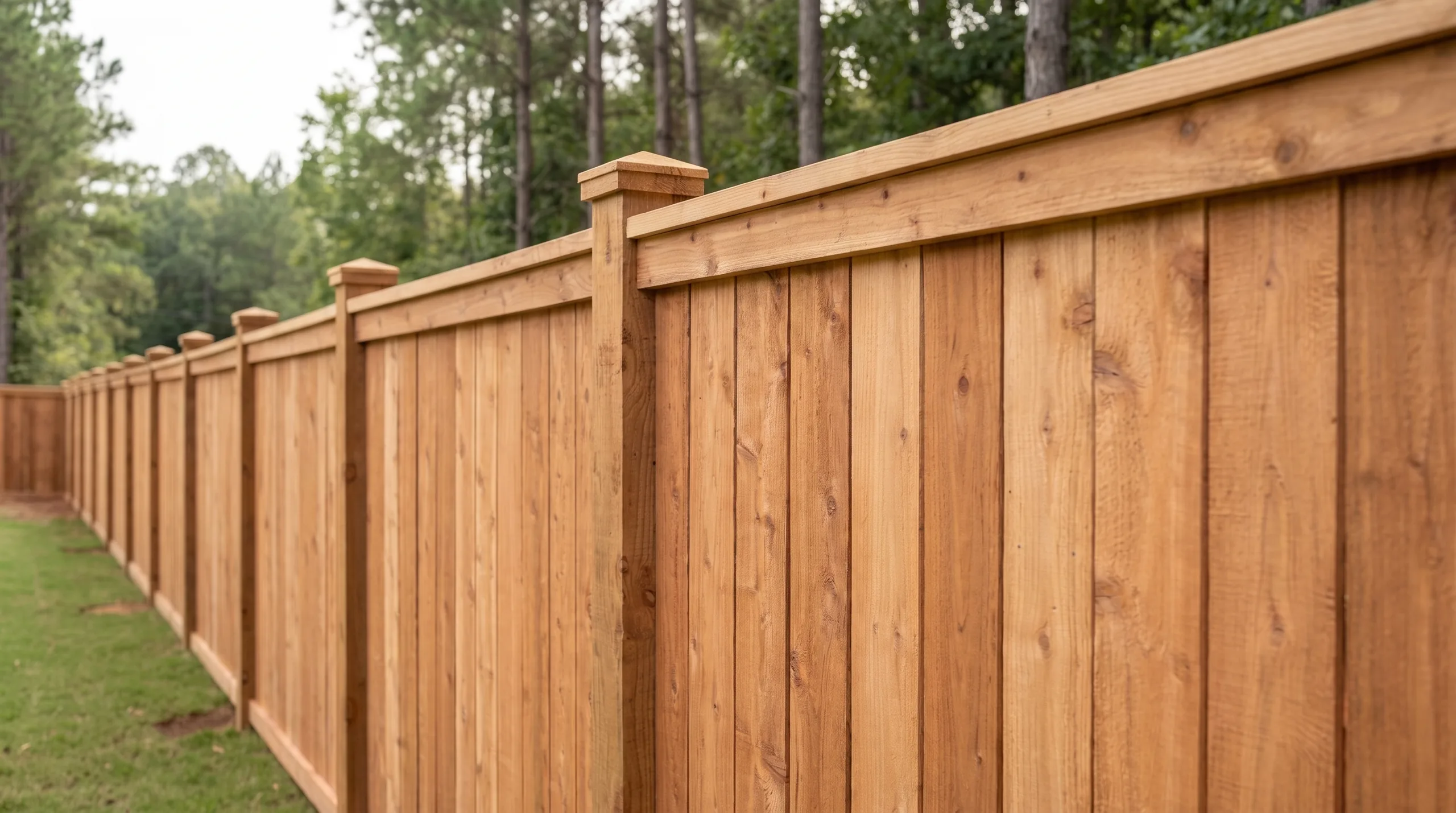
Fence cost in Columbia, SC starts at about $24 per linear foot installed for chain-link and climbs from there with the material you pick, so a typical Midlands yard of 150 to 300 linear feet starts around $3,600. That is a starting point, not a quote.
Material sets the floor. After that, three things move the number more than most people expect: how many corners your yard has, how many gates you need, and what the ground is doing between the posts.
What a linear foot of fence actually buys
Almost none of a fence price is the part you look at:
- Posts and concrete. Dug below the topsoil into firm ground and set in concrete. This is the part that decides whether the fence is straight in ten years, and it is the first thing a thin bid shortens.
- Rails and panels, or fabric. The structure between the posts, which varies completely by material.
- The boards, pickets or mesh. The visible part, and a smaller share of the total than people assume.
- Gates. Priced per gate, not per foot. The only moving part of a fence and the first thing to fail.
- Layout. Every corner, every end, and both sides of every gate needs its own post and its own footing. Two yards with identical footage can be several hundred dollars apart on corner count alone.
What each material costs
| Material | Cost per linear foot (installed) | Guide |
|---|---|---|
| Chain-link | from $24 | The cheapest real fence there is |
| Wood | from $37 | The Midlands standard |
| Vinyl | from $48 | Low maintenance, nineteen styles |
| Aluminum | from $57 | Ornamental, pool-code, racks on a slope |
| Composite | from $75 | The top of the range |
| Mixed material / custom | By quote | Two materials combined, priced by the column count |
Composite starts highest, and it is genuinely a specialty purchase: three real brands in the whole category, nothing stocked near Columbia, and freight that matters because a solid board is heavy. The composite guide covers what drives it.
Mixed material is the one row with no figure at all, because it is genuinely a per-project build. A fence with masonry columns is priced by how many columns there are, not by how many feet of fence there are, and no two properties have the same answer. The mixed-material guide covers how that quote is put together.
A guide for each material
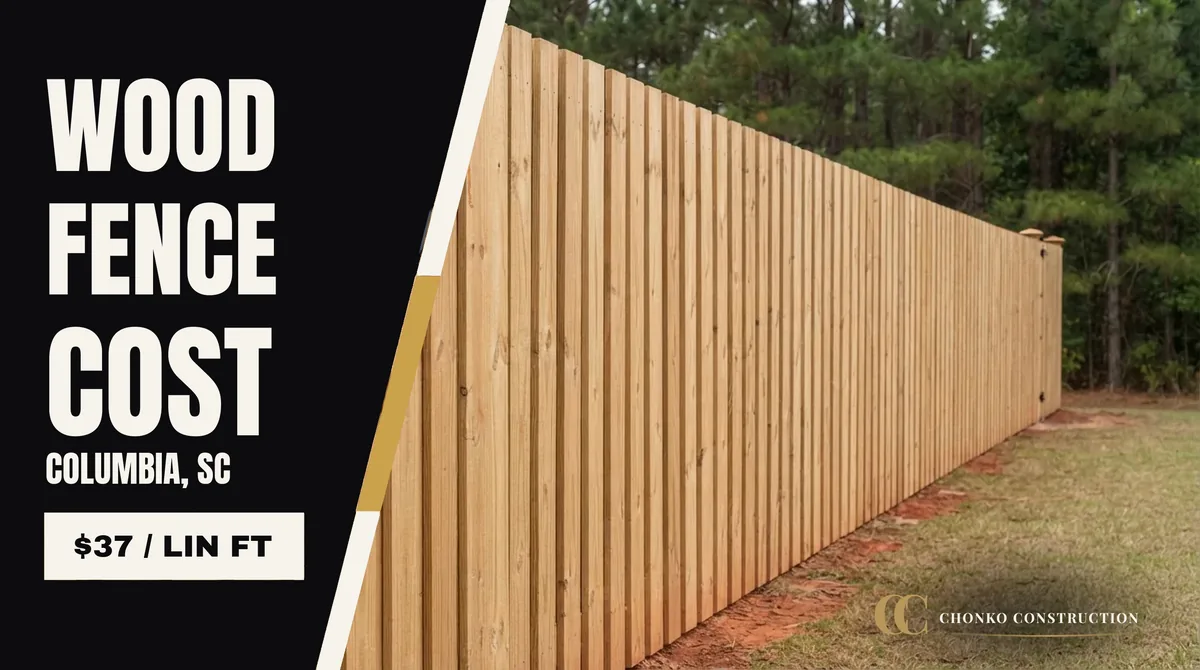
Wood Fence Cost in Columbia, SC (2026)
The Midlands default, and the ten different builds hiding behind the phrase.
Read the guide arrow_forward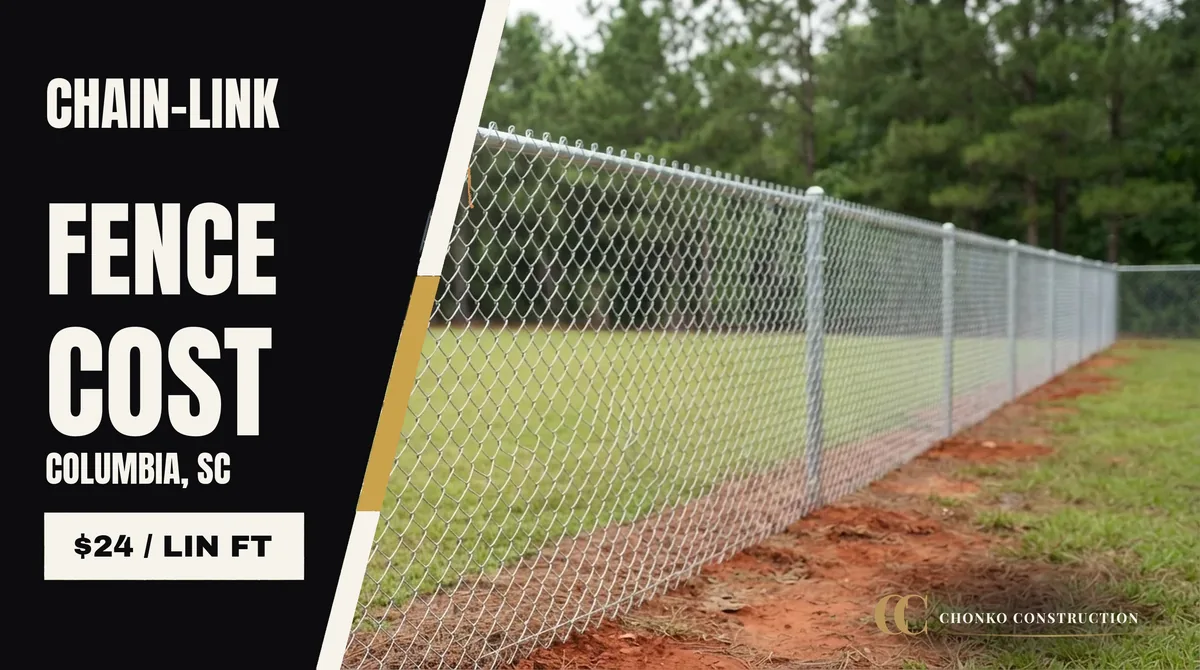
Chain-Link Fence Cost in Columbia, SC (2026)
The cheapest way to close in a yard, and where the money goes instead.
Read the guide arrow_forward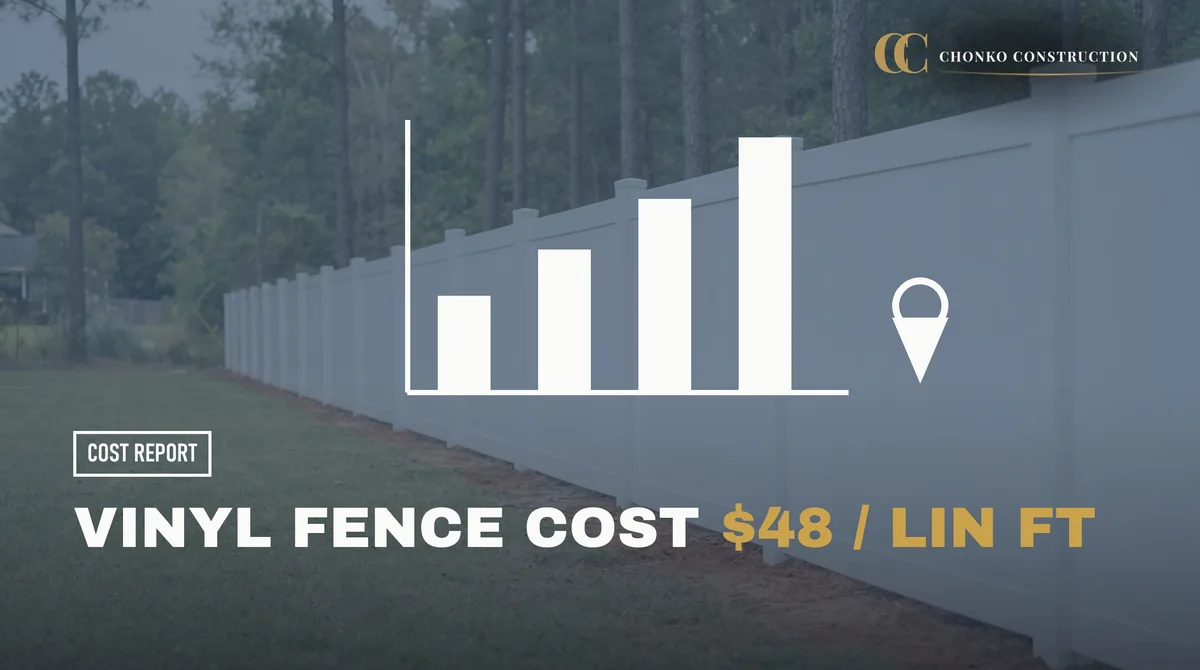
Vinyl Fence Cost in Columbia, SC (2026)
Wood's price without wood's maintenance, and the 19 styles in the line.
Read the guide arrow_forward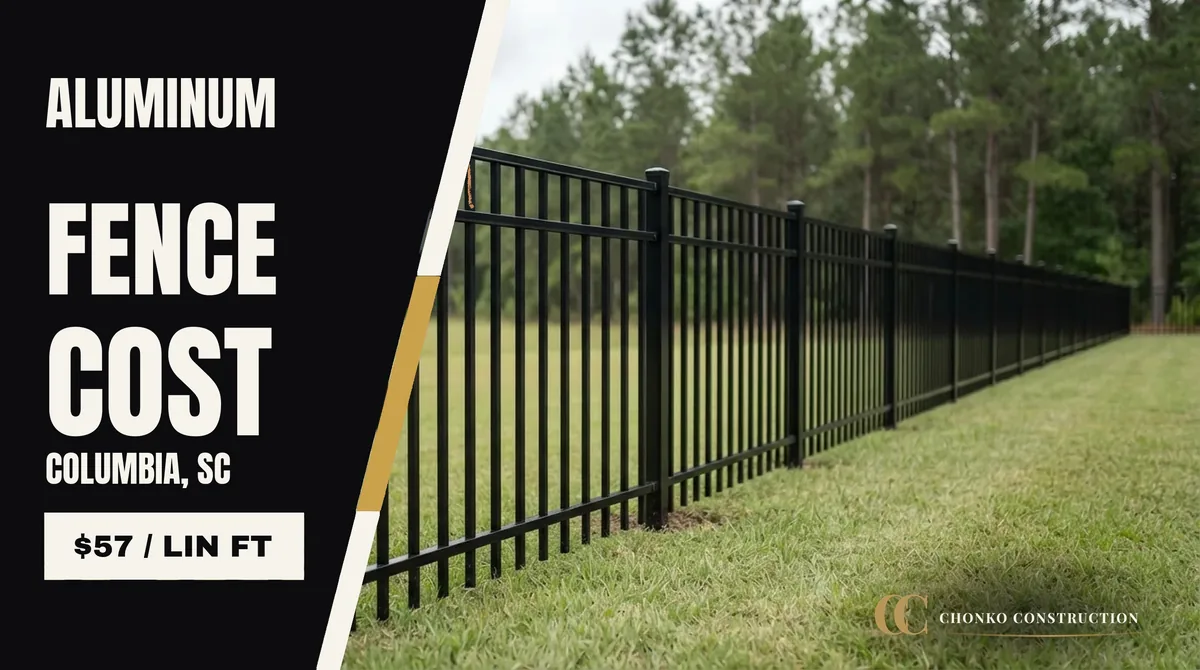
Aluminum Fence Cost in Columbia, SC (2026)
Ornamental, pool-code, and the one material that follows a slope without stepping.
Read the guide arrow_forward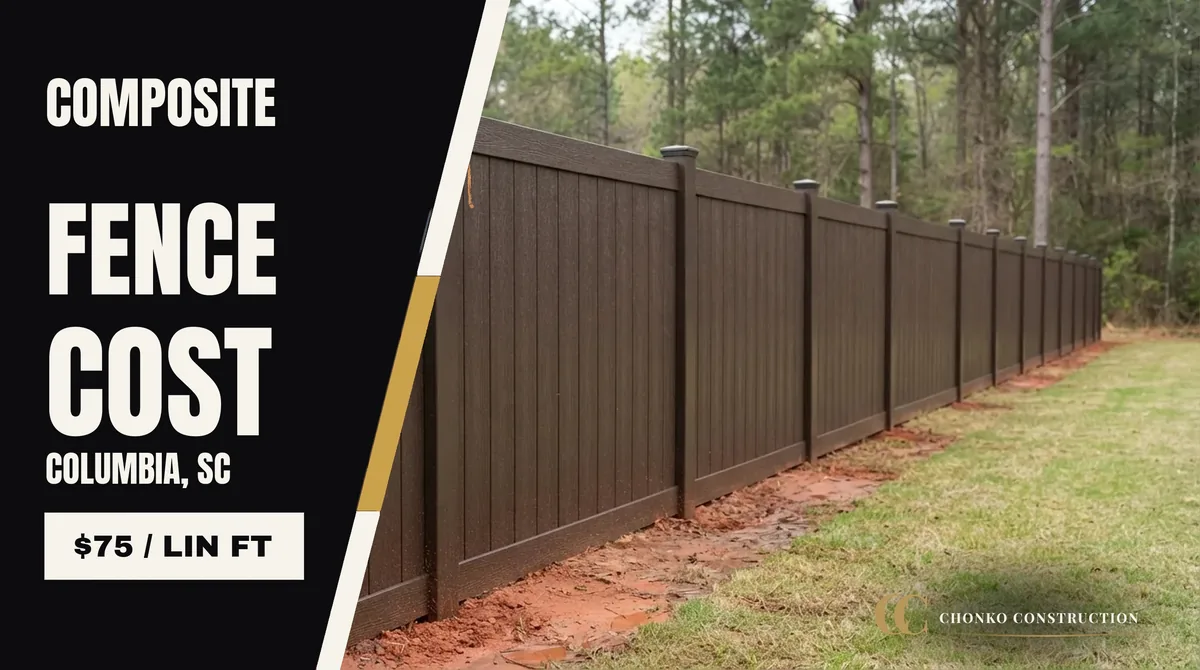
Composite Fence Cost in Columbia, SC (2026)
The stained-wood look that never gets stained. Three real brands, and that is all.
Read the guide arrow_forward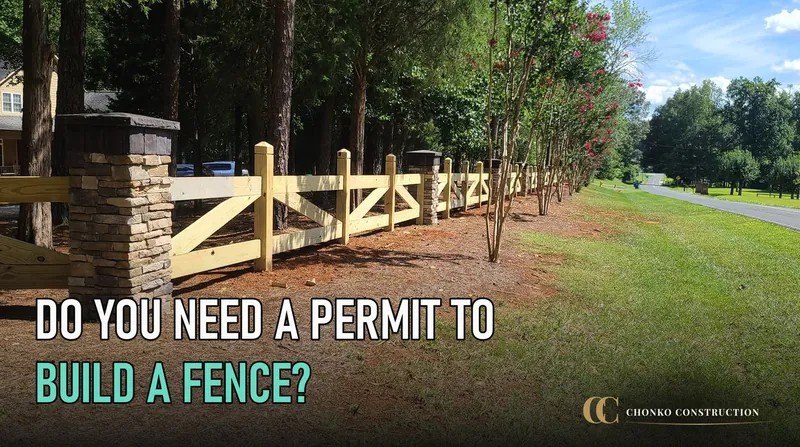
Do You Need a Permit to Build a Fence in Columbia, SC?
When a fence needs a permit here, and what the HOA gets a separate say in.
Read the guide arrow_forward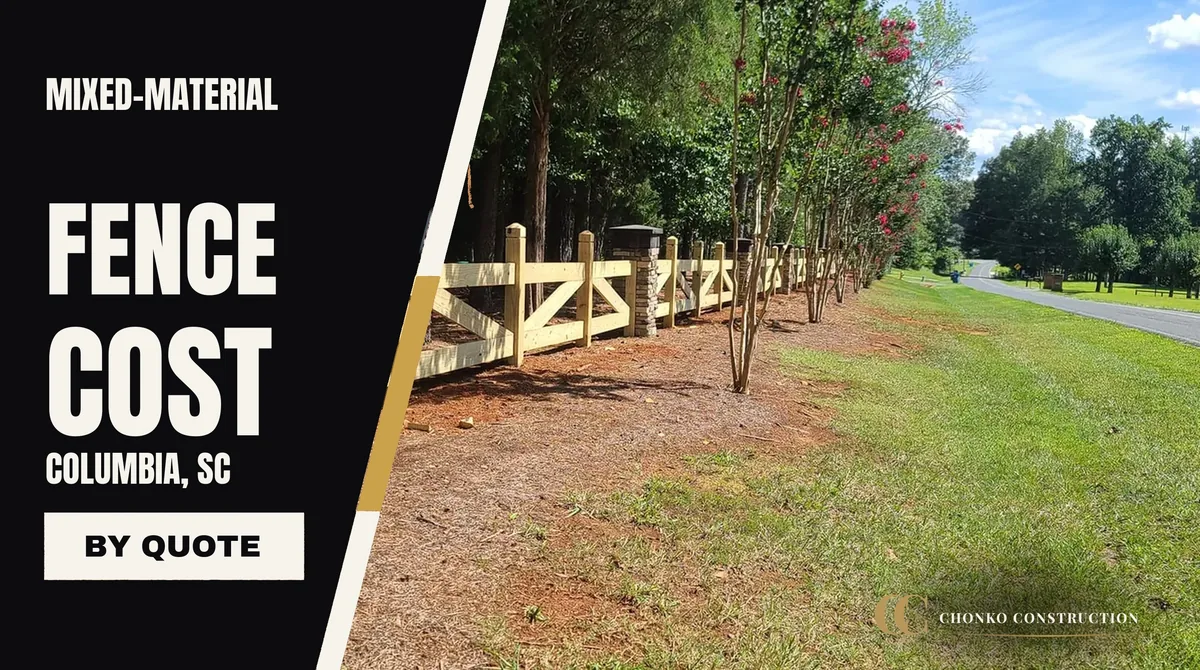
Mixed-Material & Custom Fence Cost in Columbia, SC (2026)
Two materials combined on purpose: masonry columns, hybrid panels, privacy below and open above.
Read the guide arrow_forward
How to Measure for a Fence (Before You Call for a Price)
How to measure the run yourself before anybody quotes it.
Read the guide arrow_forwardOne guide per material, with what each one costs and what it is actually for.
Length is the multiplier, and it does not scale down
Fencing is priced by the linear foot, so a 300-foot perimeter costs roughly twice a 150-foot one in the same material. That part is intuitive.
What is not intuitive is the other direction. A very short run comes in high per foot, because a crew still mobilizes to your property, the line still gets laid out, terminal posts still go at both ends, and the gate still costs what a gate costs. Almost none of that gets smaller because the fence did.
What the posts have to do
Every material in this guide depends on the same thing underground.
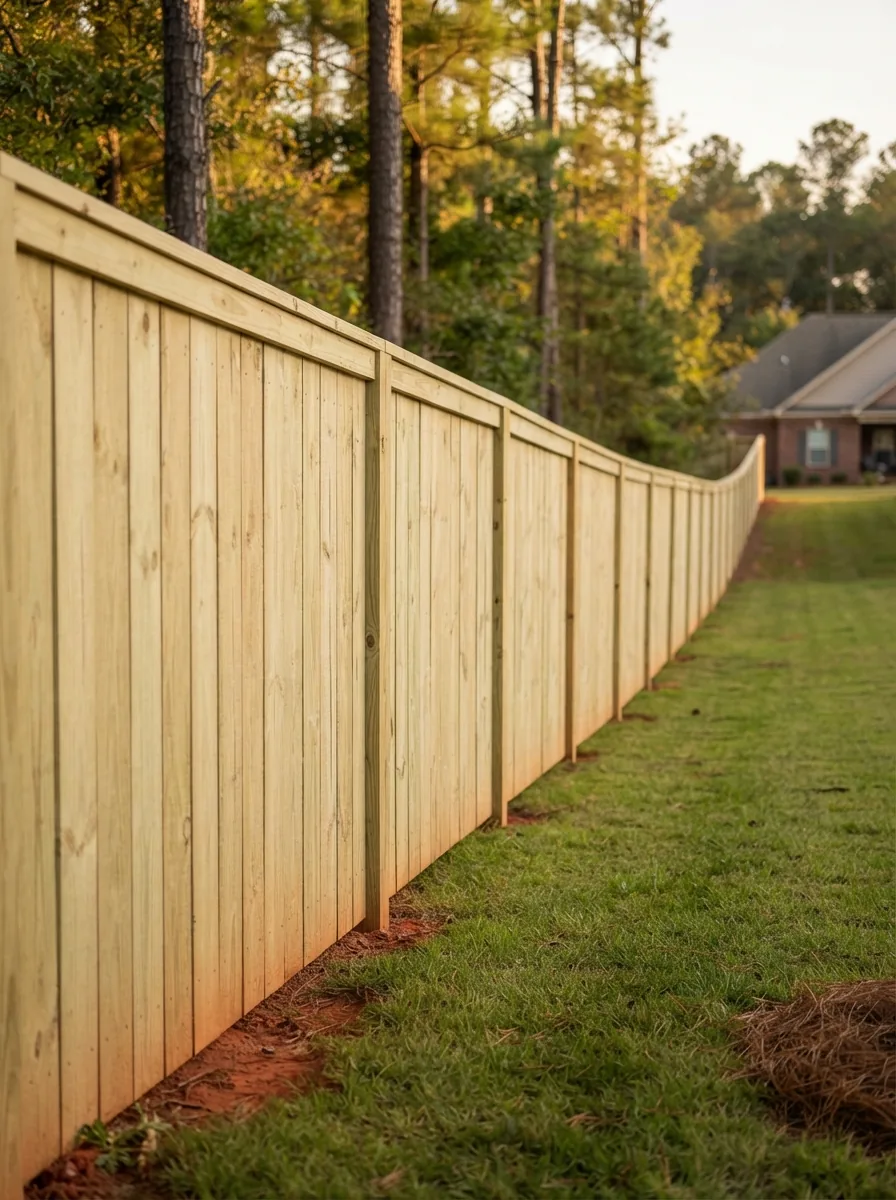
A fence is a sail. Every gust that hits the panels gets levered onto the posts, and the only thing resisting that is how deep the post sits and how much undisturbed soil the concrete around it is bearing against. A post that did not go deep enough, or that got backfilled with dirt instead of concrete, gives up a little ground at a time and starts to lean. Because the panels are fastened to it, one leaning post pulls the sections either side of it out of line, so a fence tends not to fail one board at a time. It fails in a section.
Spacing is six to eight feet on center at one consistent interval down the whole run. A line with a four-foot bay next to a nine-foot bay was not laid out before the digging started.
Gates
A gate is the only part of a fence that moves, which makes it the part with its own price. It is quoted per opening, not by the foot, and what sits inside that price is different in every material: a wood gate needs a braced frame, a vinyl gate needs a metal insert through a hollow one, an aluminum pool gate is specified by code, and a composite gate is heavy enough that its weight sets the hardware.
Because the answer is material-specific, each guide carries its own gate section:
- Wood gate costs — bracing, and why a wood gate racks itself out of square.
- Chain-link gate costs — welded pipe frames, and the terminal posts on both sides.
- Vinyl gate costs — the metal insert that keeps a hollow gate square.
- Aluminum gate costs — pool-barrier hardware, and what automating one adds.
- Composite gate costs — the heaviest gate on the list, and what carries it.
- Mixed-material gate costs — hanging an entrance gate off a masonry column, and why it is planned at the masonry stage.
One thing is true of all five: a double drive gate is not two walk gates. It needs a heavier post on each side, and those two posts do more work than any others on the property.
Slope, and what it does to a price
A fence line follows the ground, and there are only two ways to do that.
Stepping brings the run down a slope in level sections, which leaves a stair-stepped top and a triangular gap under each section where the ground falls away. It is normal on a rigid-panel material.
Racking skews the panel itself so it follows the grade continuously with the pickets still plumb. Aluminum does this best, and it is a real part of why aluminum sometimes wins on a sloping lot even though it is the most expensive option on the table.
Either way, a sloped run needs extra layout, extra posts, and cutting. A bid priced as flat, straight footage has not accounted for any of it.
What a low fence bid usually leaves out
Most of a fence's cost is work that never shows up on a materials list, and that is where a thin bid gets thin:
- Post depth and concrete. See above. It is the cheapest thing on the job to shortchange and the most expensive to fix.
- Gate hardware. Light hardware lets a gate sag and drag on the ground inside two years.
- Grade work on a sloped run. Extra layout, extra posts, panel cutting.
- Old fence removal. The existing posts come out with their concrete footings still attached, and all of it has to be hauled off. That carries labor and a disposal fee.
- Permit and HOA submittal. Some Columbia-area neighborhoods require both, and somebody has to file them before a crew can show up.
Ask any bid you are holding which of those it actually covers.
Permits, the HOA, and the property line
There are three separate approvals people tend to blur into one. The permit is the jurisdiction's, and whether you need one depends on where you are and what you are building. The HOA is often the stricter of the two, and it may dictate material, height, style, and which direction the finished side faces. Neither of them tells you where your line is.
The property line is the third, and it is the expensive one to get wrong. A fence built on the wrong side of it is a survey problem and a neighbor problem at the same time. Measuring the run properly is the first thing that happens on a walk.
What makes a quote hold
A fence price moves after signing for one reason: something was not decided before it was written. The scope items that settle it are always the same four.
- Material, height and style. These set the per-foot rate, and changing any of them after the order is placed is a new quote, not an adjustment.
- Gate count and type. Gates are priced per opening. Adding one at framing stage adds two posts and a set of hardware.
- The HOA and the permit. Both are approvals, and they can dictate material, height, style and the direction the finished side faces. Confirmed before design, they are a constraint; discovered after, they are a rebuild.
- The property line. Where the line actually is, in writing, before anything is dug.
Settled up front, those four make the number in the contract the number on the invoice. Every change after that goes through a signed change order, which is what keeps the final bill matching what was agreed.
What an online number can and cannot tell you
The table above tells you which material you are shopping for. It cannot tell you what your fence costs, because it does not know how many corners your yard has, how many gates you need, what the slope does, or whether there is an old fence to pull out first.
Ready to see real numbers for your yard? Book a free phone consultation and we will walk the line with you.
Frequently Asked Questions
How much does a fence cost in Columbia, SC?add
Fence cost in Columbia, SC starts at about $24 per linear foot installed and climbs with the material: chain-link from $24, wood from $37, vinyl from $48, aluminum from $57, composite from $75. For a typical 150 to 300 linear foot yard that is a start of around $3,600. These are starting points, not a quote.
Which fence material is the cheapest, and which lasts longest?add
Chain-link is the lowest cost per foot and it is also the lowest-maintenance of the cheap options, though it buys no privacy. Wood is the least expensive way to get real privacy and the only material that asks something of you afterward. Vinyl, aluminum and composite all cost more up front and effectively nothing over the years. Over fifteen years the gap between wood and vinyl is much narrower than the day-one prices suggest.
What does a composite fence cost?add
A composite fence starts at about $75 per linear foot installed, the highest starting figure of the six materials. Three things put it there: three brands make it so there is little price competition, none of it is stocked near Columbia, and a solid board is heavy enough that freight is a real line item. The composite guide covers it in full.
Why is one fence bid so much lower than the others?add
A low bid is usually low because scope is missing: post depth and concrete, gate hardware, grading on a sloped run, old-fence removal and haul-off, or the permit. Those gaps come back as change orders mid-job. A complete quote defines all of it up front.
Does the shape of my yard change the price?add
Yes, and more than most people expect. Every corner, every end and both sides of every gate is its own post and its own footing, and on chain-link those posts are a heavier grade of pipe than the ones in the middle of a run. Two yards with identical footage can be several hundred dollars apart on corner count alone.
Do I need a permit to build a fence in Columbia?add
It depends on the jurisdiction and on what you are building, and the HOA is a separate approval from the permit, often a stricter one. Both are covered in the fence permit guide. The property line is a third question again, and it is the expensive one to get wrong.
Have a project in mind?
See the full scope and pricing, or book a free phone consultation. No estimate pressure.