

Guide
How to Measure a Patio (Before You Call for a Price)
Measure your paver patio in a few steps (square footage, shape, and site conditions) so you can pull a real ballpark from our Columbia paver patio cost guide before you call.
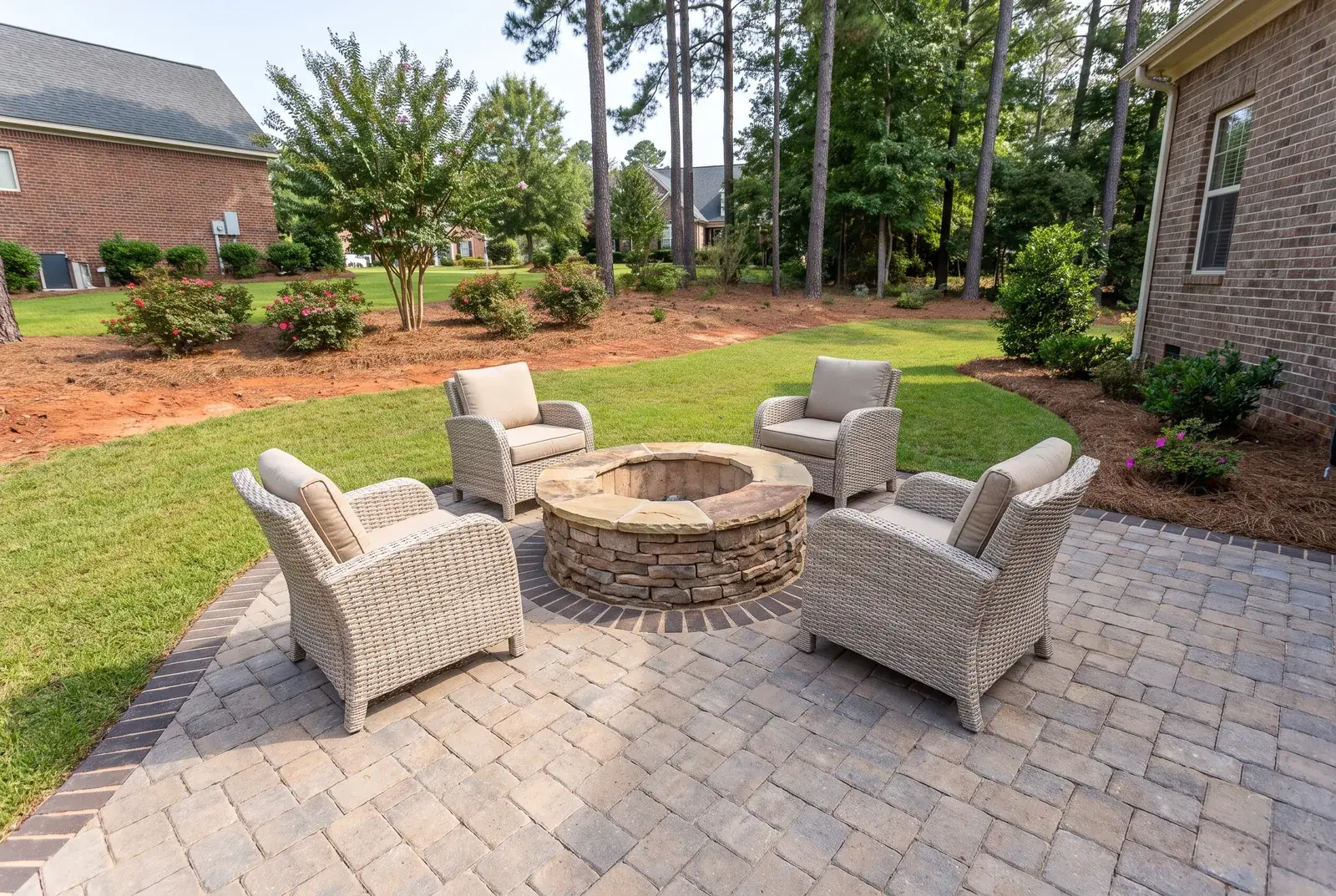
A paver patio comes down to one main number: square footage. Get that, note a couple of site details, and you can check a real ballpark against our paver patio cost guide before you ever call.
Five minutes in the back yard and a scrap of paper is all it takes. Here is exactly what to write down, and what each number does to the price.
1. Measure the square footage
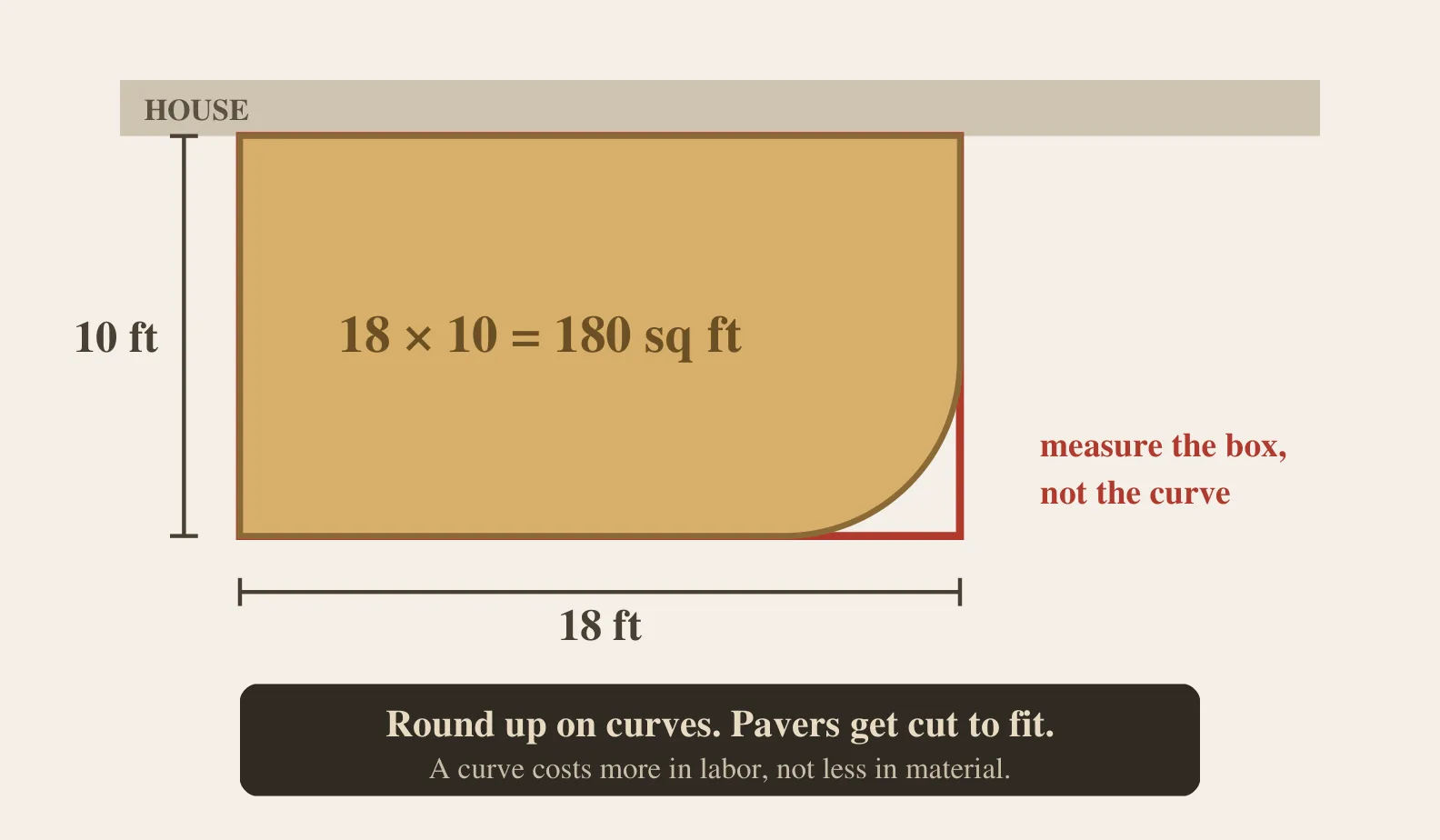
- Measure the length and width in feet, then multiply for square feet.
- Curved or odd-shaped? Break it into rectangles, measure each, and add them up. Round up a little on curves. Pavers get cut to fit.
Most Midlands patios run 200 to 600 square feet. That number drives most of the price.
Tip, measure from the sky. Google Earth is a great tool for this. The free desktop version (Google Earth Pro) has a ruler that measures area right off the satellite image. Outline where the patio will go and it gives you the square footage in seconds. It's an estimate (shade trees and older imagery can blur the edges), but it gets you close without stepping outside.
2. Note the shape and edges
- Simple rectangle, or curves and multiple sections?
- Any built-in features, a fire pit, a seating wall, a border course in a different paver?
Curves and features don't change the square footage much, but they add cutting and labor.
3. Check what's there now
What we're covering matters as much as the size:
- Grass or dirt, standard prep.
- Existing concrete or an old patio, may need removal and haul-off, which adds cost.
4. Look at the slope and drainage
Walk the area and notice which way water runs. A patio needs a slight, deliberate fall so water leaves it, and that fall has to go away from the house.
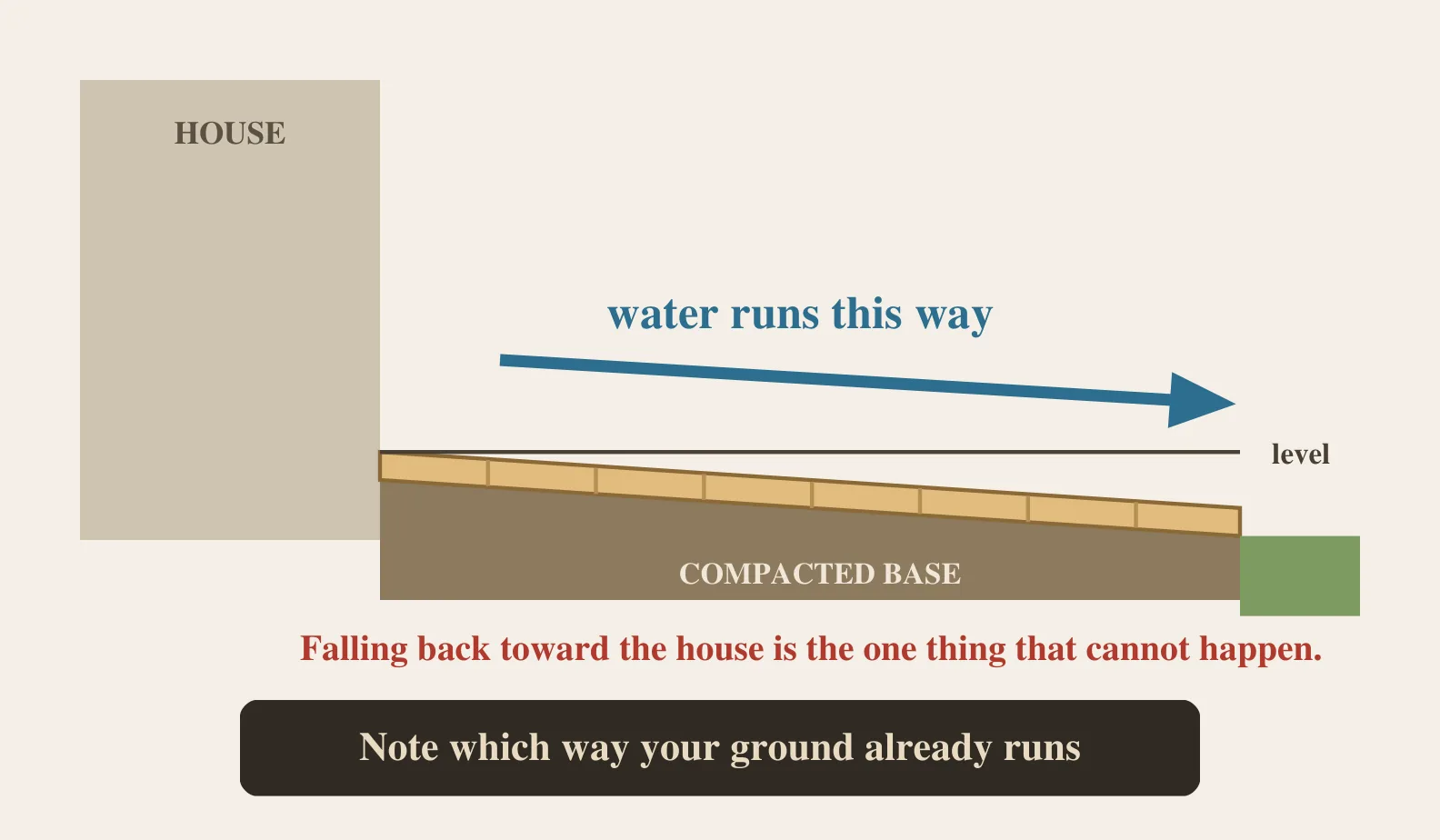
A flat spot, or a low area that pools after rain, means extra base work and grading. Worth a note now, because it moves the number.
5. Note the access
Can a small machine and a pallet of pavers reach the spot, or is everything coming through a narrow gate by wheelbarrow? Tight access slows the crew and adds labor.
What a finished measurement looks like
This is all we need to put a real number on a patio. A sketch, and five short answers:
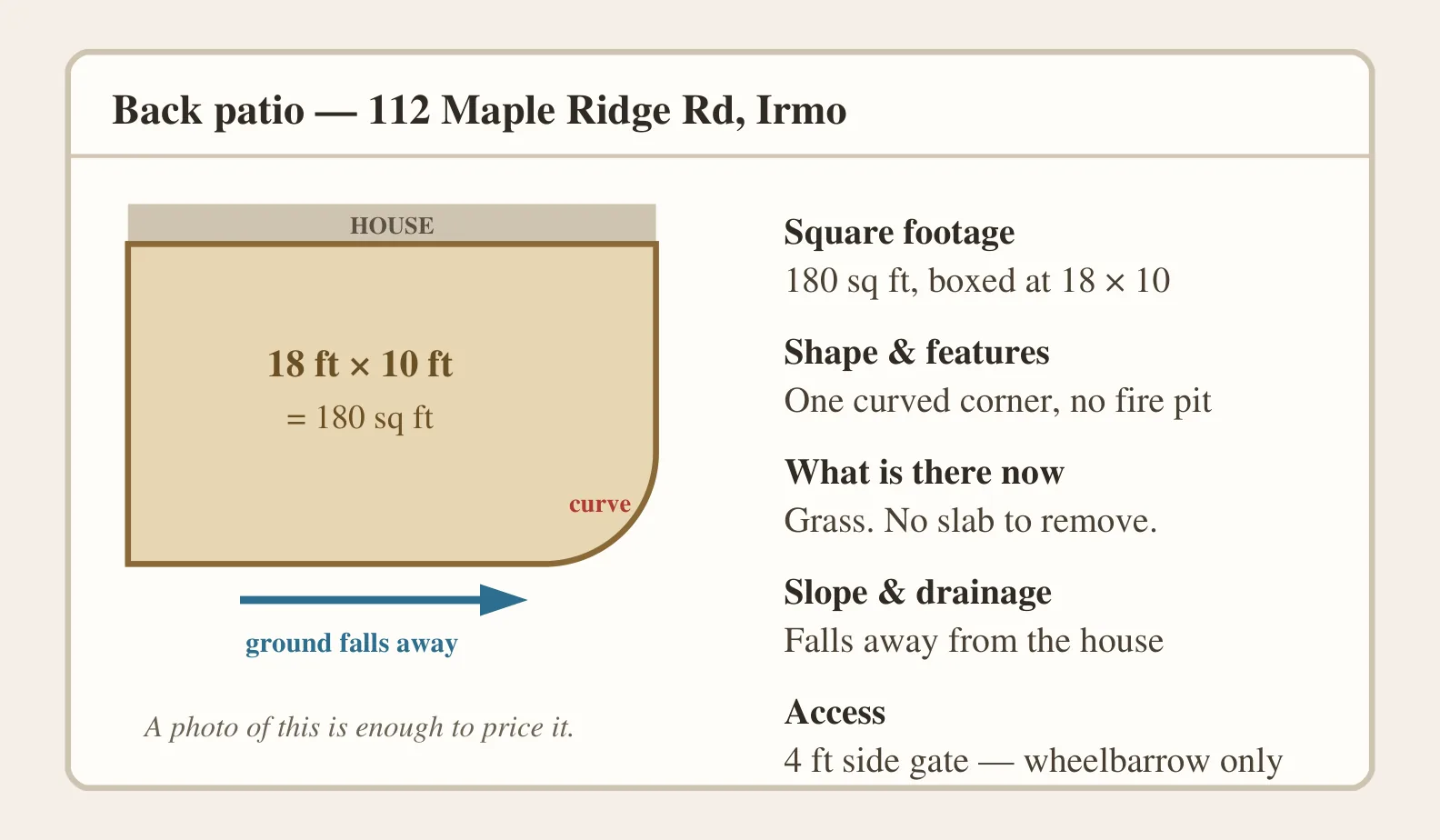
The access line matters more here than on a deck or a fence. Pavers and base stone come by the pallet and the ton, and whether a machine can reach the spot or everything goes through a four-foot gate by wheelbarrow is a real difference in labor.
Turn your numbers into a ballpark
Square footage times the rate in our paver patio cost guide gets you a realistic range.
Then send us the sketch. A measurement gets you a ballpark; it does not get you a quote. The firm number depends on base depth, drainage, and what is under your yard, and it is only real once it is in writing. But a photo of your sketch is enough for us to tell you whether the ballpark holds, and that is a much shorter conversation than starting from nothing.
If the shape is tricky, or you would rather not measure it yourself, call us and we will come measure it on site.
Have a project in mind?
See the full scope and pricing, or book a free phone consultation. No estimate pressure.