

Cost Guide
Mixed-Material & Custom Fence Cost in Columbia, SC (2026)
What a mixed-material fence costs in Columbia: masonry columns with fence between them, aluminum-framed vinyl panels, and privacy-below-open-above. Why the column count drives the number.
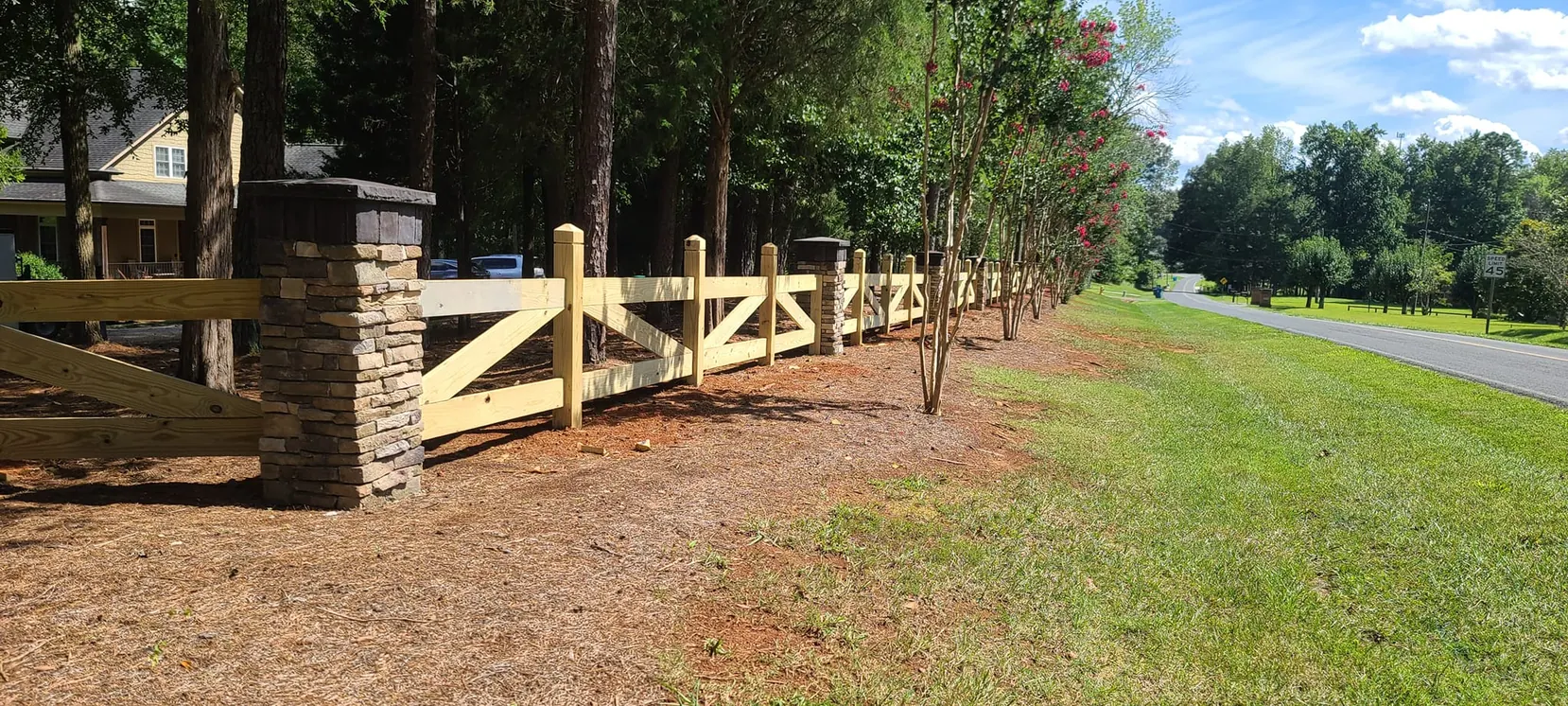
A mixed-material fence is quoted per project, not per foot, and there is a real reason for that: the thing driving the price usually is not fence at all. It is how many masonry columns are in the run.
We do not publish a per-foot figure for this one, the same way we do not for composite. What this guide does instead is tell you what the number is actually made of, so you can read a real quote properly. The five single materials are priced in the fence cost guide.
What counts as a mixed-material fence
Two different things get called this, and they price completely differently.
Site-built combinations. Two materials assembled on your property into one fence line. The common one in the Midlands is masonry columns with fence spanning between them: stacked stone or brick, capped, with wood, aluminum, or vinyl sections running column to column. It is what makes a front boundary or a driveway entrance read as finished rather than fenced.
Manufactured hybrids. A single panel system that arrives already combining two materials. These are ordered like any other panel and priced like the material they are mostly made of.
The columns are the price
On a site-built mixed fence, this is the whole story. Each masonry column is its own small construction project: a footing sized for it, block or a core to build against, the stone or brick laid up, and a cap set on top. That work has nothing to do with fencing, and it costs what masonry costs.
So a mixed-material quote moves on column count, not on footage. A 200-foot run with two entrance columns and a 200-foot run with eight evenly spaced columns are the same amount of fence and nowhere near the same price.
The three questions that set it:
- How many columns, and where. Entrance only, corners as well, or repeating down the whole run.
- What they are made of. Stacked stone, brick, or stucco over block, and whether they carry a cut-stone cap or a cast one.
- How tall and how thick. A column that reads right next to a six-foot fence is a bigger column than one next to a four-foot rail.
Everything between the columns then prices at the wood, aluminum or vinyl rate for that material, on the footage that is actually fence.
Layout stops being optional
On a single-material fence, layout is good practice. On a columned fence it is the job.
Columns are fixed objects. Once a footing is poured, the bay either side of it is whatever it is, and the fence sections have to be built to that bay. That is fine for wood, which can be cut on site. It is a problem for anything that comes as a manufactured panel in a fixed length, because a vinyl or aluminum panel does not shorten gracefully.
So the sequence is: walk the line, set the column positions on paper, confirm the material can span those bays, and only then dig. A quote that skips that stage is pricing a fence that has not been designed yet.
Matching columns that are already there is the same problem in reverse, and it comes up often on properties with an existing brick entrance. Existing columns almost never sit on a convenient interval, so the sections are built to the bays that exist. It is very doable. It is measuring work, and it should be priced as such rather than assumed.
Privacy below, open above
The other real mixed build, and it solves a specific problem: you want the yard private without the fence becoming a wall.
The answer is a solid section for the lower two-thirds and something open over the top, either black aluminum balusters or a decorative screen panel. You keep the sightline blocked where people actually see through it and you get light and air over the top. On a pool run it is often the better-looking answer than a full-height privacy fence.
The manufactured hybrids we install
The Catalyst line carries three, and all three are aluminum combined with vinyl:
- Riverside. A matte-black aluminum frame around interlocking vinyl infill boards, which can run vertical or horizontal. Six feet tall, six-foot panels. Infill comes in smooth solids (white, sand, clay, gray) or smooth woodgrains (coastal cedar, cypress), and there is an all-aluminum infill configuration in matte black. An optional decorative mesh screen topper adds to the top of the panel.
- Savannah. Gap-free vinyl privacy panels for the lower two-thirds with overhead screen panels above, at a six-foot overall height in six- and eight-foot widths. White comes with a white topper; every other color takes a black one.
- Stockton. Solid vinyl boards below, black aluminum balusters above. Six feet tall, eight-foot panels, white with black balusters. Marketed for lawn and pool enclosures.
Because these arrive as systems, they price much closer to a vinyl fence than to a columned build. If "mixed material" to you means the look rather than the masonry, this is the considerably cheaper way to get there.
Gate costs
On a mixed-material fence the gate is usually the entrance, and the entrance is usually the reason the fence exists.
A gate hung between two masonry columns is a different job from a gate hung between two posts. The column has to have something in it to hang from, which means a steel post or a hinge plate set into the column when it is built, not drilled into the finished stone afterwards. That has to be planned at the masonry stage. Getting it wrong is expensive to fix, because fixing it means opening a column.
The rest of what sits in the price:
- Width. Entrance gates on columned fences are usually wide enough for a vehicle, which means a double, which means two heavy leaves.
- Material of the leaf, matched to the fence sections either side.
- Automation, if you want it. An operator, a power run out to the entrance, safety hardware, and a keypad or remote. Budget it as its own scope, not as a gate upgrade.
- A drop rod pinning the inactive leaf, on any double.
What we will tell you on the walk
Because there is no published rate here, the honest version is this: we count the columns, measure the runs between them, look at what the grade does, price the masonry and the fence separately, and put the two together in writing. If the column count is what is making the number uncomfortable, that is a conversation about design, and we would rather have it before the quote than after.
The rest of the fence guides
Fence Cost in Columbia, SC (2026 Price Guide by Material)
The hub: all six materials side by side, and what moves a fence price.
Read the guide arrow_forward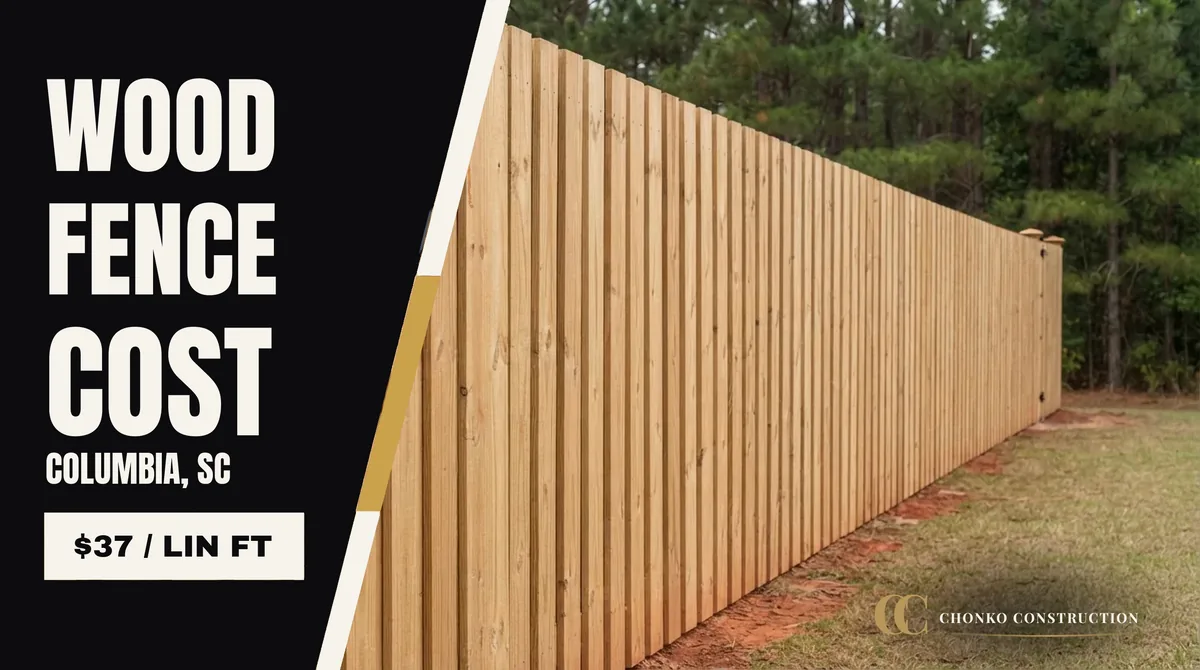
Wood Fence Cost in Columbia, SC (2026)
The Midlands default, and the ten different builds hiding behind the phrase.
Read the guide arrow_forward
Vinyl Fence Cost in Columbia, SC (2026)
Wood's price without wood's maintenance, and the 19 styles in the line.
Read the guide arrow_forward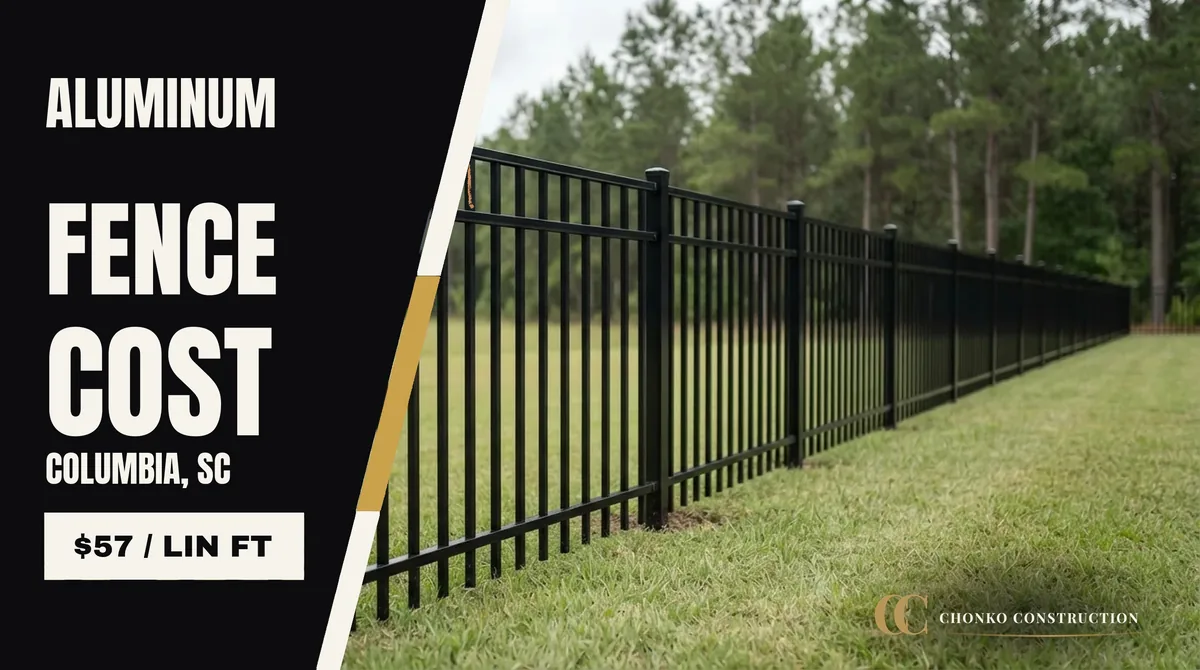
Aluminum Fence Cost in Columbia, SC (2026)
Ornamental, pool-code, and the one material that follows a slope without stepping.
Read the guide arrow_forward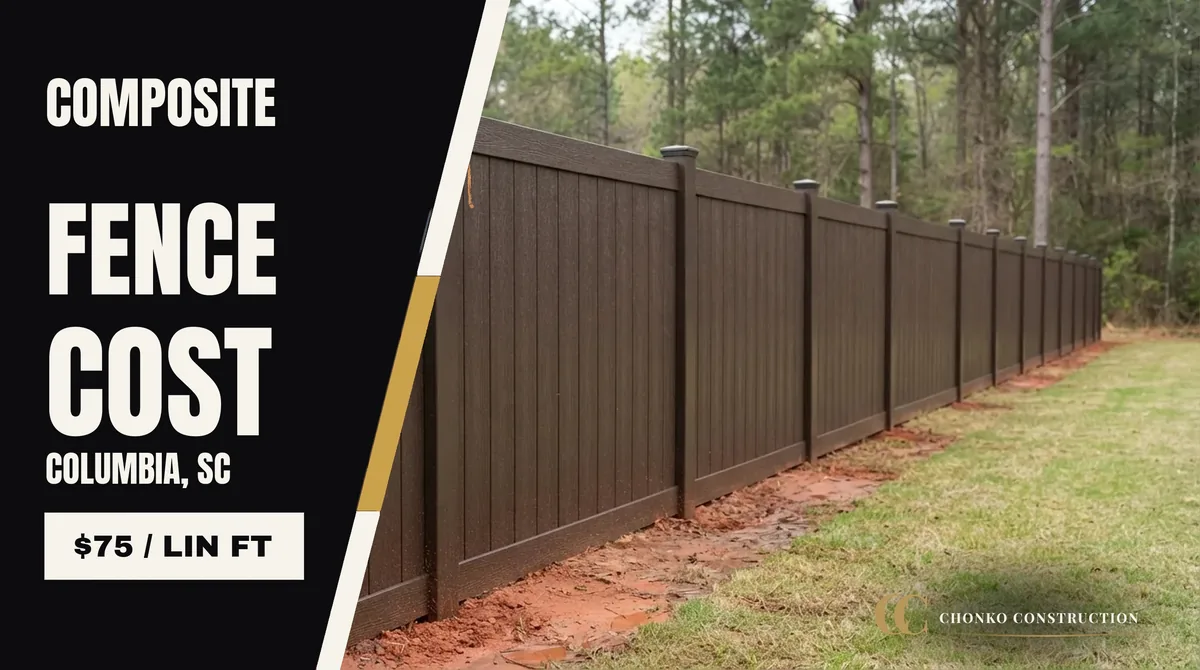
Composite Fence Cost in Columbia, SC (2026)
The stained-wood look that never gets stained. Three real brands, and that is all.
Read the guide arrow_forward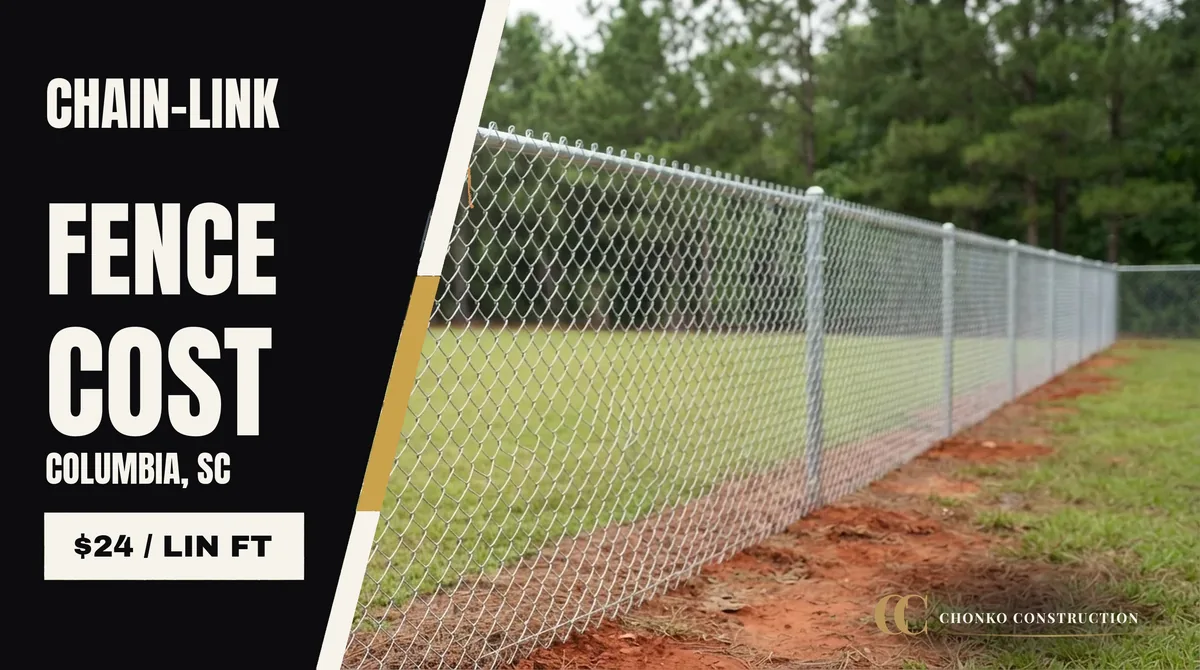
Chain-Link Fence Cost in Columbia, SC (2026)
The cheapest way to close in a yard, and where the money goes instead.
Read the guide arrow_forwardEvery material we install, with what each one actually costs.
Frequently Asked Questions
How much does a mixed-material fence cost in Columbia, SC?add
It is quoted per project rather than per foot, because the thing driving the number is usually the masonry, not the fence. Each column is a footing, a build and a cap, so a run with two entrance columns and the same run with eight columns are nowhere near the same price. The fence between the columns prices at that material's normal rate. The five single materials are priced in the fence cost guide.
What is a mixed-material fence?add
A fence that combines two or more materials on purpose. Site-built: masonry columns with wood, aluminum or vinyl sections spanning between them, or solid panels below with open spindles above. Manufactured: a panel system that arrives already combining two materials, like an aluminum frame with vinyl infill.
Do stone or brick fence columns need footings?add
Yes. A masonry column is a structure and it gets a footing sized for it. That is the main reason a columned fence has a layout stage before anything is dug, and it is why this is builder work rather than a fence order.
Can you match new fence sections to columns that are already there?add
Usually. Existing columns almost never land on a convenient interval, so the sections get built to the bays that actually exist rather than to a stock panel width. That is straightforward with wood and harder with manufactured panels, which come in fixed lengths and do not shorten gracefully.
Is a mixed-material fence more expensive than a single material?add
Per foot, usually. Overall, not always. Masonry columns are expensive and they are also what makes the fence look like an entrance. Running an upgraded material only where it is seen from the road and something plain along the back line is a common way a mixed project lands below a single-material one.
What is the cheapest way to get the mixed-material look?add
A manufactured hybrid panel. The Catalyst line carries three: Riverside (matte-black aluminum frame with vinyl infill, vertical or horizontal, optional screen topper), Savannah (gap-free vinyl privacy two-thirds up with overhead screen panels), and Stockton (solid vinyl below, black aluminum balusters above). They are ordered as systems, so they price much closer to a vinyl fence than to a columned build.
How do you hang a gate between two stone columns?add
Off a steel post or a hinge plate that was set into the column while it was being built, not drilled into the finished stone afterwards. That has to be planned at the masonry stage, because correcting it later means opening a column. Entrance gates on columned fences are usually wide enough for a vehicle, which makes them doubles.
Can I have privacy without the fence feeling like a wall?add
That is exactly what the privacy-below, open-above build is for: a solid section for the lower two-thirds and black aluminum balusters or a decorative screen panel over the top. The sightline stays blocked where people actually look through, and light and air come over the top. On a pool run it usually looks better than full-height privacy.
Have a project in mind?
See the full scope and pricing, or book a free phone consultation. No estimate pressure.