

Guide
How to Measure a Deck (Before You Call for a Price)
A simple way to measure your deck (square footage, shape, and height off the ground) so you can pull a real ballpark from our Columbia deck cost guide before you ever pick up the phone.
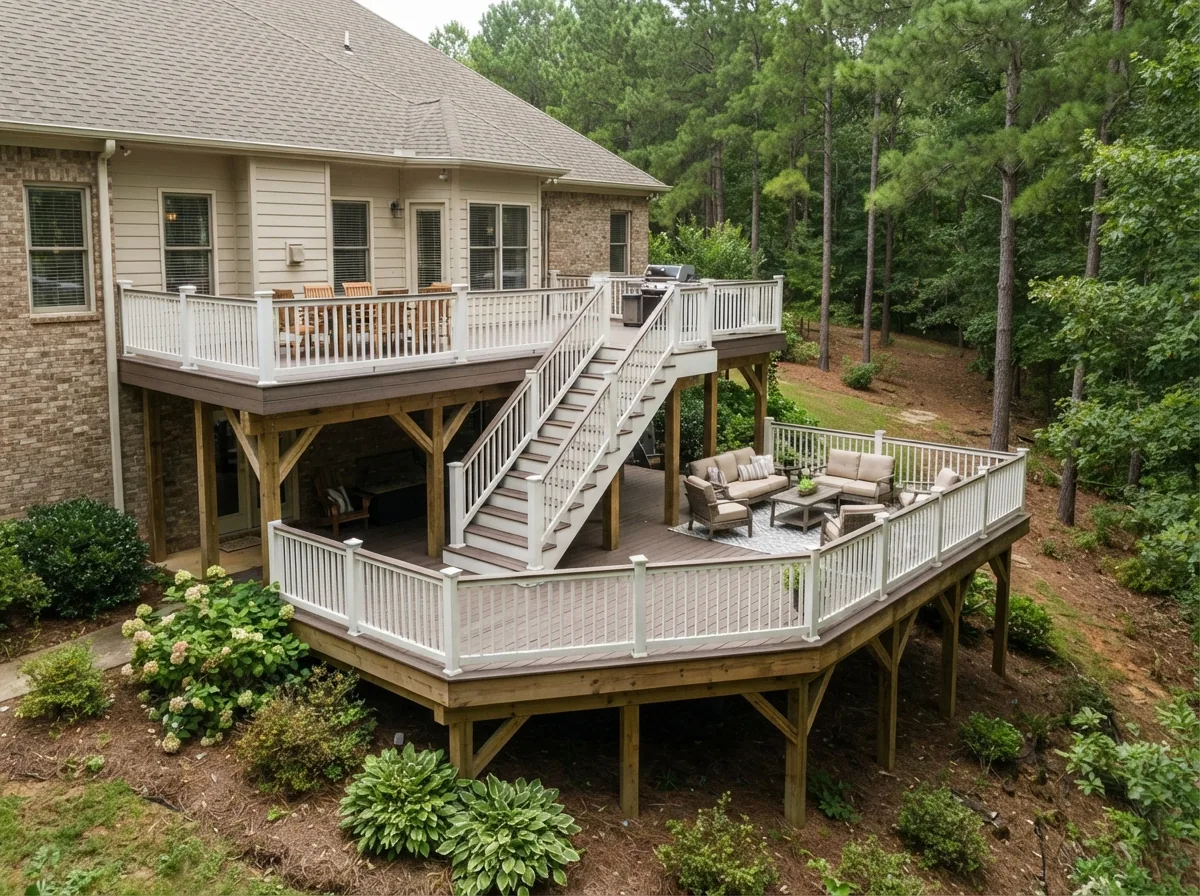
Measuring a deck yourself comes down to three numbers: how big it is, what shape it is, and how high it sits off the ground. Get those on paper and you can check a real ballpark against our deck cost guide before you ever call, no site visit needed.
Five minutes with a tape measure and a scrap of paper is all it takes. Here is exactly what to write down, and what each number does to the price.
1. Measure the footprint (square footage)
Square footage is the single biggest driver of deck price, because most of the cost scales with it.
- Measure the length and the width in feet.
- Multiply them: length × width = square feet.
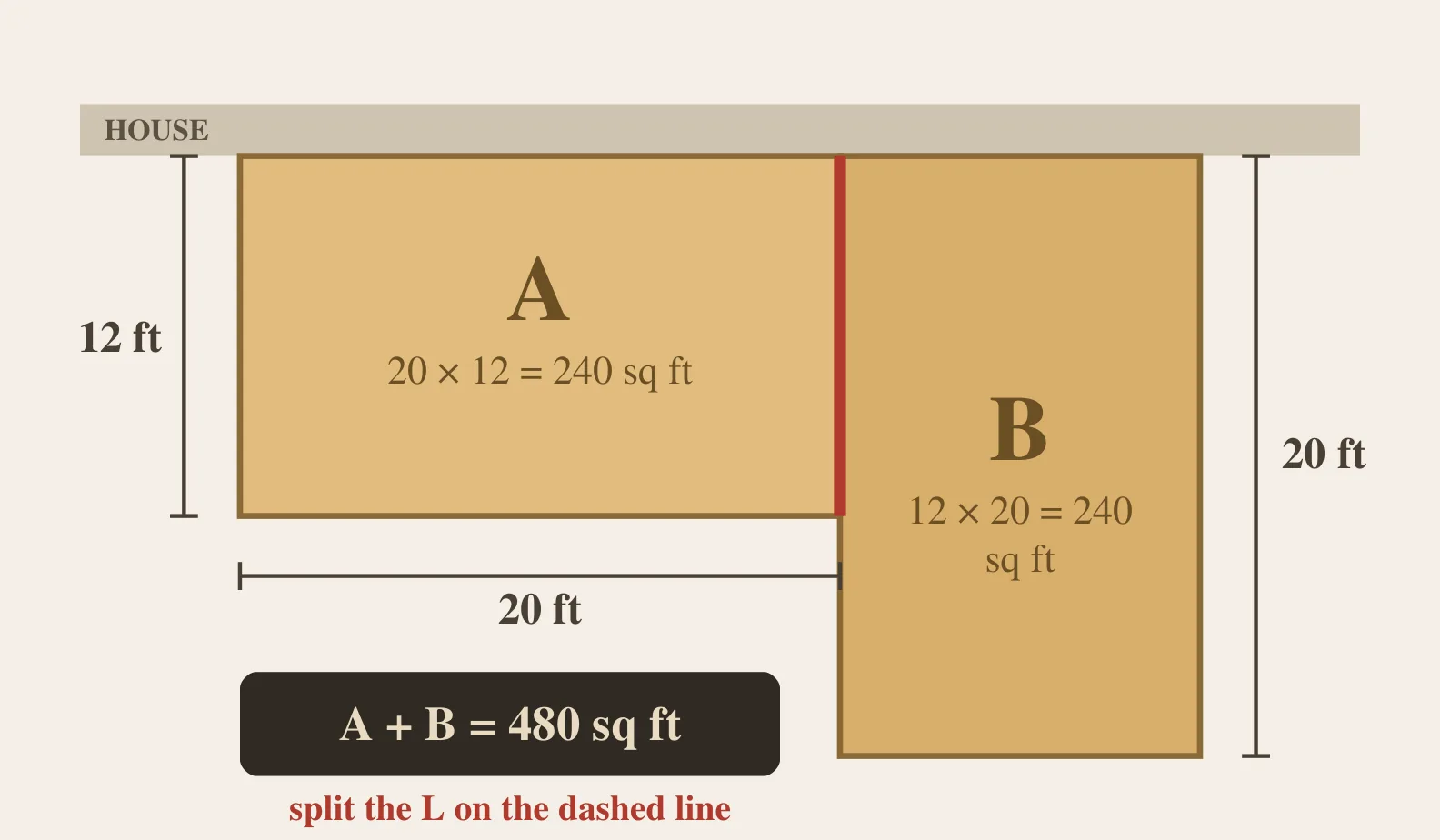
- For an L-shape or anything irregular, break it into rectangles, measure each, and add them up.
A typical Midlands deck runs 200 to 500 square feet. Write your number down. It plugs straight into the cost guide.
Tip, measure from the sky. If your deck is already there, or you're sizing a spot in an open part of the yard, Google Earth is a great shortcut. The free desktop version (Google Earth Pro) has a ruler tool that measures distance and area right off the satellite image. Trace the footprint and it gives you the square footage without a tape measure. Treat it as a solid estimate; tree cover and older imagery can throw it off a little.
2. Note the shape
A clean rectangle frames faster and cheaper than a multi-level or angled design. Jot down whether yours is:
- A simple rectangle or square
- An L-shape or wrap-around
- Multiple levels, a step down to a lower platform
Shape doesn't change the square footage, but it changes the framing and labor, so it moves the price.
3. Measure the height off the ground
This one surprises people, and it is the number most often measured to the wrong place. Measure from the ground to the top of the deck surface, not to the underside of the frame.
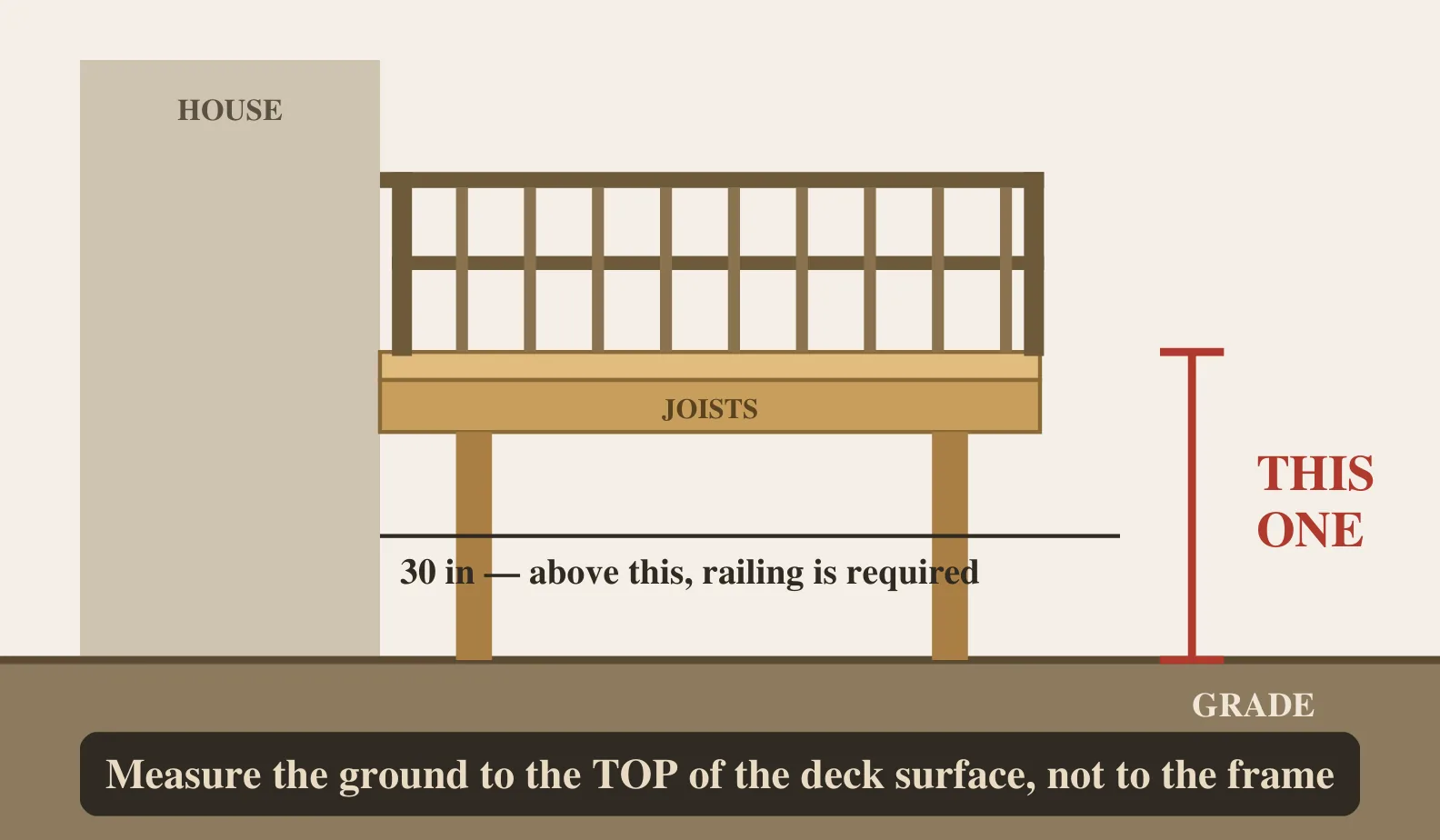
Height drives:
- Footings and posts, taller decks need deeper footings and longer posts.
- Stairs, the higher the deck, the more steps, and the more material.
- Railing, anything more than 30 inches off the ground needs code-compliant railing, which adds linear footage and cost.
A deck 18 inches off the ground and one 8 feet up can be the same square footage and very different prices.
4. Count the extras
A few quick notes round out your measurements:
- Stairs, roughly how many, and where do they land?
- Railing, measure the linear feet around the open sides.
- Attached or freestanding, does it tie into the house or stand on its own?
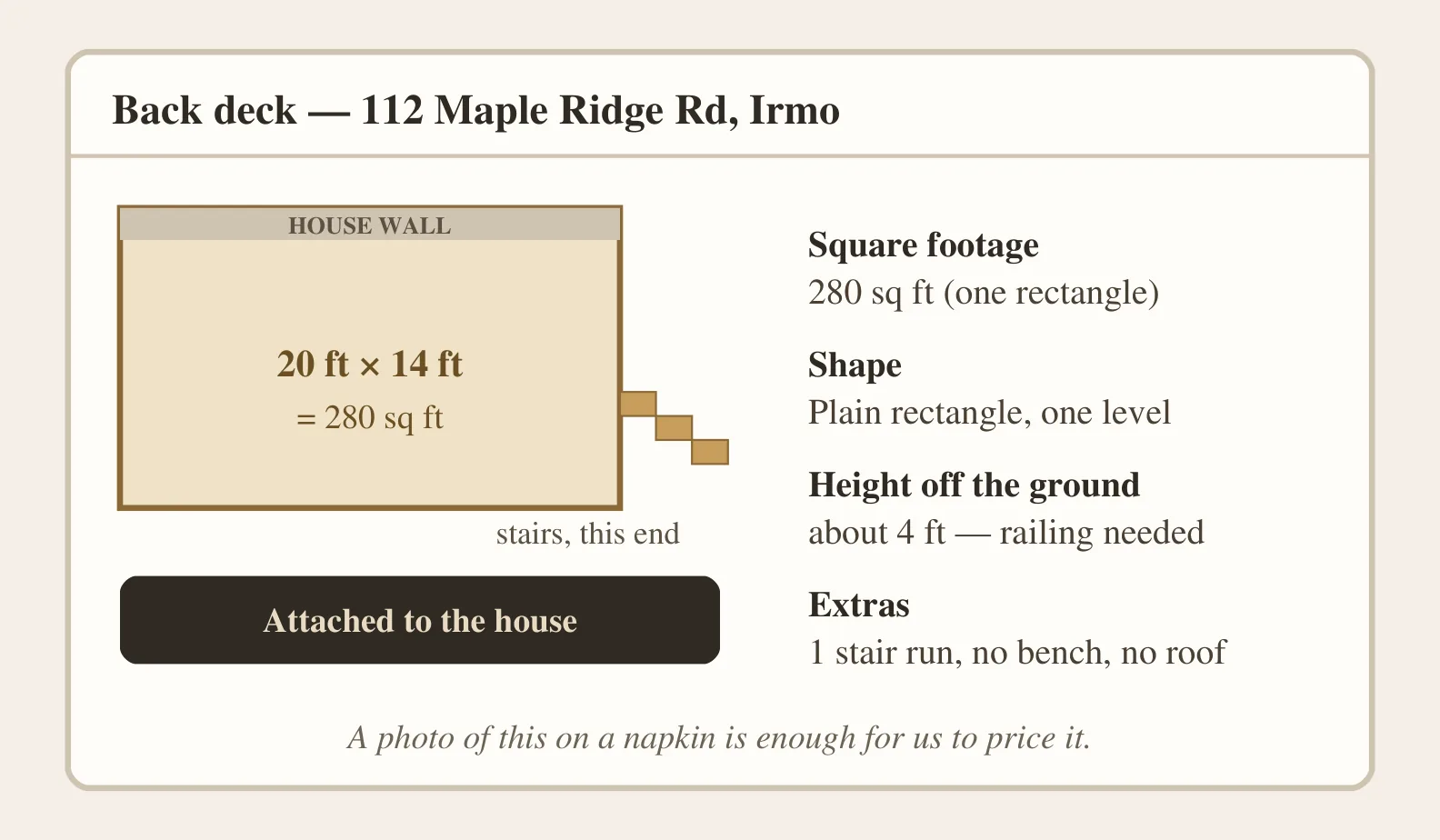
What a finished measurement looks like
This is all we need to put a real number on a deck. Sketch, four figures, one note about how it meets the house:
Turn your numbers into a ballpark
With square footage, shape and height written down, our deck cost guide does the rest. It breaks the price down by the square foot so you can land on a realistic range before you talk to anybody.
Then send us the sketch. A measurement gets you a ballpark; it does not get you a quote. The exact number depends on what we find on site, the slope, the soil, the access, and how it attaches to the house, and it only becomes real once it is in writing. But a photo of your sketch is enough for us to tell you whether the ballpark holds, and that conversation is a lot shorter than starting from scratch.
If the numbers are awkward to get, or you would rather skip the tape measure entirely, call us and we will come measure it ourselves.
Have a project in mind?
See the full scope and pricing, or book a free phone consultation. No estimate pressure.