

Comparison
Composite vs. Pressure-Treated Decking in Columbia, SC
Composite or pressure-treated for a Midlands deck? Cost, upkeep, lifespan, heat underfoot, and how each one actually behaves in South Carolina sun and humidity.
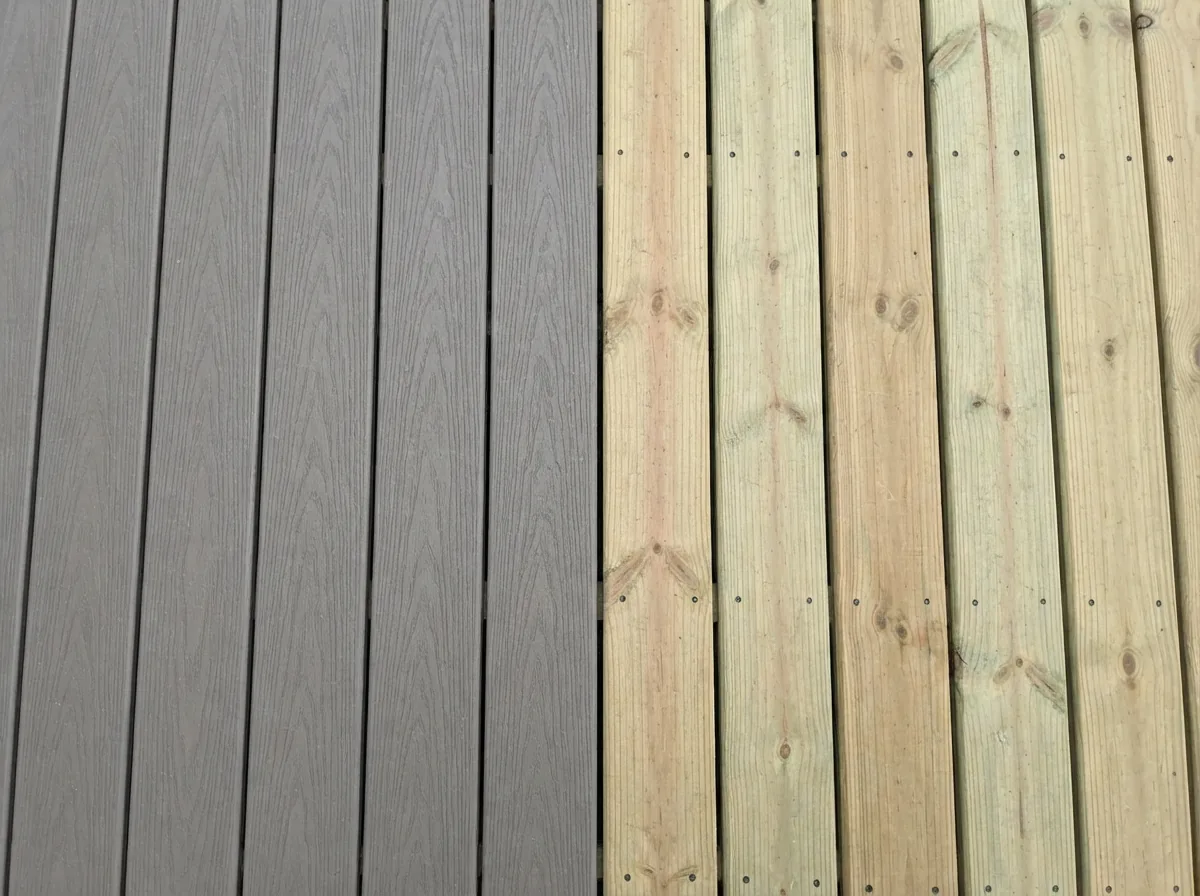
This is the first real decision on almost every Midlands deck, and it is not close to a tie. Pressure-treated wood costs less to build and more to own. Composite costs more to build and almost nothing to own. Nearly everything else follows from that.
The short answer
If you plan to be in the house long enough to stain a wood deck three or four times, composite usually wins on total cost. If you are building to sell in the next few years, or the budget is the constraint, pressure-treated is the honest pick and there is nothing wrong with it.
You are choosing a surface, not a deck
Worth clearing up first, because it changes how the price difference feels: both decks are built on pressure-treated wood. Composite decking is not structural. It cannot carry a load across a span, so the posts, beams, and joists under a composite deck are the same treated southern yellow pine that a wood deck is built from.
What you are picking is the walking surface, the railing, and the trim. That is why the two decks are much closer in price than the per-board numbers suggest, and it is why a composite deck does not last forever on its own terms. The frame under it still ages the way wood ages, which is a good argument for getting the framing details right whatever you put on top.
One spec consequence people get caught by: composite is more flexible than wood, so most manufacturers require tighter joist spacing than a wood deck needs, and tighter still if boards run diagonally. If you are converting an old wood deck to composite, the existing frame may not be spaced for it.
| Factor | Composite capped, over PT framing | Pressure-treated southern yellow pine |
|---|---|---|
| Up-front cost | Higher. It is the premium surface. | Lower, by a wide margin. |
| Upkeep | Wash it. | Clean and re-coat on a cycle, forever. |
| Cost to own | Effectively nothing after the build. | Real money every re-coat, for the life of the deck. |
| Warranty | 25 to 30 years on most capped lines. | None on the surface. The treatment warranty covers rot, not looks. |
| In full sun | Runs hotter. Every line does, some more than others. | Stays closer to air temperature. |
| Color | Holds it. Year ten looks like year one. | Silvers out in about two years unstained. |
| Look | Engineered, in a wide range of finishes including wood grain. | Real wood, knots and all. |
| Splinters | None. The cap is a shell. | Yes, as the finish ages. |
| Damage | Scratches and grease stains are hard to undo. | Sand it, re-coat it, move on. |
| Repairs | Swap a board. Matching an old color can be a problem. | Swap a board, then match the finish. |
- Up-front cost
- Higher. It is the premium surface.
- Upkeep
- Wash it.
- Cost to own
- Effectively nothing after the build.
- Warranty
- 25 to 30 years on most capped lines.
- In full sun
- Runs hotter. Every line does, some more than others.
- Color
- Holds it. Year ten looks like year one.
- Look
- Engineered, in a wide range of finishes including wood grain.
- Splinters
- None. The cap is a shell.
- Damage
- Scratches and grease stains are hard to undo.
- Repairs
- Swap a board. Matching an old color can be a problem.
- Up-front cost
- Lower, by a wide margin.
- Upkeep
- Clean and re-coat on a cycle, forever.
- Cost to own
- Real money every re-coat, for the life of the deck.
- Warranty
- None on the surface. The treatment warranty covers rot, not looks.
- In full sun
- Stays closer to air temperature.
- Color
- Silvers out in about two years unstained.
- Look
- Real wood, knots and all.
- Splinters
- Yes, as the finish ages.
- Damage
- Sand it, re-coat it, move on.
- Repairs
- Swap a board, then match the finish.
Composite runs hotter in the sun. All of it does
This is the complaint we hear most from people who already own a composite deck, and it is the thing the sales literature is quietest about. It is not a bad-brand problem or a dark-board problem: composite in general runs warmer in full sun than wood does.
The reason is physical. Composite board is dense and solid, so it takes on the sun's heat and holds it. Wood is a poor conductor and full of air, so it stays nearer air temperature and sheds heat faster. On a July afternoon in Columbia, on a west-facing deck with no cover, a composite deck is noticeably warm to stand on. Every major manufacturer publishes guidance on it, which tells you it is real.
Two things soften it, and both are decided before you buy:
- Cover and shade. A screened porch, a pergola with real coverage, or an afternoon shade tree takes it off the table almost entirely.
- Color and line. A light board does run cooler than a charcoal one, and some manufacturers now market specific lines on surface temperature. Neither makes composite cool — they make a warm deck less warm. Ask for the manufacturer's own numbers rather than a showroom opinion.
It also has a clock on it. Composite gives the heat up quickly once the sun moves off, so an evening deck is a non-issue. It is the mid-afternoon that you notice.
Railing is where the budget actually splits
People compare deck boards and then get surprised by the quote, because railing is a large share of the cost on a small deck and it rarely follows the same material as the floor.
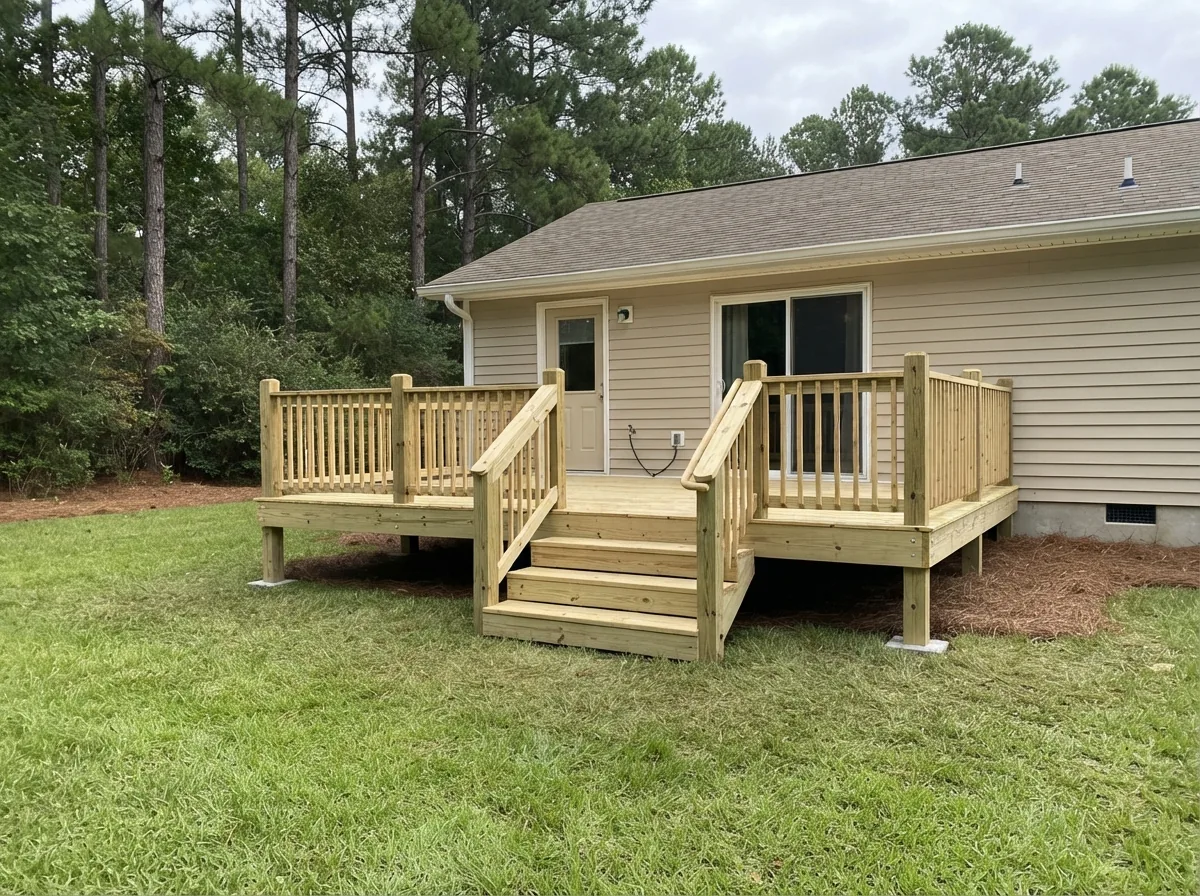
On a wood deck, the default is a wood railing, and here is the honest part: the railing is the highest-maintenance thing you will own. The deck floor is a flat surface you can pressure-wash and roll a coat onto in an afternoon. A railing is posts, top and bottom rails, and a baluster every few inches, all of which have to be brushed by hand and all of which weather from every side. Most wood decks we see that have been let go were let go at the railing first.
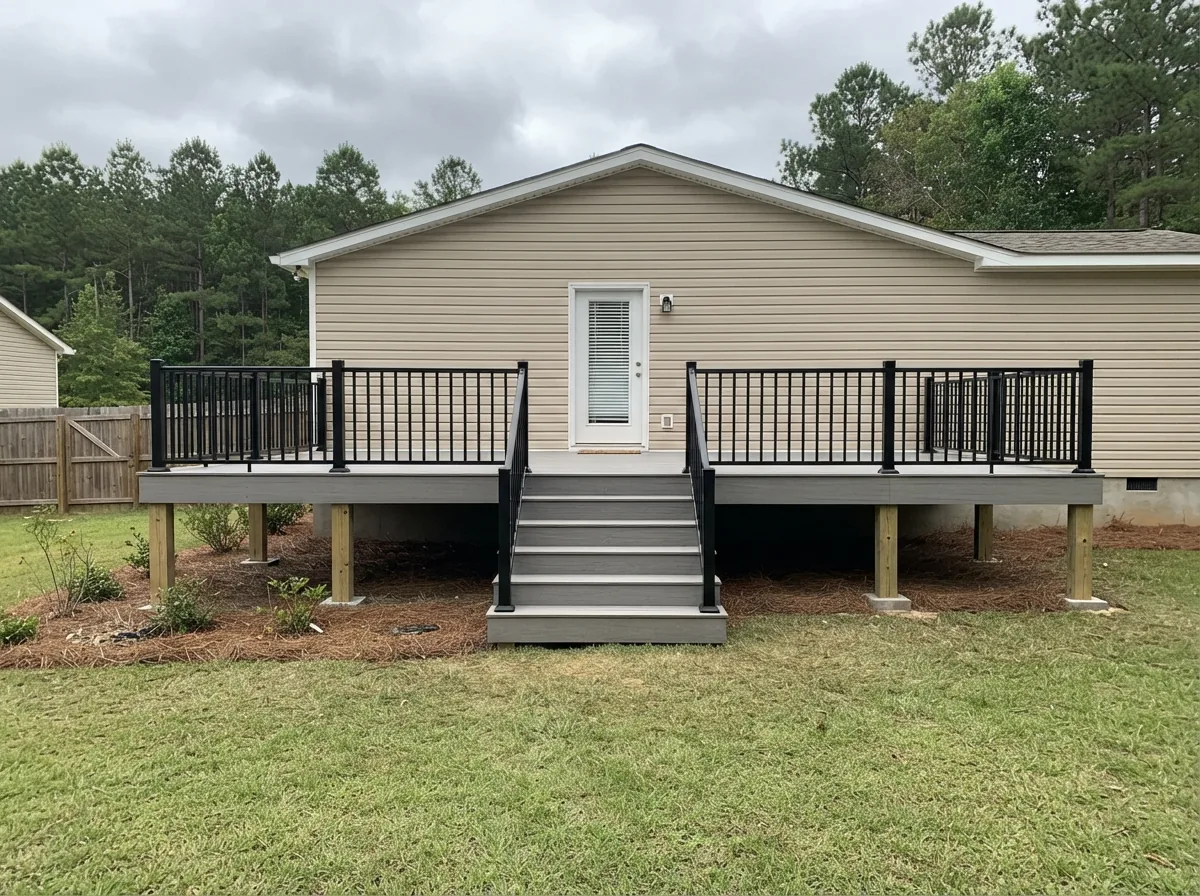
On a composite deck, the railing is usually aluminum or a composite system rather than wood, because there is no sense in bolting an annual chore onto a surface you bought to stop maintaining. That is the right call, and it is also the line item that moves the number. Aluminum railing with black balusters is the common Midlands choice and it does two useful things: it never needs a finish, and it disappears visually, so a deck that looks at trees keeps looking at trees.
If a wood deck is the pick and you want to spend money in one smart place, spend it here: a metal railing on a pressure-treated deck is a legitimate combination, and it removes most of the future work.
| Factor | Wood railing PT pine, site-built | Metal or composite railing factory system, installed in sections |
|---|---|---|
| Up-front cost | Cheapest railing there is. | A real step up, and the line item people miss. |
| Upkeep | Every baluster, brushed by hand, on a cycle. | Wash it. That is the whole job. |
| How it ages | Silvers and checks first, before the deck floor does. | Powder coat holds for the life of the deck. |
| The view | Wide wood balusters block a lot of it. | Thin black pickets and cable read as almost nothing. |
| Lines we install | Site-built from PT stock. | Trex Enhance and Select, TimberTech Impression Rail, Fiberon Brio, Fortress Fe26 steel, Westbury and Key-Link aluminum, Feeney cable. |
| Best on | A budget wood deck, or a rail you plan to replace later. | Any composite deck, and any deck that looks at something. |
- Up-front cost
- Cheapest railing there is.
- Upkeep
- Every baluster, brushed by hand, on a cycle.
- How it ages
- Silvers and checks first, before the deck floor does.
- The view
- Wide wood balusters block a lot of it.
- Lines we install
- Site-built from PT stock.
- Best on
- A budget wood deck, or a rail you plan to replace later.
- Up-front cost
- A real step up, and the line item people miss.
- Upkeep
- Wash it. That is the whole job.
- How it ages
- Powder coat holds for the life of the deck.
- The view
- Thin black pickets and cable read as almost nothing.
- Lines we install
- Trex Enhance and Select, TimberTech Impression Rail, Fiberon Brio, Fortress Fe26 steel, Westbury and Key-Link aluminum, Feeney cable.
- Best on
- Any composite deck, and any deck that looks at something.
How each one behaves in the Midlands
South Carolina is hard on a deck: humidity, hard afternoon sun, and storms that soak it and then bake it dry.
Capped composite does not absorb water, so it does not rot, cup, or splinter, and the shell holds its color instead of bleaching out. Two honest caveats. It is low-maintenance, not maintenance-free: a shaded, north-facing composite deck under trees will still grow mold and algae on the surface and needs washing, because the mold is living on pollen and dirt sitting on the board, not on the board itself. And the cap is a shell, so deep scratches and grease from a grill are permanent in a way they are not on wood.
Pressure-treated pine handles the climate fine as long as it gets its finish on schedule. Left alone, it silvers out in about two years and starts checking, and eventually a board needs replacing. Two things worth knowing going in:
- New treated lumber has to dry before it takes a finish. It arrives wet with treatment. Seal it too early and the coat will not bond. Plan on waiting, then staining, and do not let the wait become never.
- Wet PT boards go down tight, butted edge to edge, because they shrink as they dry. The gaps open on their own over the first few months. A wood deck installed with gaps already in it ends up with gaps you can drop a phone through.
When each one wins
Choose composite when
- You want to stop maintaining a deck surface, permanently.
- You are staying in the house long term.
- You want it to look the same in year ten as year one.
- Splinters are a real consideration for how the deck gets used.
Choose pressure-treated when
- The budget is the deciding constraint.
- You are selling within a few years.
- You want the option to change the color later, which composite does not give you.
- You would rather have real wood and you will actually finish it. Worth knowing this one cuts both ways: composite comes in wood-grain finishes now, and a good one is convincing, so "I want it to look like wood" is not by itself an argument for pine.
Full numbers for both are in the composite deck cost guide and the pressure-treated deck cost guide. If you are sizing a deck before pricing it, how to measure a deck covers that first.
Frequently Asked Questions
Is composite decking worth the extra cost?add
It depends almost entirely on how long you're staying. Composite costs more up front but you never stain it, so if you'd otherwise re-coat a wood deck three or four times, composite usually comes out ahead on total cost. If you're selling in a few years, pressure-treated is the better spend.
How long does pressure-treated decking last?add
A pressure-treated deck that gets cleaned and re-coated on schedule lasts a long time in the Midlands; one that never gets finished grays, checks, and starts needing boards replaced much sooner. The structure underneath typically outlives the surface either way.
Does composite decking get hot in the South Carolina sun?add
Yes, and every line does to some degree, not just the dark ones. Composite board is dense and solid, so it takes on the sun's heat and holds it where wood sheds it. Cover or afternoon shade takes it off the table almost entirely, and a light board runs cooler than a charcoal one, but neither makes composite cool. It gives the heat up quickly once the sun moves off, so it is a mid-afternoon issue rather than an evening one.
Can you put composite decking on an existing wood deck frame?add
Sometimes, but check the joist spacing before you budget for it. Composite is not structural and flexes more than wood, so manufacturers require tighter joist spacing than a wood deck needs, and tighter again if the boards run diagonally. An older frame built at wider spacing may need joists added, which changes the arithmetic on a re-deck.
Does a composite deck still need a wood frame?add
Yes. Composite decking is a surface, not a structural member, so the posts, beams and joists under it are pressure-treated wood on both kinds of deck. You are choosing the walking surface, the railing and the trim, which is why the two options are closer in total price than the per-board cost suggests.
Is composite decking maintenance-free?add
Low-maintenance, not maintenance-free. You never stain or seal it, which is the whole point. But a shaded deck under trees will still grow mold and algae on the surface, because that is living on pollen and dirt sitting on the board rather than on the board itself, so it needs washing. Deep scratches and grill grease are also harder to undo than on wood, which you can sand.
Have a project in mind?
See the full scope and pricing, or book a free phone consultation. No estimate pressure.