

Cost Guide
Composite Deck Cost in Columbia, SC (2026 Guide: Trex, TimberTech, Fiberon & More)
What a composite deck costs in Columbia and the Midlands, how the board lines from Trex, TimberTech, Fiberon, Deckorators and Azek compare, what railing adds, and where the money actually goes.
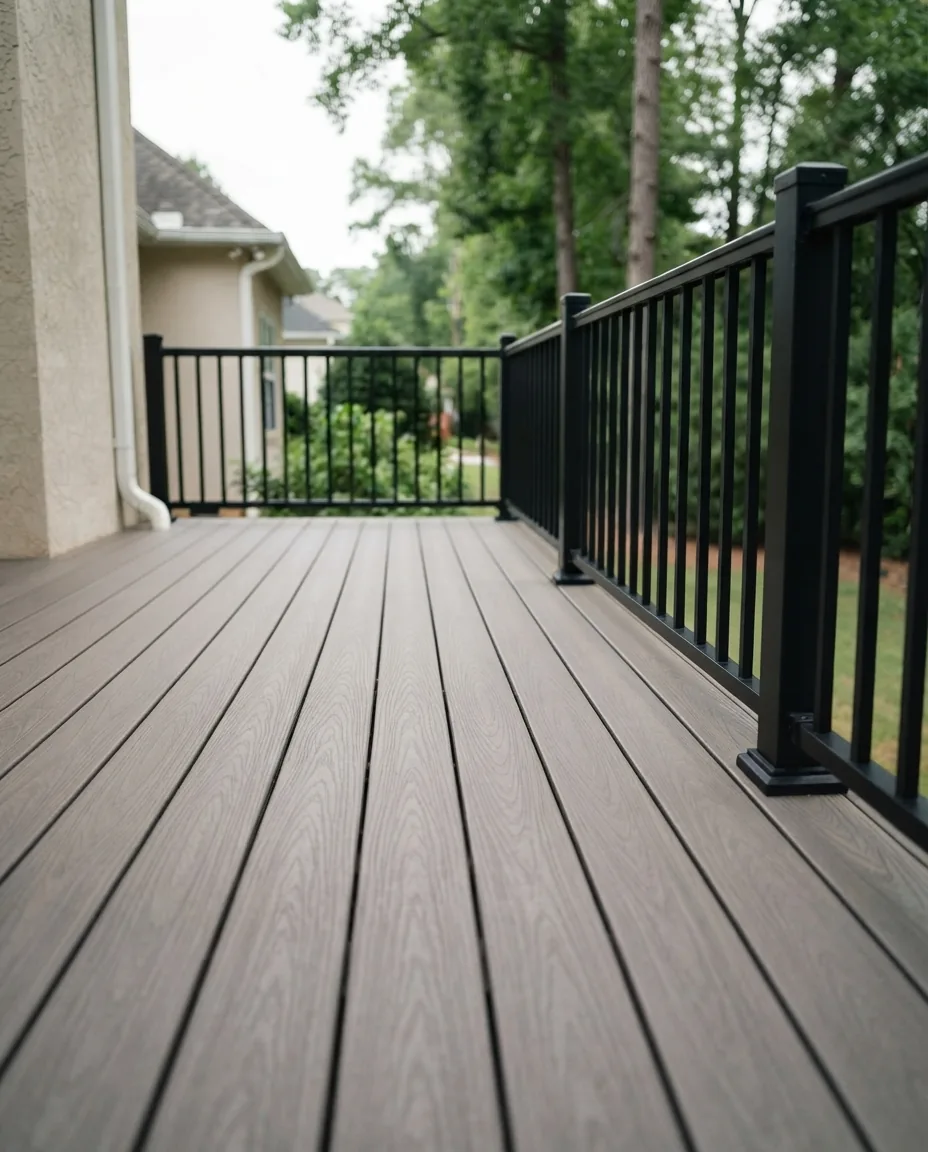
Composite decking costs more up front than pressure-treated wood and less over its life, because you never stain it. A composite deck in Columbia starts around $69 per square foot installed, which puts a typical 200 to 500 square foot deck somewhere around $13,800 to $34,500. That spread is mostly size. What moves the price per square foot is which board line you pick and what you do for railing, and those are the two decisions this guide is really about.
Chonko Construction is a licensed South Carolina home builder (license #52210). We build composite decks across Columbia and the Midlands.
What you're paying for
Composite boards are a wood-flour and polymer blend with a capped outer shell. That shell is what does the work: it doesn't absorb water, so the board doesn't rot, cup, or splinter, and it holds its color instead of graying out. That's why the maintenance line on a composite deck is a hose and a bucket rather than a yearly staining weekend.
The trade is the up-front number. You are buying the next twenty-five to thirty years of not staining, and you pay for it on day one.
The board lines, and what separates them
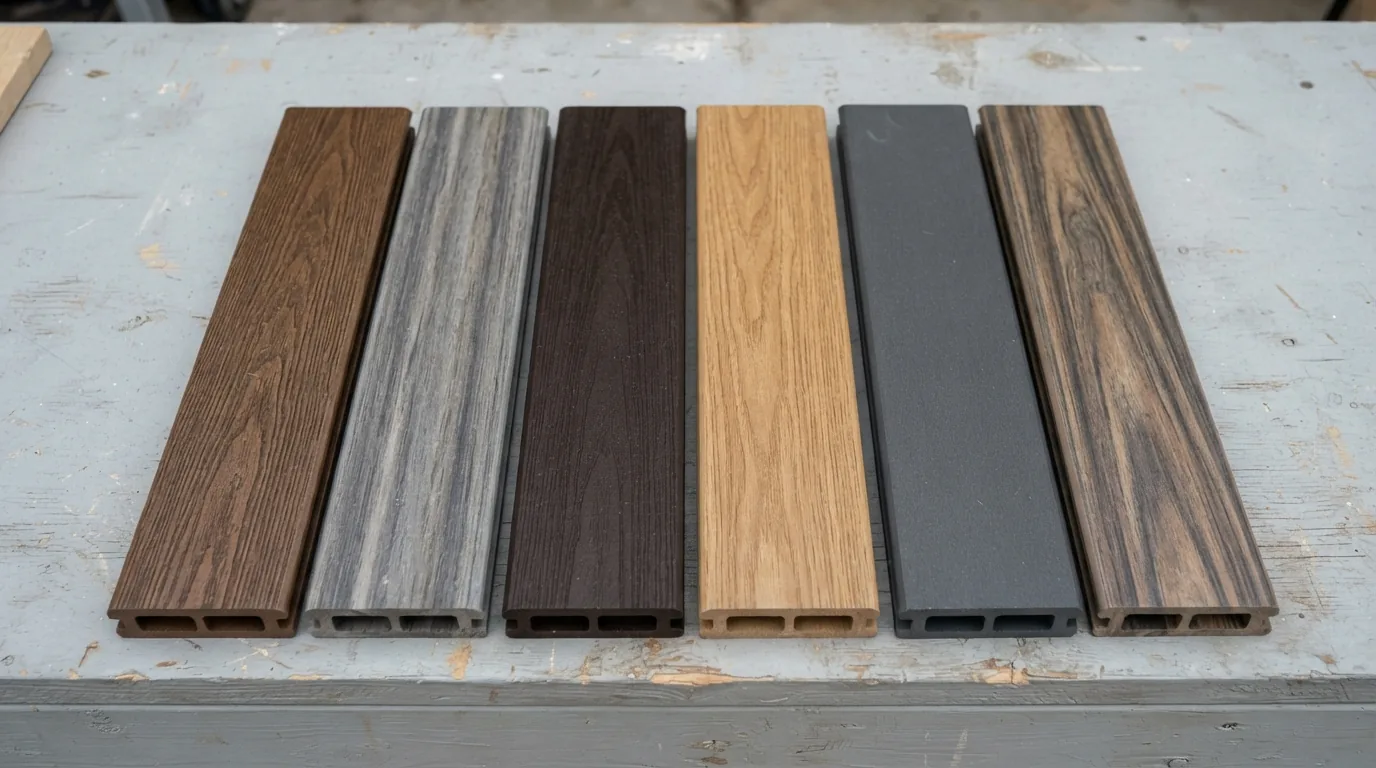
Every manufacturer runs a good-better-best ladder, and the rungs are real. Moving up buys you a deeper, more varied grain, more capping, better heat behavior, and a longer warranty. Here is the landscape you will actually be choosing from, cheapest to dearest within each brand.
| Brand | Board line | Core | Warranty | Cost |
|---|---|---|---|---|
 | Enhance | Capped wood-composite | 25 yr | $$ |
| Select | Capped wood-composite | 35 yr | $$ | |
| Transcend | Capped wood-composite | 50 yr | $$$ | |
| Signature | Capped wood-composite | Top of the Trex range | $$$$ | |
 | Prime+ / Terrain | Capped wood-composite | Varies by line | $$ |
| Reserve / Legacy | Capped wood-composite | Varies by line | $$$ | |
 | Harvest | PVC, no wood flour | Up to 50 yr | $$$$ |
| Landmark | PVC, no wood flour | Up to 50 yr | $$$$ | |
| Vintage | PVC, no wood flour | Up to 50 yr | $$$$ | |
 | Good Life | Capped wood-composite | 25 yr | $ |
| Sanctuary / Concordia | Capped wood-composite | Up to 50 yr | $$$ | |
| Paramount | PVC | Varies by line | $$$$ | |
 | Trailhead / Venture | Capped wood-composite | 25 yr | $$ |
| Voyage / Vault / Vista | Mineral-based (Surestone) | 25 yr | $$$ | |
 | Infinity | Capped composite | Varies by line | $$$ |
| Apex | Capped PVC | Varies by line | $$$$ | |
 | UltraShield Naturale / Magellan | Bamboo-composite, 4-sided cap | Varies by line | $$ |
| MoistureShield | Vision / Meridian / Elevate | Solid-core capped composite | Varies by line | $$$ |
 | Enhanced Grain / Weathered Oak | Polyurethane-mineral, no wood | Varies by line | $$$$ |
Three things in that table matter more than the brand name.
Capped wood-composite vs. PVC. Most composite is wood flour blended with polymer and wrapped in a shell. PVC boards, which is what TimberTech AZEK and Fiberon Paramount are, have no wood in them at all. Nothing in the board can absorb water because there is nothing organic to absorb it. That is why PVC sits at the top of the price ladder.
Heat. This is the Midlands-specific one. A dark composite board in full August sun gets genuinely uncomfortable barefoot, and the darker and denser the board, the worse it is. TimberTech publishes that its PVC runs up to 30 degrees cooler in direct sun than competing composite, and Trex's Transcend Lineage line is built around the same problem. If your deck faces west with no cover, this belongs near the top of your list, not the bottom.
Deckorators is doing something different. Its Voyage, Vault and Vista lines use a mineral core called Surestone instead of wood flour, which is why they behave better on wet and hot decks than the price would suggest.
A few more worth knowing about, because they solve problems the big three don't. MoistureShield is the only composite rated for ground contact and full submersion, which matters on a low deck close to wet Midlands clay or anything near water. NewTechWood caps all four sides of the board where most brands cap three, so the underside is sealed too. And Millboard is not composite at all: it is a polyurethane and mineral board with a hand-moulded surface, and it is the one that genuinely does not read as a plastic deck when you stand on it.
Where you actually buy this in Columbia
Worth knowing before you fall in love with a board, because the answer is rarely "the manufacturer." Decking moves through two-step distribution: the brand sells a distributor, the distributor sells a lumber yard, the yard sells us. What that means for you on the ground here:
- Lowe's stocks the entry Trex lines and special-orders the rest, and carries Fortress.
- Home Depot sells Fiberon under its own Veranda label, so a board you priced as Veranda is a Fiberon board.
- Deckorators comes through Master Halco, and MoistureShield through Oldcastle, both of which are channels we already buy through on fence and paver work.
- The premium end, Millboard and Zuri, is a special order with a lead time. Worth planning around rather than discovering late.
Railing is the line item people underestimate
Railing is usually the biggest surprise on a composite quote. On a deck that needs a lot of it, a raised deck, a long run, a set of stairs, railing can rival the decking itself. It is worth deciding early rather than treating it as trim at the end.
- Matching composite railing. Same brand, same color family as your boards, heaviest visual look. It is the simplest choice and the one that reads most like a single finished system. It also blocks the most view.
- Aluminum. Thin posts and balusters, powder-coated, essentially zero upkeep. Costs more than composite railing on most decks and gives back a lot of sight line. This is the one we point people toward when the deck looks out at anything worth looking at.
- Cable. Stainless cable in an aluminum or wood frame. The clearest view of any option and the most expensive, and it needs solid, properly braced end posts because the whole system is under tension.
- Composite over a steel frame. A hybrid some manufacturers offer, sold on span and strength.
| Maker | System | Material | Why it gets specified | Cost |
|---|---|---|---|---|
| AFCO | Pro / 100-200-300 Series | Aluminum | Made in Alabama, the closest plant to us | $$ |
 | American / Outlook Series | Aluminum | Sits under Westbury on price, strong contractor channel | $$ |
| Fe26 steel / Al13 / Vertical Cable | Steel and aluminum | Powder-coated steel, which nobody else does at this price | $$ |
| Westbury | Tuscany / Riviera / VertiCable | Aluminum | The deepest style range in residential aluminum | $$$ |
 | CableRail / DesignRail | Aluminum + stainless cable | The cable system homeowners ask for by name | $$$$ |
| Atlantis Rail | RailEasy cable / Spectrum glass | Stainless and aluminum | Coastal-grade stainless, for Lake Murray water exposure | $$$$ |
 | Signature Cable / glass | Aluminum, glass, cable | Direct-ship and made to measure, the modern tier | $$$$ |
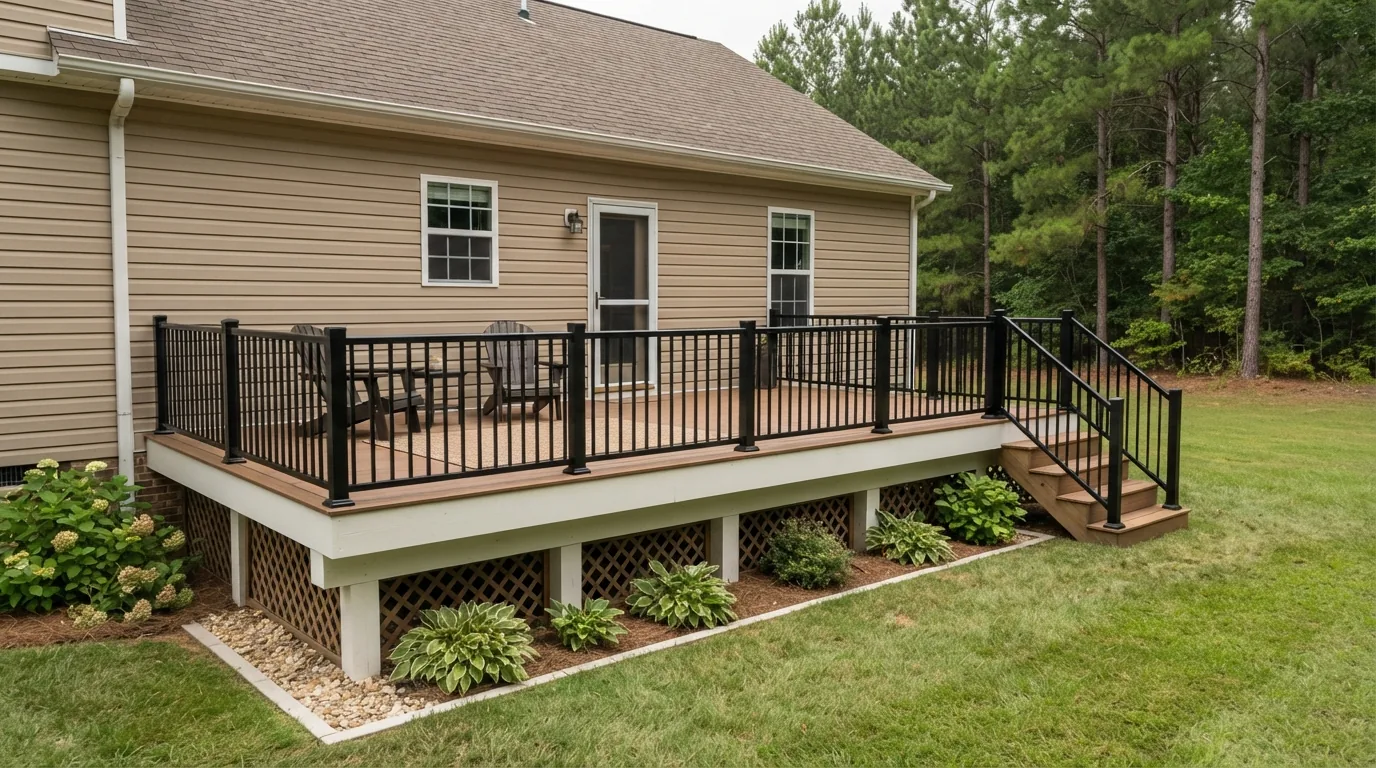
Two things to settle before you price railing. How much of it do you actually need? Code requires guards above a certain height, and a low deck may need none at all, which changes the number a lot. And where do the stairs land? Stair railing costs more per foot than straight runs because of the angles and the extra posts.
What moves the number
- Board line. Entry, mid, and premium composite lines from the same manufacturer sit meaningfully apart per square foot. The premium lines buy you deeper grain, better color variation, and a longer warranty.
- Square footage and shape. A clean rectangle frames faster and cheaper than an angled or multi-level layout.
- Height off the ground. A raised deck needs taller posts, more footings, and code-required railings and stairs.
- Railing system. Composite, aluminum, and cable all price differently, and railing is often a bigger share of the total than people expect. See the railing section above.
- Hidden fasteners. Most composite decks use a clip system so the surface stays clean. It adds material and labor over face-screwing.
- Old-deck removal. Tearing out and hauling off a failing deck is its own line.
Composite vs. pressure-treated, in one line
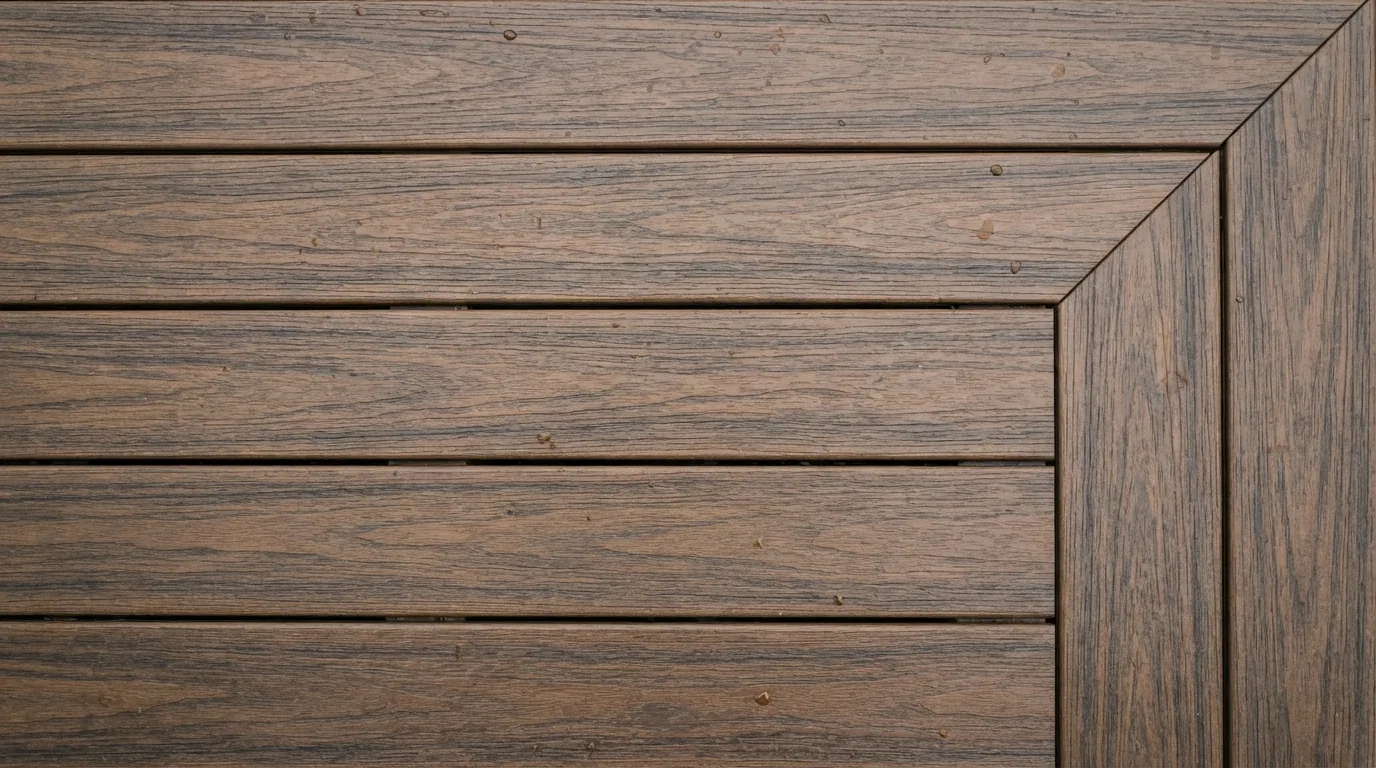
Pressure-treated costs less to build and more to own. Composite costs more to build and almost nothing to own. If you plan to be in the house long enough to stain a wood deck three or four times, the math usually favors composite. We build both and we'll tell you straight which one fits your plan. The full side-by-side is in our composite vs. pressure-treated decking comparison, and the pressure-treated deck cost guide breaks down the wood side.
What we settle first
Board line and railing are the two decisions that move a composite number most, so they are the two we settle before anything else, with real samples on the table rather than colors on a screen. A board that looks warm on a monitor can read orange in Midlands sun, and a color you love in the shade can be the one you cannot stand barefoot in August.
Planning a composite deck? Book a free phone consultation and we'll go through the lines honestly, including the ones we would talk you out of.
Frequently Asked Questions
How much does a composite deck cost in Columbia, SC?add
A composite or Trex deck in Columbia runs from about $69 per square foot installed, which puts a typical 200 to 500 square foot deck around $13,800 to $34,500. Board line, size, height, and railing move the number most. These are typical ranges, not a quote.
Is composite decking worth the higher cost?add
If you plan to keep the house long enough to stain a wood deck three or four times, composite usually wins on total cost, because you skip the staining entirely. If you're building to sell soon, pressure-treated is often the better spend. We'll talk the tradeoff through honestly on your call.
How long does composite decking last?add
Capped composite decking typically carries a 25 to 30 year warranty and holds its color over that span, because the shell doesn't absorb water. It won't rot, cup, or splinter the way untreated wood can.
Have a project in mind?
See the full scope and pricing, or book a free phone consultation. No estimate pressure.