

Comparison
Composite vs. Vinyl Fencing in Columbia, SC: An Honest Comparison
Composite or vinyl for a Midlands fence? What each one actually is, who makes it, the finishes you can get, why composite costs what it does, and how long each takes to land in your yard.
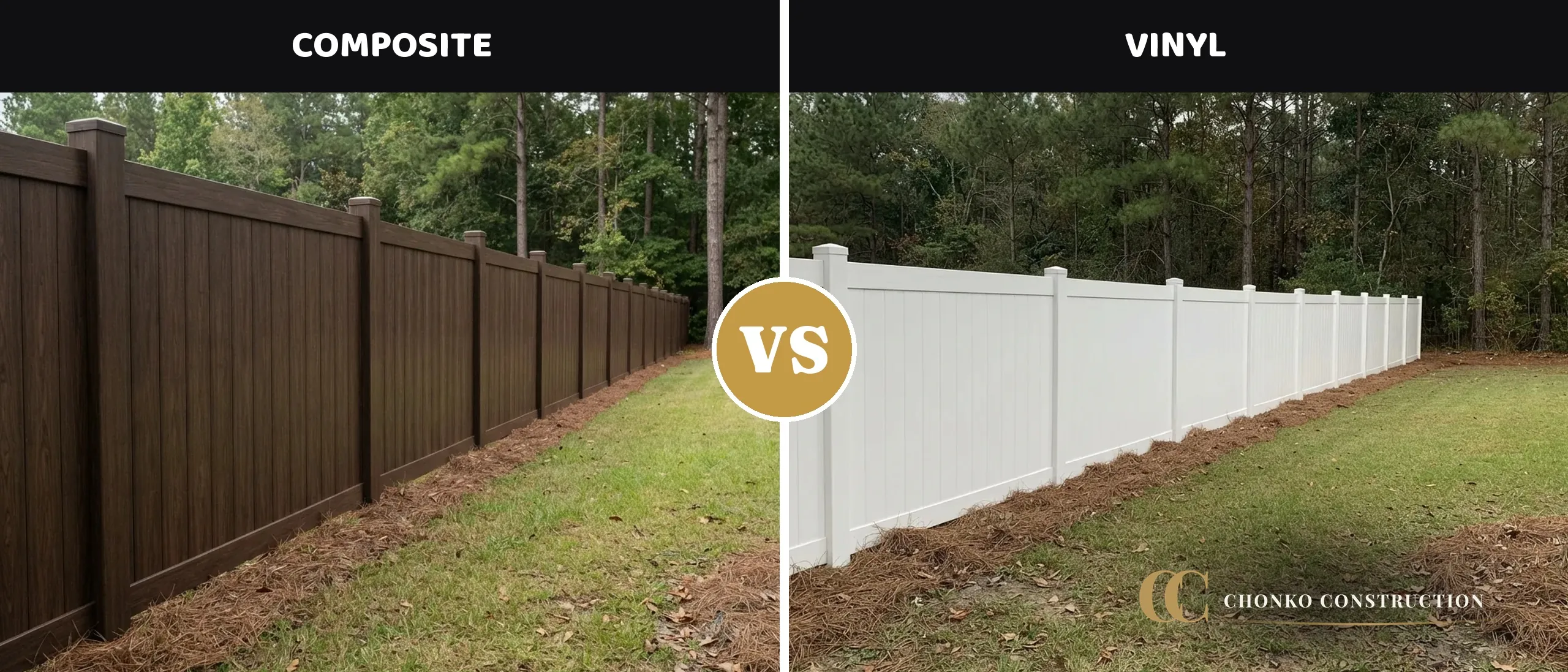
These two get compared because they answer the same question, a fence that never needs staining, but they are not two versions of the same product. Vinyl is the mainstream low-maintenance fence, sold in depth, priced in the middle of the material range. Composite is a specialty product at the top of it, bought almost entirely for one reason: it looks like stained wood and it never asks you to stain it.
What a composite fence actually is
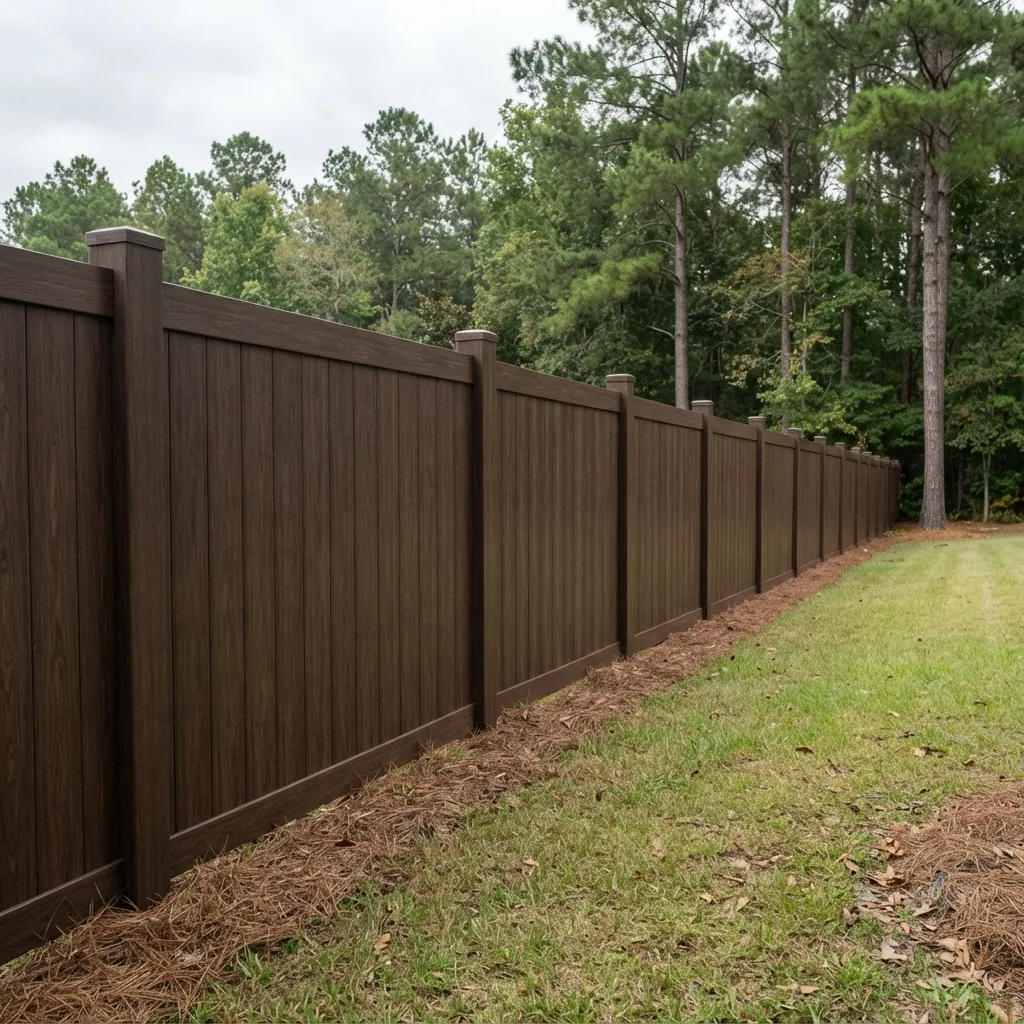
Composite is wood flour blended with recycled polyethylene and extruded into a solid board, the same material family as composite decking. The privacy lines are capped, a polymer shell wrapped around the core, which is what holds the color and keeps water out of the wood content. That solid board is the whole story: it is why the fence has real depth and grain instead of a printed-on texture, and it is also why it weighs what it weighs, freights what it freights, and costs what it costs.
It arrives as a post-and-panel system. Posts are composite or aluminum depending on the line, set in the ground like any other fence, and the panels drop between them.
The other thing to know is that the composite fence lane is genuinely thin. There are three real brands we can get to a Midlands job, and the roundup articles that list more are wrong. We checked: Fiberon is decking, railing and lighting only, with no fence line at all. SimTek is real, but it is molded HDPE that imitates stone, not a wood composite. That thinness is part of why the product prices the way it does.
Who makes it
Trex Fencing is the category anchor and the closest thing to a default. Four lines, and they are not variations on one look:
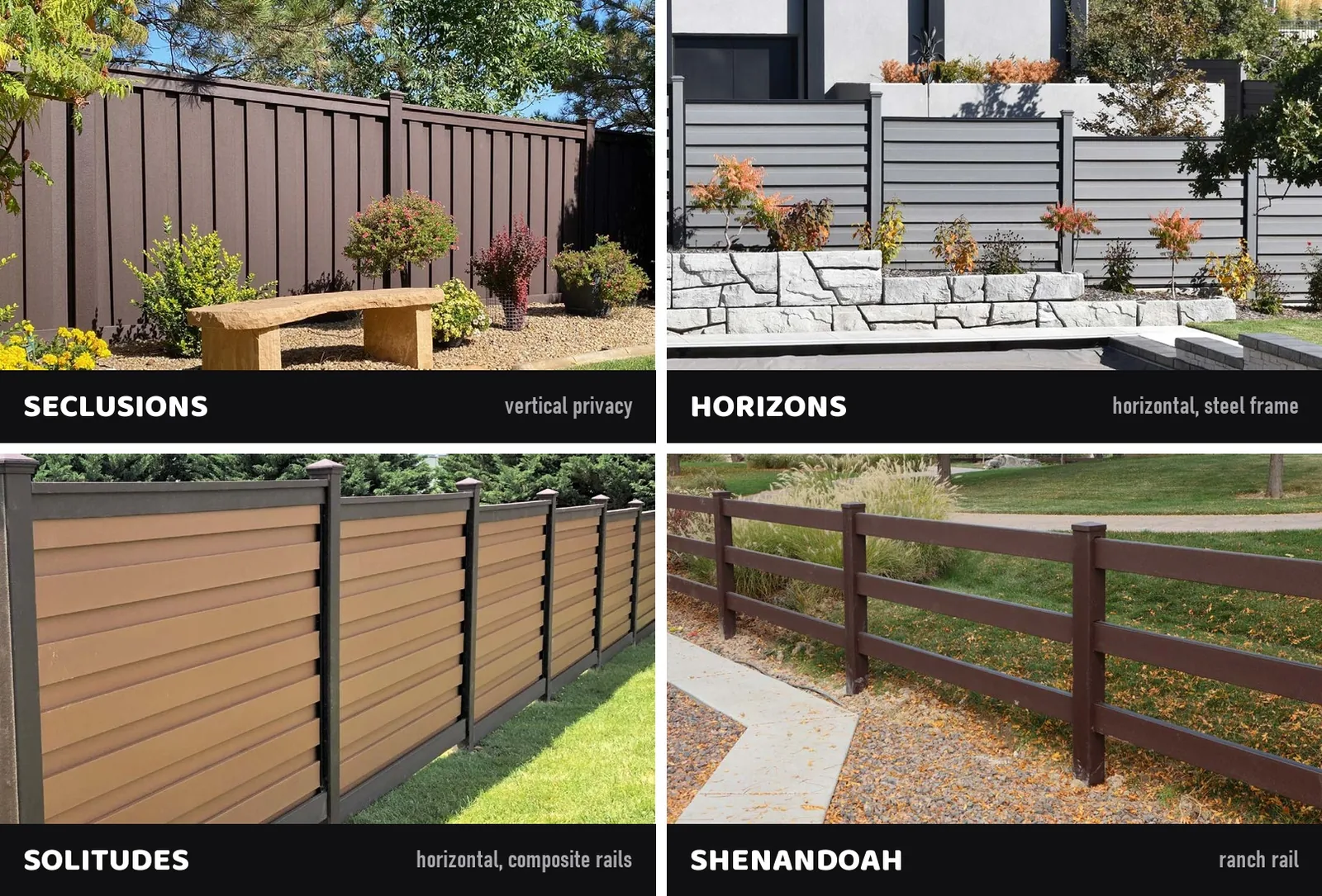
Seclusions is the vertical full-privacy line: interlocking pickets, identical on both sides, so there is no good-side-bad-side argument with a neighbor. It runs 2 to 12 feet tall on 8-foot post spacing and is rated to 130 mph. Horizons runs horizontal boards inside a black steel picture frame. Solitudes is the same horizontal look on composite top and bottom rails. Shenandoah is a ranch rail in 2-, 3- and 4-rail configurations. 95% recycled content, 25-year residential warranty.
Three colors, and they are not the color you keep. Trex publishes both, which is more honest than most:
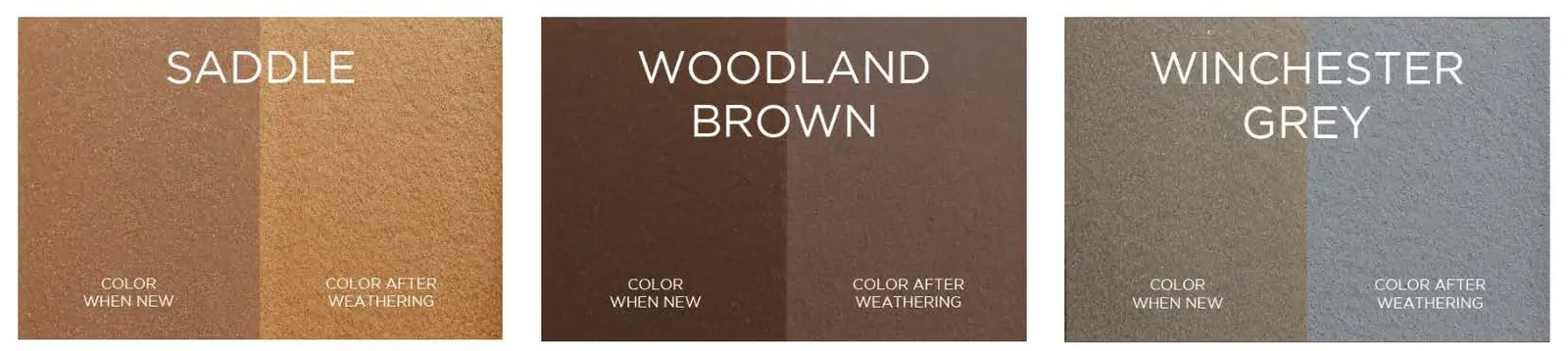
That first-season shift is real and it is worth seeing before you pick. Saddle lightens noticeably, Woodland Brown warms, Winchester Grey goes cooler and lighter. After that it holds.
The other two:
- NewTechWood UltraEasy is the value entry. Capped composite over an HDPE and wood-fiber core, aluminum posts, Classic (smooth board) and Fluted styles, boards that can be mixed and matched, and a real color range for the lane: teak, walnut, gray, mahogany, charcoal. 25-year warranty.
- Catalyst Manchester is the odd one, and worth knowing about because it is not what people mean by composite fence. It is a flat-top three-rail ornamental panel with a gloss AlumiCast finish over a composite core, so it is a fence that looks like aluminum, not wood. Black only, 4-, 4.5- and 5-foot heights, 6-foot panels. It debuted at FENCETECH in 2026, so it is new.
Why it costs what it costs
Three reasons, and none of them are markup. A solid board carries several times the material of a hollow vinyl panel the same size. That weight has to travel, because none of it is stocked in the Midlands. And with three brands in the category there is nothing competing the price down. Composite sits at the top of the fence material range and it is honest about it. The fence cost guide has the per-linear-foot bands for every material we install.
What a vinyl fence actually is
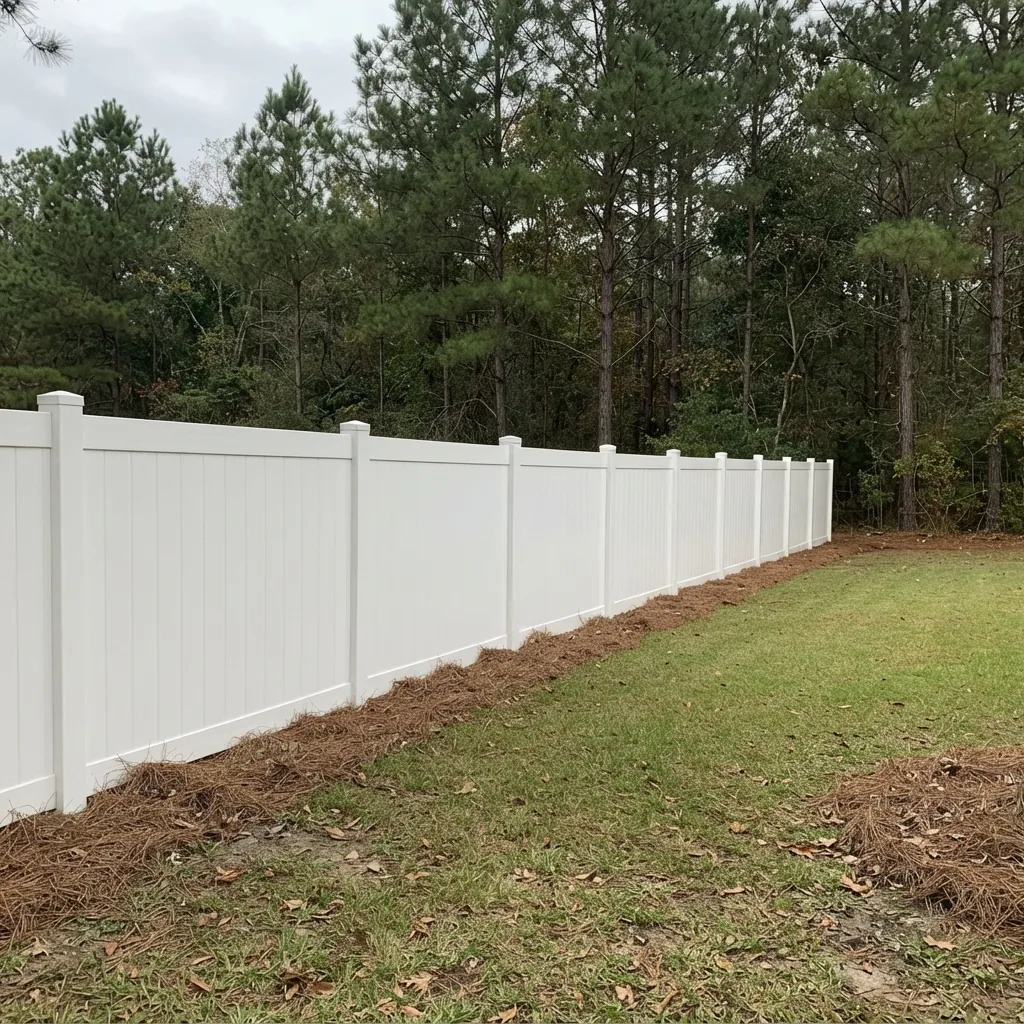
Vinyl is hollow extruded PVC: panels, rails and posts formed as tubes and profiles, assembled into a panel-and-post system. Hollow is not a knock; it is why a panel is light enough for one person to set and why the material is priced where it is. Modern vinyl is co-extruded, meaning the outer layer that faces the weather is a different, more UV-stable formulation than the substrate underneath it, which is what keeps white vinyl white instead of yellow.
Our vinyl comes from Catalyst Fence Solutions. Bufftech, ActiveYards, Alumi-Guard and Barrette ProFence were separate brands until February 2025; they are all Catalyst now, under one catalog. If you have an older quote with one of those names on it, that is where it went.
The three finishes, which is the part nobody explains
Vinyl is sold in three tiers, and the tier decides the finish far more than the style does:
- Standard. Smooth solid color. White, Sand, Clay, Gray, depending on the style. This is what most people picture, and it is the tier that ships fastest.
- Select. Smooth woodgrain. A wood color without the texture: Weathered Aspen, Mesquite, Coastal Cedar, Cypress, Dark Walnut.
- Premium TimberGrain. A textured woodgrain, with the grain actually embossed into the surface. Four blends: Weathered, Arctic, Brazilian, Sierra. From the street a TimberGrain panel reads like a stained cedar fence, which is the one place vinyl comes at composite directly.
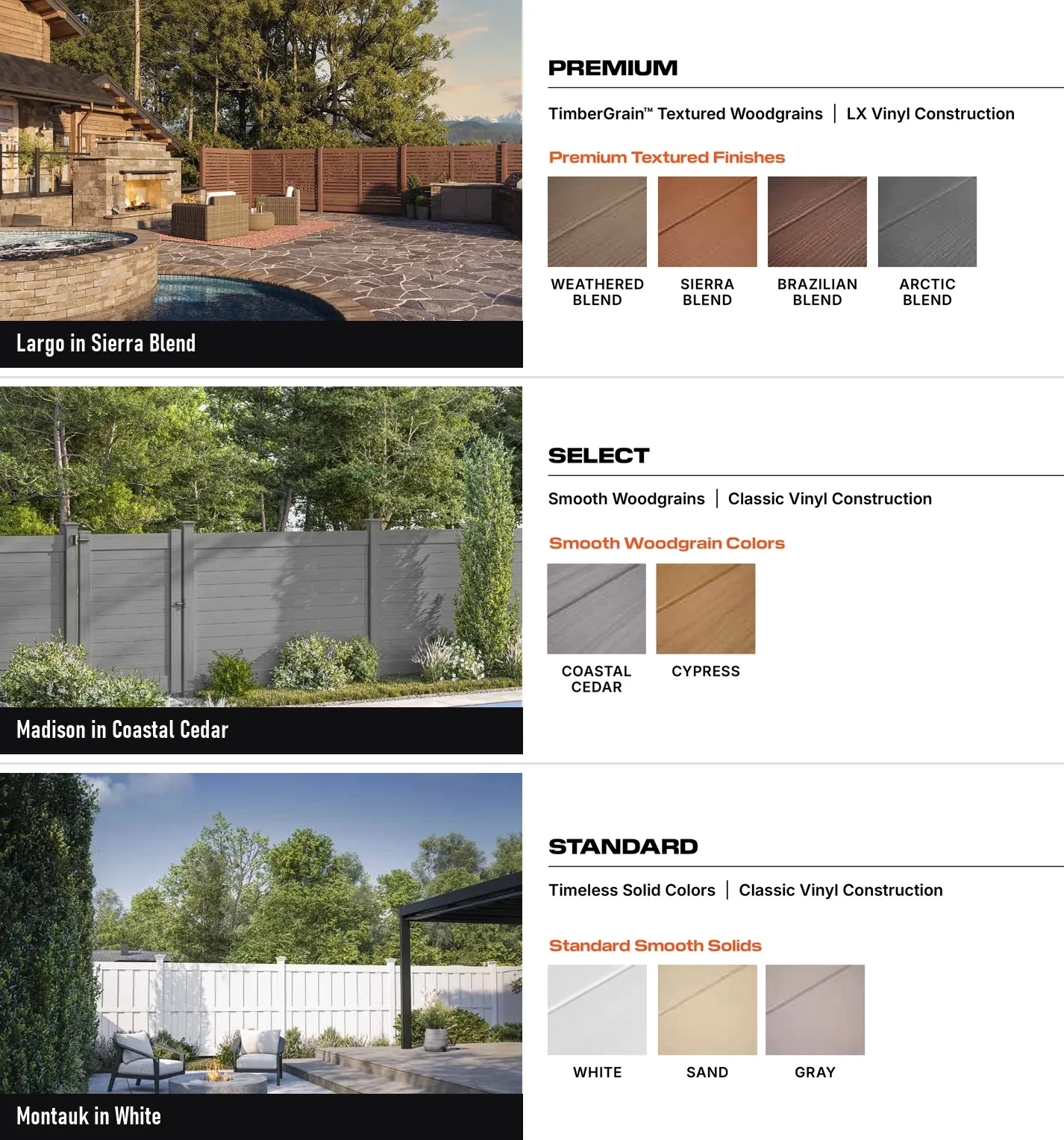
Which colors you can get depends on the style as well as the tier. Newbury adds Weathered Aspen, Mesquite and Dark Walnut on Select and Clay on Standard, while several of the pickets are white and nothing else. Pick the style first, then the finish.
Worth sitting with the inversion there: on finish and color choice, vinyl beats composite outright. Composite's category leader offers three colors. Vinyl offers a dozen across three tiers, in textures composite does not have a monopoly on anymore.
The catalog, by what you want it to do
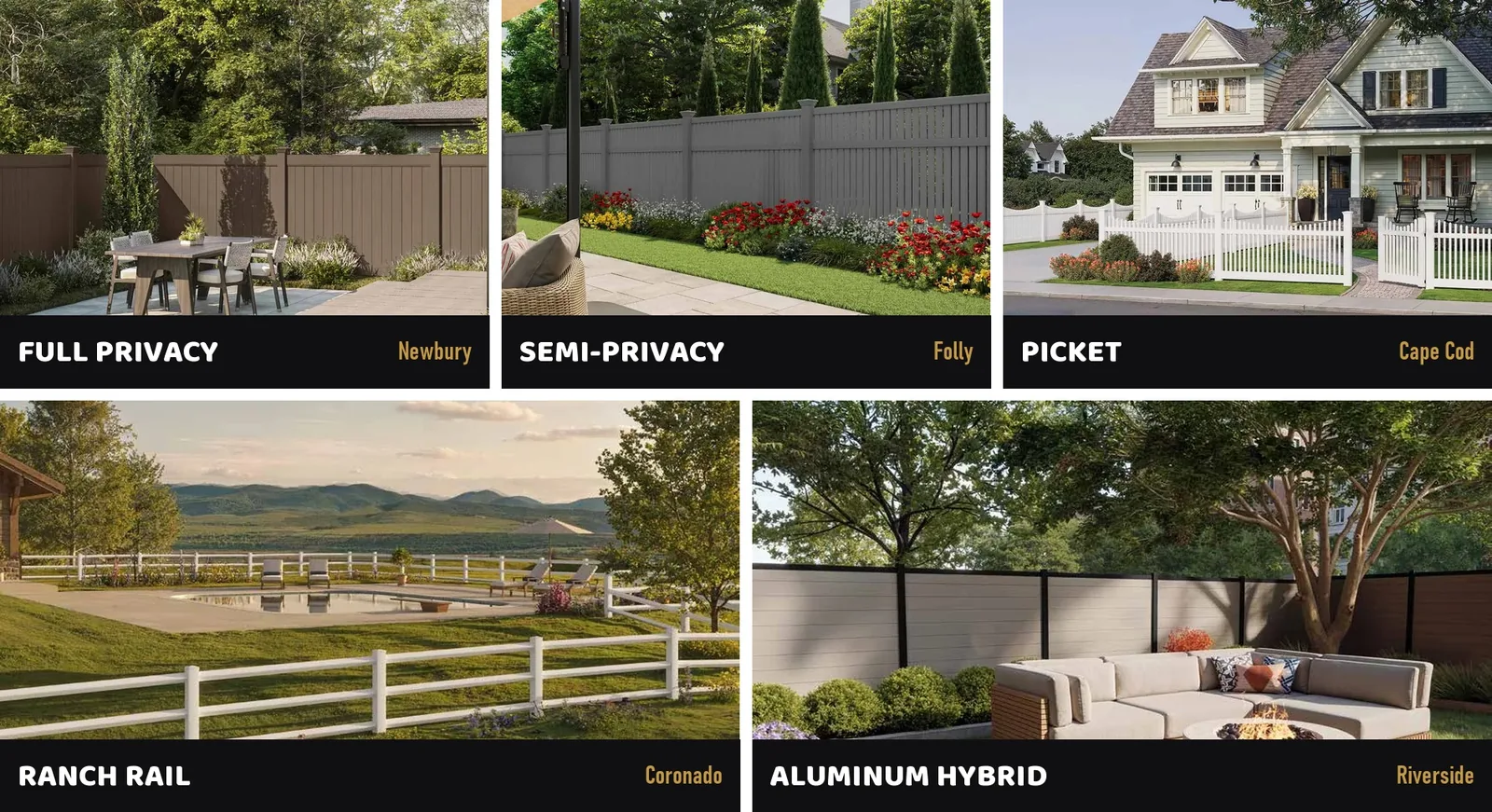
Nineteen styles, and they sort cleanly by job:
- Full privacy. Newbury (solid vertical, the only style that goes to 7 and 8 feet), Madison (horizontal boards, the contemporary read), Chesapeake (closed spindle), Tybee (lattice top).
- Semi-privacy. Largo and Folly (horizontal and 3-inch slats), Hudson (6-inch, more open), Sarasota (the vinyl stockade with the clipped corner), Montauk (board-on-board, finished both sides), Seaside (angled louvers that block the sightline but pass daylight).
- Picket. Norwalk (closed), Cape Cod (the New England profile, straight or scalloped), Rockport (dog-ear), Nantucket (spade top).
- Ranch rail. Coronado (open horizontal rail, mesh can go on the inside face for pets), Sedona (crossbuck).
- Aluminum hybrids. Riverside (aluminum frame, vinyl infill), Savannah (solid panel under an ornamental aluminum screen), Stockton (privacy below, black aluminum spindles above, the HOA favorite).
All of it is on the vinyl fence page with a picture of each style.
| Factor | Composite solid wood-fiber board, capped | Vinyl hollow extruded PVC panel |
|---|---|---|
| Up-front cost | The top of the fence range. A specialty purchase. | Mid-range, and the mainstream low-maintenance fence. |
| What it is | Wood flour and recycled polyethylene, extruded into a solid board and usually capped in a polymer shell. | Hollow extruded PVC, formed into panels, rails and posts. |
| Look | Reads as stained wood from the street. The texture is real, not printed. | Reads as vinyl in the smooth finishes; the textured woodgrain tier reads close to stained cedar. |
| Color choice | Narrow. Three colors on the category leader. | Wide. Three finish tiers, from bright white to four textured blends. |
| Style choice | Narrow. A handful of privacy and horizontal builds. | Deep. Privacy, semi-privacy, picket, ranch rail and aluminum hybrids. |
| Weight | Heavy. Solid board, and the posts and footings are sized for it. | Light. One person can carry a panel. |
| In full sun | A solid dark board takes on heat the way composite decking does. | A light hollow panel stays nearer air temperature. |
| Hard impact | Heavier and more forgiving. A mower kicking a rock dents rather than breaks. | Can crack on a hard hit, and more so as it ages. |
| Warranty | 25 years residential on the two wood-look lines. | Lifetime limited on the major vinyl lines. |
| Getting it | Made to order, every time. Nothing in the category is stocked locally. | The common colors move quick; the woodgrain tiers are made to order. |
- Up-front cost
- The top of the fence range. A specialty purchase.
- What it is
- Wood flour and recycled polyethylene, extruded into a solid board and usually capped in a polymer shell.
- Look
- Reads as stained wood from the street. The texture is real, not printed.
- Color choice
- Narrow. Three colors on the category leader.
- Style choice
- Narrow. A handful of privacy and horizontal builds.
- Weight
- Heavy. Solid board, and the posts and footings are sized for it.
- In full sun
- A solid dark board takes on heat the way composite decking does.
- Hard impact
- Heavier and more forgiving. A mower kicking a rock dents rather than breaks.
- Warranty
- 25 years residential on the two wood-look lines.
- Getting it
- Made to order, every time. Nothing in the category is stocked locally.
- Up-front cost
- Mid-range, and the mainstream low-maintenance fence.
- What it is
- Hollow extruded PVC, formed into panels, rails and posts.
- Look
- Reads as vinyl in the smooth finishes; the textured woodgrain tier reads close to stained cedar.
- Color choice
- Wide. Three finish tiers, from bright white to four textured blends.
- Style choice
- Deep. Privacy, semi-privacy, picket, ranch rail and aluminum hybrids.
- Weight
- Light. One person can carry a panel.
- In full sun
- A light hollow panel stays nearer air temperature.
- Hard impact
- Can crack on a hard hit, and more so as it ages.
- Warranty
- Lifetime limited on the major vinyl lines.
- Getting it
- The common colors move quick; the woodgrain tiers are made to order.
Lead time, which decides more schedules than people expect
This is the practical difference and it rarely comes up until it is a problem.
Vinyl has a fast lane. The QuickShip colors (White on most styles, and White, Sand and Gray on some) are stocked, and a job in a QuickShip color can move on a normal schedule. Step up to a Select woodgrain or a Premium TimberGrain blend and the panels are built to the order, which adds real weeks. The style and the finish are two separate lead-time decisions and the finish is usually the longer one.
Composite has no fast lane at all. None of the three lines is stocked anywhere near here, and Manchester is new enough that it is still reaching the market, so every composite fence is an order-and-wait. We confirm the actual wait when the order goes in rather than promising a number in advance, because a guessed lead time is worth nothing.
The same fact has a tail on it: the panel you cannot get in a week is also the panel you cannot get in year six when a tree comes down on the fence. On any composite job, and on any vinyl job in a non-stock finish, buy a spare panel with the original order and put it in the garage. It will match. A replacement ordered years later may not.
Which one we would point you to
- Vinyl, for most Midlands yards. It costs less, it comes in more finishes, it has nineteen styles to a handful, and a TimberGrain panel gets most of the way to the wood look for a fraction of the difference.
- Composite, when the wood look is the actual requirement and the budget is real. It reads as stained wood in a way vinyl does not quite manage up close, it never needs stain, and Seclusions looks the same from both sides, which settles a neighbor conversation before it starts.
- Wood, if you want the cheapest privacy fence up front and you are honest about the maintenance. It is still the Midlands standard and there is nothing wrong with it. It just buys work later.
Pricing every material side by side is in the fence cost guide; if you are sizing the run first, how to measure a fence covers that.
Comparing quotes in Columbia, Lexington or Chapin? Tell us the yard and the look you want, and we will price both options flat, in writing.
Frequently Asked Questions
What exactly is a composite fence?add
Wood flour blended with recycled polyethylene and extruded into a solid board, usually with a polymer cap wrapped around it. It is the same material family as composite decking. The solid core is what gives it real grain and depth instead of a printed texture, and it is also why it is heavy and why it costs what it does. It installs as a post-and-panel system with composite or aluminum posts.
Why is composite fencing so expensive?add
Three reasons, none of them markup. A solid composite board carries several times the material of a hollow vinyl panel the same size. That weight has to travel, because none of it is stocked in the Midlands. And there are only three real composite fence brands we can get here, so nothing is competing the price down. It sits at the top of the fence material range.
Who actually makes composite fencing?add
Three brands worth naming. Trex Fencing is the category anchor: Seclusions for vertical privacy, Horizons and Solitudes for horizontal, Shenandoah for ranch rail, in three colors (Saddle, Woodland Brown, Winchester Grey) with a 25-year residential warranty. NewTechWood UltraEasy is the value line, in Classic and Fluted, with a wider color range. Catalyst Manchester is an ornamental composite that looks like aluminum rather than wood, and it is new for 2026. Fiberon is often listed as a fourth and should not be, because the company makes decking and railing, not fencing.
Can a vinyl fence look like wood?add
Closer than most people expect. Vinyl comes in three finish tiers: Standard is smooth solid color, Select is a smooth woodgrain color, and Premium TimberGrain has the grain physically embossed into the surface. A TimberGrain panel in one of the four blends reads like a stained cedar fence from the street. It is the one place vinyl competes with composite directly, and on color choice vinyl actually wins, a dozen finishes against composite's three.
How long does a composite or vinyl fence take to get here?add
Vinyl has a fast lane and composite does not. The QuickShip vinyl colors are stocked and move on a normal schedule; Select and Premium finishes are built to the order and add weeks. Every composite fence is made to order, because none of the three lines is stocked anywhere near the Midlands. We confirm the actual lead time when the order goes in rather than promising a number in advance.
Can a damaged fence panel be replaced later?add
Yes, both are panel-and-post systems, so a damaged section gets replaced outright instead of patched. The catch is matching it. Buy a spare panel with the original order on any composite job, and on any vinyl job in a non-stock finish, and keep it in the garage. A panel ordered years later may be a different production run, and on a woodgrain finish that shows.
Have a project in mind?
See the full scope and pricing, or book a free phone consultation. No estimate pressure.