

Cost Guide
Aluminum Fence Cost in Columbia, SC (2026)
An ornamental aluminum fence in Columbia starts at about $57 a linear foot installed, so a 150 to 300 foot yard starts around $8,550. Grades, pool code, and why it handles a slope better than anything else.
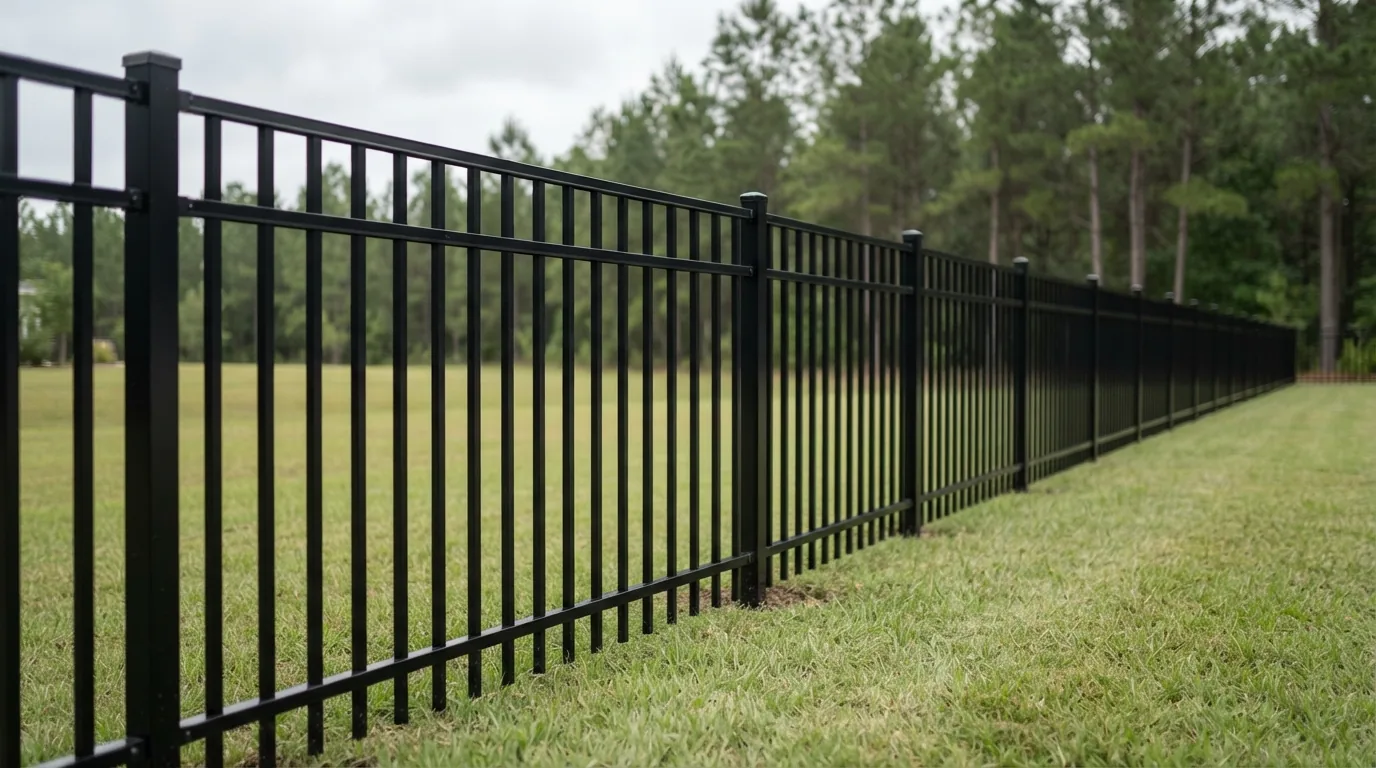
An ornamental aluminum fence in Columbia starts at about $57 a linear foot installed, so a typical 150 to 300 foot yard starts around $8,550. That is a starting point, not a quote.
It is the top of the fence range, and it is buying something none of the other materials sell: a boundary you can see through that still looks like a decision rather than a compromise.
What you are actually buying
Extruded aluminum pickets and rails, powder-coated, assembled into panels that bolt to aluminum posts. Aluminum does not rust, which is the whole reason it displaced wrought iron on residential work. Powder coat is not paint on top of metal; it is a dry finish baked onto it, so it does not chip off in sheets the way a painted steel fence does.
What you get for the price is the wrought-iron look with no rust, no repainting, and effectively no maintenance beyond hosing off the pollen.
The one thing it does that nothing else does: it racks
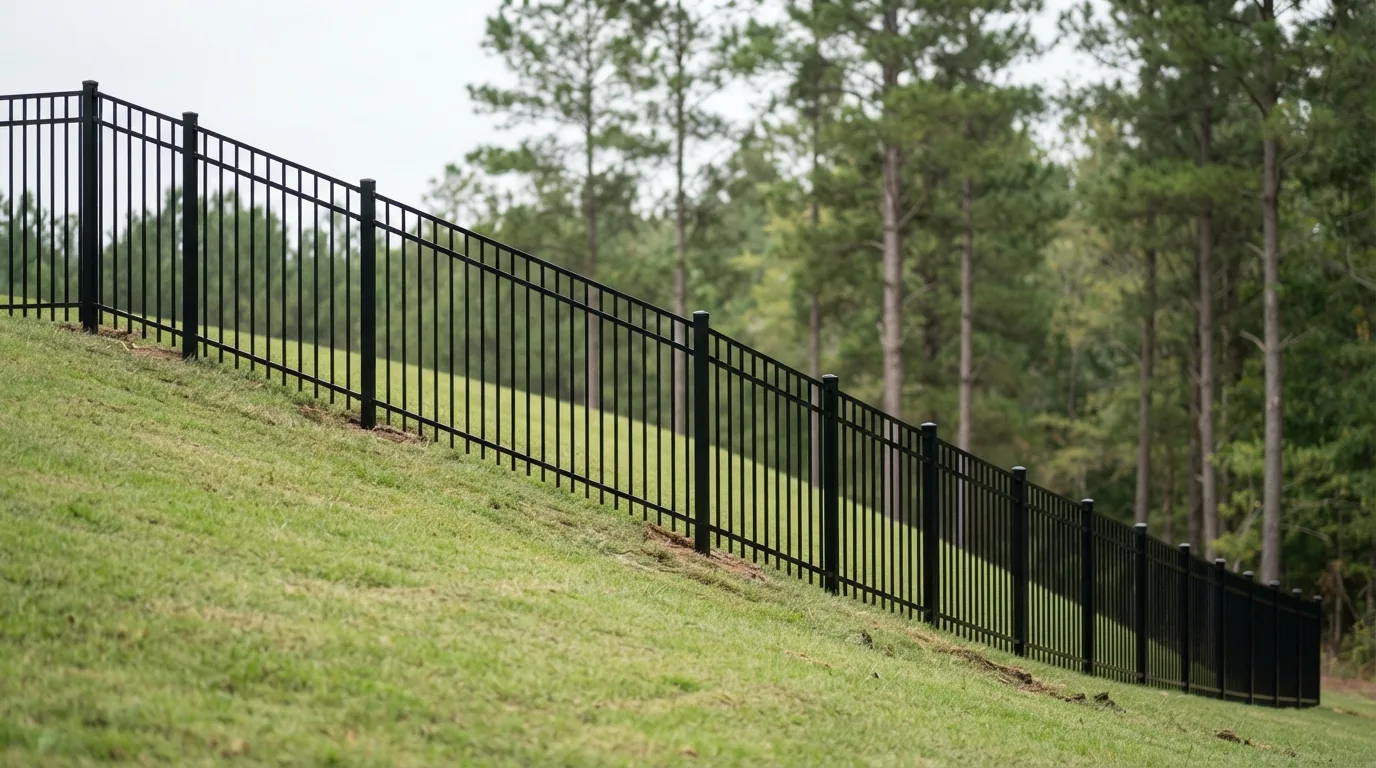
On a sloped yard, most fences step. The run comes down the hill in level sections with a stair-step top and a triangular gap under each section where the ground falls away. It is normal and it is how a rigid panel handles a grade.
A rackable aluminum panel does not step. The pickets pivot at the rails, so the whole panel skews into a parallelogram and follows the ground continuously, with the pickets still plumb and the top rail parallel to the grade. No stair steps, no gaps underneath.
On a Midlands lot with any real fall to it, that is not a cosmetic difference. It is the difference between a fence line that looks designed and one that looks like it was fought onto the property. It is also the reason aluminum is often the right call for a pool enclosure or a front boundary on a sloping lot even when it is the most expensive option on the table.
Grade is the biggest price lever inside aluminum
Not every aluminum fence is the same fence. Manufacturers build the same styles in ascending grades, and the difference is wall thickness of the extrusion, picket size, and how many rails the panel carries.
- Residential grade is the everyday yard fence. Lighter wall, lighter picket.
- Commercial and industrial grades step up the extrusion and the picket dimensions. They are what goes on a perimeter that has to take abuse, and they are meaningfully more per foot.
A quote that just says "aluminum fence" has not told you which one. This is the single most common reason two aluminum bids are far apart, and it is worth asking directly.
The styles
- Classic three-rail. Flat top, clean, the standard property-line ornamental fence.
- Spear top. Finial-topped pickets extending above the top rail. More formal, and the one people mean when they say estate look.
- Flat top with a puppy picket panel. Extra pickets in the bottom section, closing the spacing near the ground so a small dog cannot get through.
- Estate height with a driveway gate. Taller panels and a matching swing or slide gate. The gate is often a significant share of the whole project cost.
Colors are powder coat: black is the default and by far the most common, with bronze and white available depending on the line.
Pool fences
If the fence is enclosing a pool, it is not a fence any more. It is a barrier, and it is inspected as one.
The adopted code sets a minimum barrier height, a maximum gap between pickets, a maximum gap at the ground, and rules for how the gate latches and swings. Those numbers come from the code your jurisdiction has adopted, which is why we check them against the county before ordering rather than quoting a figure from memory. What matters for your budget is that a pool barrier is a specified product, not a style choice, and the gate hardware is part of the specification.
Aluminum is the usual answer for a pool because it satisfies the barrier requirements while leaving you able to see the water from the house. A privacy fence around a pool passes the code and loses you the view of the thing you are supposed to be watching.
Gate costs
A gate is quoted per opening, not by the foot, and on aluminum it is the item most likely to be a project of its own.
An aluminum gate is not a cut section of fence panel. It is a purpose-built welded frame in the same style and grade, because a panel cut to length has nothing holding its corners square. That is why a gate is a separate line and not a proportion of the footage.
Then it depends what the gate is for.
A yard gate is the straightforward case: a welded leaf, hinges rated to its weight, a latch, gate posts sized above the line posts, and a drop rod if it is a double.
A pool gate is specified by code, not by preference. Around a pool the gate is part of the barrier and it is inspected as one: it has to be self-closing and self-latching, it has to swing outward, away from the pool, and the latch has to sit at the height the adopted code specifies. That hardware costs more than yard-gate hardware, it is not optional, and substituting a standard latch is the kind of thing that fails an inspection after the fence is finished.
An automated drive gate is a separate project. An operator, a power run out to it, a safety reversing device, and usually a keypad or a remote. Budget it as its own scope rather than as a gate upgrade.
What moves the number: the width of the opening, the height, the grade of the panel being matched, single or double, whether it is a pool barrier, and whether it is automated.
What moves the number
- Grade. Residential, commercial, or industrial. The biggest single lever.
- Height. Four feet, five, six, and estate heights above that.
- Style. Spear tops and puppy pickets both add material over a plain three-rail.
- Gates. A walk gate is straightforward. A double drive gate needs posts sized for it, and an automated gate adds an operator, a power run and safety hardware, which is its own project.
- Rackable or stepped. How the run handles your grade.
- Corners and ends. Every one is its own post and footing.
Aluminum against the other materials
Against wood and vinyl: a different job entirely. Those close a yard in. Aluminum defines a boundary while leaving the sightline open, and it is the one people choose for a front yard, a pool, or a view they do not want to give up.
Against chain-link: the same open sightline at roughly twice the price, and it does not look like chain-link. If the run is somewhere visible, that is what the difference buys.
A lot of Midlands properties end up with both: aluminum where it is seen, something cheaper on the back line where it is not. That is a legitimate way to spend the budget and we will quote it that way.
What an online number can and cannot tell you
The range above places aluminum against the other four materials. It does not know your grade, your slope, your gate, or whether the county is going to inspect this as a pool barrier. Get the real number from someone who walked the line.
The rest of the fence guides
Fence Cost in Columbia, SC (2026 Price Guide by Material)
The hub: all five materials side by side, and what moves a fence price.
Read the guide arrow_forward
Wood Fence Cost in Columbia, SC (2026)
The Midlands default, and the ten different builds hiding behind the phrase.
Read the guide arrow_forward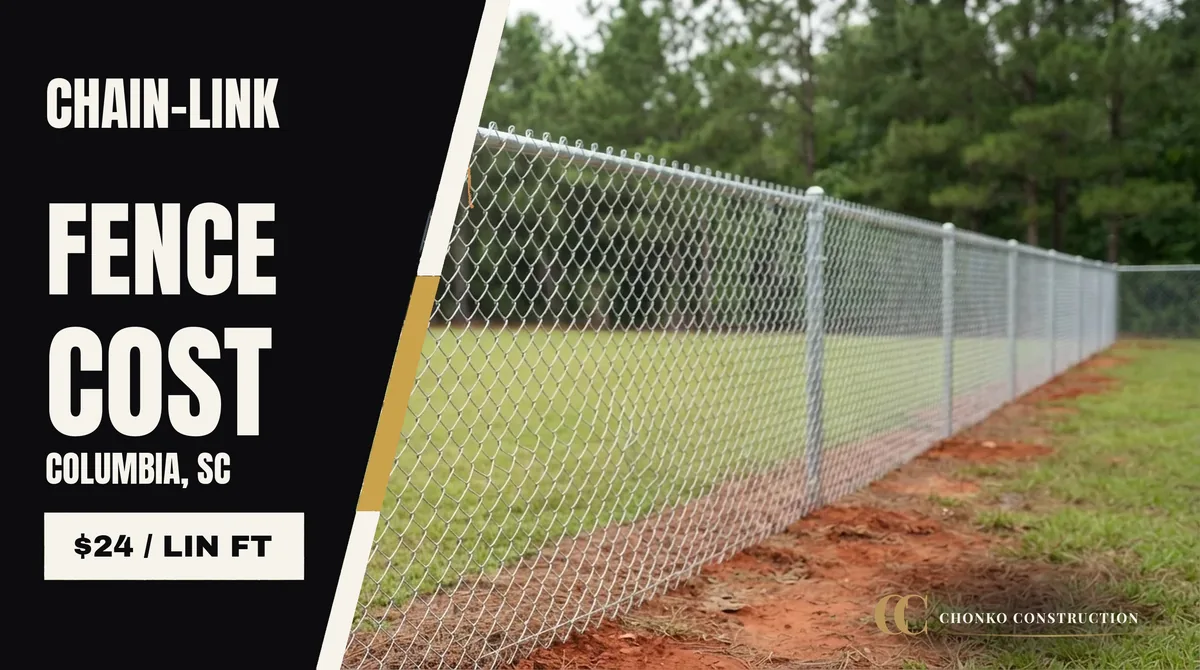
Chain-Link Fence Cost in Columbia, SC (2026)
The cheapest way to close in a yard, and where the money goes instead.
Read the guide arrow_forward
Vinyl Fence Cost in Columbia, SC (2026)
Wood's price without wood's maintenance, and the 19 styles available.
Read the guide arrow_forward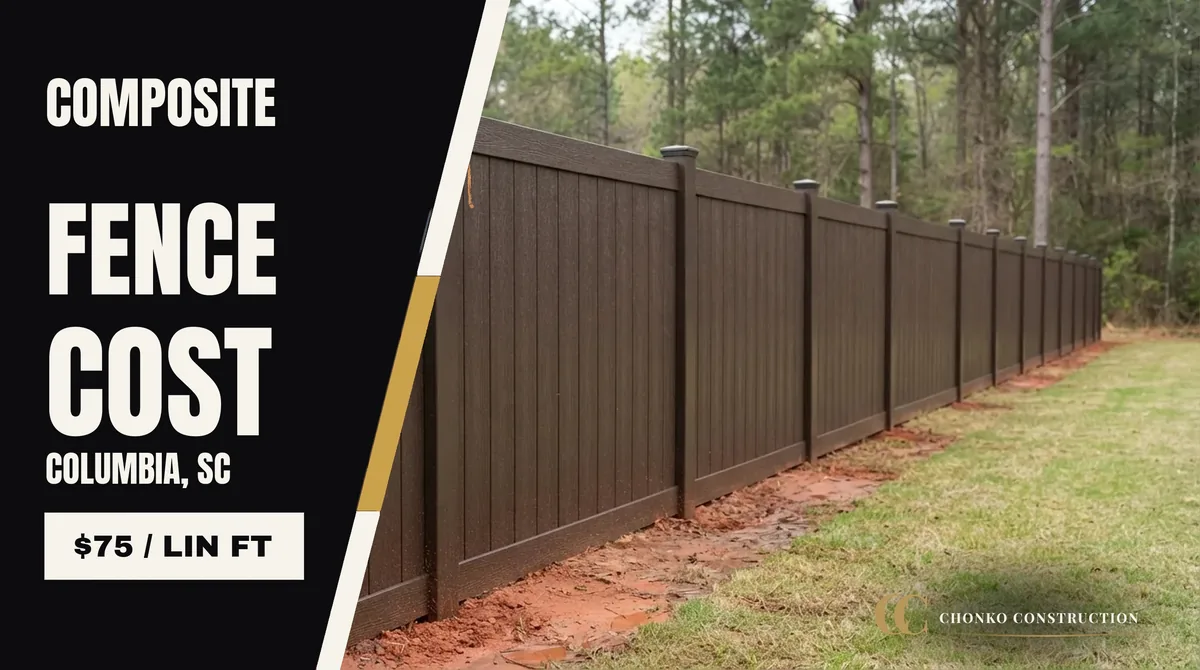
Composite Fence Cost in Columbia, SC (2026)
The stained-wood look that never gets stained. Three real brands, and that is all.
Read the guide arrow_forward
Do You Need a Permit to Build a Fence in Columbia, SC?
When a fence needs a permit here, and what the HOA gets a say in.
Read the guide arrow_forwardEvery material we install, with what each one actually costs.
Frequently Asked Questions
How much does an aluminum fence cost in Columbia, SC?add
An ornamental aluminum fence starts at about $57 per linear foot installed, which puts a typical 150 to 300 foot yard starting around $8,550. Grade, height, style, gates and slope all move it up from there. It is a starting point, not a quote.
Why are two aluminum fence quotes so far apart?add
Usually grade. The same style is manufactured in residential, commercial and industrial grades, and the difference is the wall thickness of the extrusion and the size of the pickets. A quote that says only 'aluminum fence' has not told you which one you are buying. Ask directly.
What does it mean that an aluminum fence racks?add
The pickets pivot where they meet the rails, so the panel can skew into a parallelogram and follow a sloping grade continuously, pickets still plumb, top rail parallel to the ground. Most other fences handle a slope by stepping down in level sections, which leaves a stair-stepped top and a triangular gap under each section.
Is aluminum a good pool fence?add
It is the usual answer, because it satisfies the barrier requirements while leaving you able to see the pool from the house. Around a pool the fence is a barrier and it gets inspected as one: the adopted code specifies a minimum height, maximum gaps between pickets and at the ground, and how the gate latches and swings. We check those against the jurisdiction before anything is ordered.
Does an aluminum fence rust?add
No. Aluminum does not rust, which is why it replaced wrought iron on residential work. The powder-coat finish is baked on rather than painted on, so it does not chip off in sheets the way a painted steel fence does. Maintenance is rinsing the pollen off.
Can an aluminum fence keep a small dog in?add
With the right panel. A standard three-rail leaves picket spacing a small dog can get through, so the fix is a puppy picket panel, which adds extra pickets in the bottom section and closes that spacing near the ground. It costs more per foot and it is far cheaper than solving it after the fence is up.
Aluminum or chain-link, if I just want an open fence?add
The same open sightline at roughly twice the price, and it does not read as chain-link. Where the run is visible from the house or the street, that is what the difference buys. On a back line nobody sees, chain-link does the same job. Splitting a property between the two is a normal way to spend the budget.
Do aluminum fence posts still need concrete?add
Yes. The material does not change the load. An open aluminum panel catches less wind than a solid privacy fence, but it still levers what it catches onto the post, and what resists that is embedment: the depth of the post and the undisturbed soil the concrete bears against. Posts are set below the topsoil into firm ground and concreted. Gate posts and the posts at every corner and end carry the most load and get sized accordingly.
Have a project in mind?
See the full scope and pricing, or book a free phone consultation. No estimate pressure.