

Cost Guide
Vinyl Fence Cost in Columbia, SC (2026)
A vinyl fence in Columbia starts at about $48 a linear foot installed, so a 150 to 300 foot yard starts around $7,200. The styles, the finishes, and what separates good vinyl from the cheap stuff.
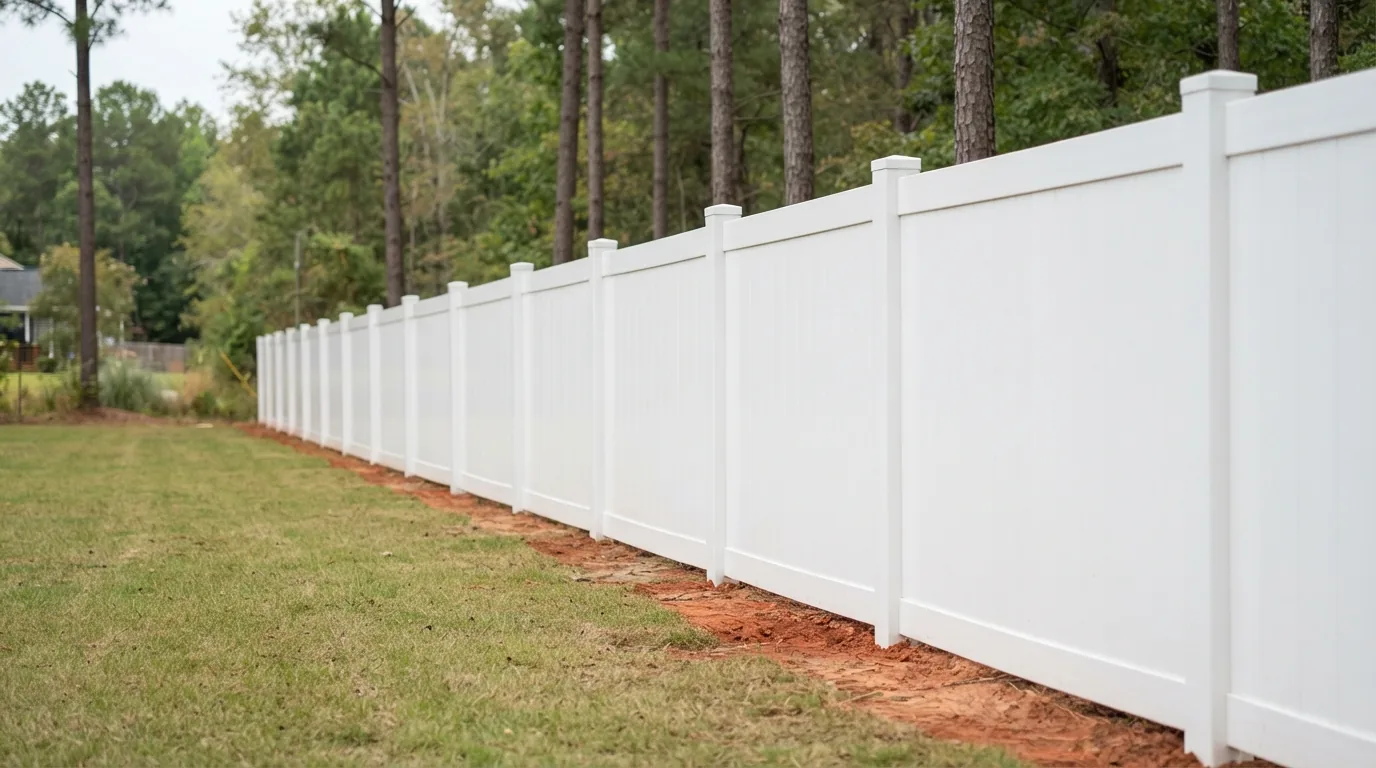
A vinyl fence in Columbia starts at about $48 a linear foot installed, so a typical 150 to 300 foot yard starts around $7,200. That is a starting point, not a quote.
Vinyl sits above wood on day one and below it over the years, because it is the mainstream answer to the same question composite answers at a higher price: a fence that never needs staining.
What vinyl actually is
Rigid PVC, UV-stabilized, extruded into hollow posts, rails and panels that lock together. The color goes through the material rather than sitting on top of it, so there is nothing to scratch off and nothing to repaint. It does not rot, insects have no interest in it, and it does not take on water.
Hollow is the word doing the work there, and it is why the quality spread inside vinyl is wider than most people expect. Two vinyl fences at the same height can have visibly different wall thickness, different rail reinforcement, and completely different behavior in a windstorm. A thin panel flexes, a thin rail sags across an eight-foot bay, and neither of those problems shows up on the day it is installed.
The styles
We install the Catalyst Fence Solutions vinyl line. It is a genuinely deep catalog, which matters, because "vinyl fence" in most people's heads means one thing: a white privacy panel. It is nineteen.
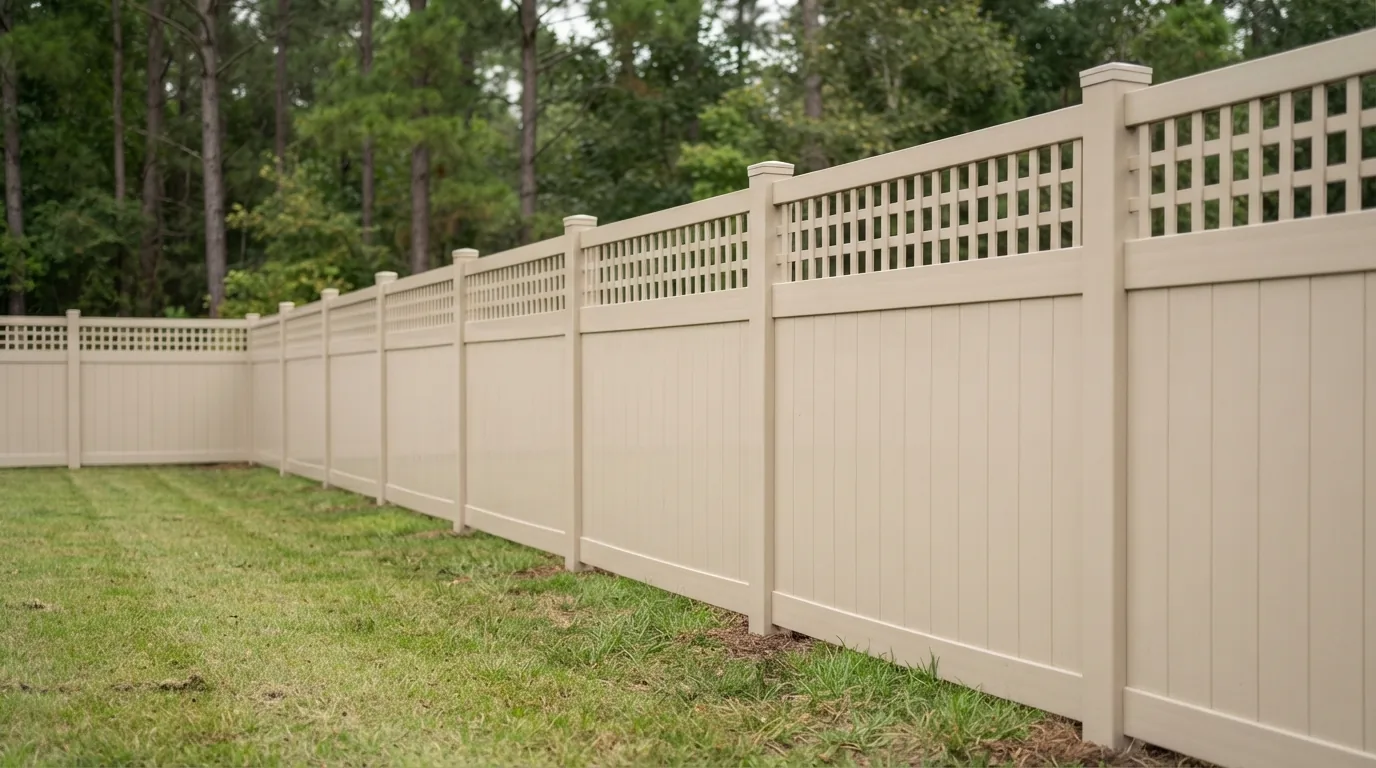
Privacy. Newbury (solid vertical, and the only style in the line that goes to seven and eight feet), Madison (solid horizontal), Chesapeake (privacy panel with a closed spindle top), Tybee (privacy panel with a lattice top).
Semi-privacy. Largo (horizontal slats), Folly (three-inch spacing), Hudson (six-inch spacing), Sarasota (dog-ear, straight or scalloped), Montauk (board-on-board, finished on both sides), Seaside (angled horizontal louvers).
Picket. Norwalk (closed picket), Cape Cod (pyramid tops, straight or scalloped), Rockport (dog-ear tops), Nantucket (spade tops).
Ranch rail. Coronado (two or three rail), Sedona (crossbuck).
Aluminum and vinyl together. Riverside (vinyl panel in an aluminum frame), Savannah (horizontal privacy with an ornamental aluminum top), Stockton (privacy below, aluminum spindles above).
Finish is the other price lever
Panels come in smooth white, sand, clay and gray. Above that there are smooth woodgrains and textured TimberGrain finishes, depending on the style, and those cost more.
The textured tier is worth looking at in person before you decide. Smooth white is unmistakably vinyl from across the street, which some people want and some people do not. A textured woodgrain reads close to stained cedar at a normal viewing distance, and it is the finish that makes vinyl a real alternative for someone who wanted a wood fence.
What moves the number
- Height. Six feet is standard for privacy. Seven and eight exist in one style in the line, and they are a different price.
- Style. A picket run uses far less material than a solid privacy panel of the same length. The aluminum hybrids cost more than either.
- Finish tier. Smooth white at the bottom, textured woodgrain at the top.
- Gates. Vinyl gates need internal reinforcement, usually an aluminum or steel insert in the frame, because a hollow gate with nothing in it will sag out of square. A gate priced as "one more panel with hinges" is a gate that is going to drag.
- Corners and ends. Same as any fence: every corner and every end is its own post and its own footing.
Gate costs
A gate is quoted per opening, not by the foot, and vinyl is the material where the difference between a good gate and a cheap one is completely invisible on the day it goes in.
The reason is that vinyl is hollow. A vinyl fence panel does not have to hold itself rigid, because it is captured in a post at each end. A gate is captured at one edge only, so everything the panel was leaning on is gone. A hollow gate frame with nothing inside it will rack out of square, and once it does, the latch stops meeting the post and no adjustment brings it back.
What a real vinyl gate has:
- A metal insert through the frame. An aluminum or steel stiffener running inside the hollow gate rails and stiles. This is the whole difference, and it is the thing you cannot see.
- Hardware through-bolted, with backing. Hinges and latches carry the leaf, and a screw into a hollow vinyl wall has almost nothing to bite. Fasteners go through the frame onto a plate or into the metal insert.
- Gate posts sized for the load, set deeper and often reinforced internally. A standard line post is not a gate post.
- A drop rod on a double.
What moves the number: the width of the opening, the height, single or double, the style and finish tier being matched, and whether the gate is a stock size for that line or has to be built to the opening.
A gate priced as one more panel with hinges on it is the part of a cheap vinyl quote that fails first. It is a fair question to ask any bid you are holding: is there metal inside the gate frame?
Where a vinyl install goes wrong
Vinyl is unforgiving of a bad layout in a way wood is not. A wood fence can be nudged, a board can be ripped narrower, a rail can be cut on site. A vinyl panel is a manufactured length that drops between two routed posts, and if the posts are not where the panel expects them to be, there is no fixing it with a saw.
That means:
- The line has to be laid out and the post spacing set before anything gets dug. Post spacing is dictated by panel length, not by preference.
- Posts still get set in concrete, and deep. A hollow post with a shallow footing will lean, and unlike wood, a leaning vinyl post takes a rigid panel with it and puts the whole bay out of square.
- Slopes have to be planned. A rigid panel does not follow a grade the way a board fence does. On a slope, a vinyl run either steps down in stair-steps with a triangular gap under each panel, or it uses a rackable style built to angle. Which one you get should be decided on the walk, not discovered on install day.
Vinyl against the other materials
Against wood: more up front, nothing afterward. No sealing, no staining, no greying. Over fifteen years the two are much closer than the day-one prices suggest, and if you are honest that you will never re-seal a wood fence, vinyl is cheaper.
Against composite: vinyl is lighter, cheaper, and available in far more styles and colors. Composite is a solid board rather than a hollow panel, so it has real weight and blocks sound better, and it reads as stained wood rather than as vinyl. We wrote the whole comparison out in composite vs. vinyl.
Against aluminum: different jobs. Vinyl is for privacy; aluminum is for a boundary you can see through.
What an online number can and cannot tell you
The range above tells you where vinyl sits against the other four materials. It does not know your style, your finish tier, your gate count, or what your back yard does on the way to the tree line. Get the real number from someone who walked it.
The rest of the fence guides
Fence Cost in Columbia, SC (2026 Price Guide by Material)
The hub: all five materials side by side, and what moves a fence price.
Read the guide arrow_forward
Wood Fence Cost in Columbia, SC (2026)
The Midlands default, and the ten different builds hiding behind the phrase.
Read the guide arrow_forward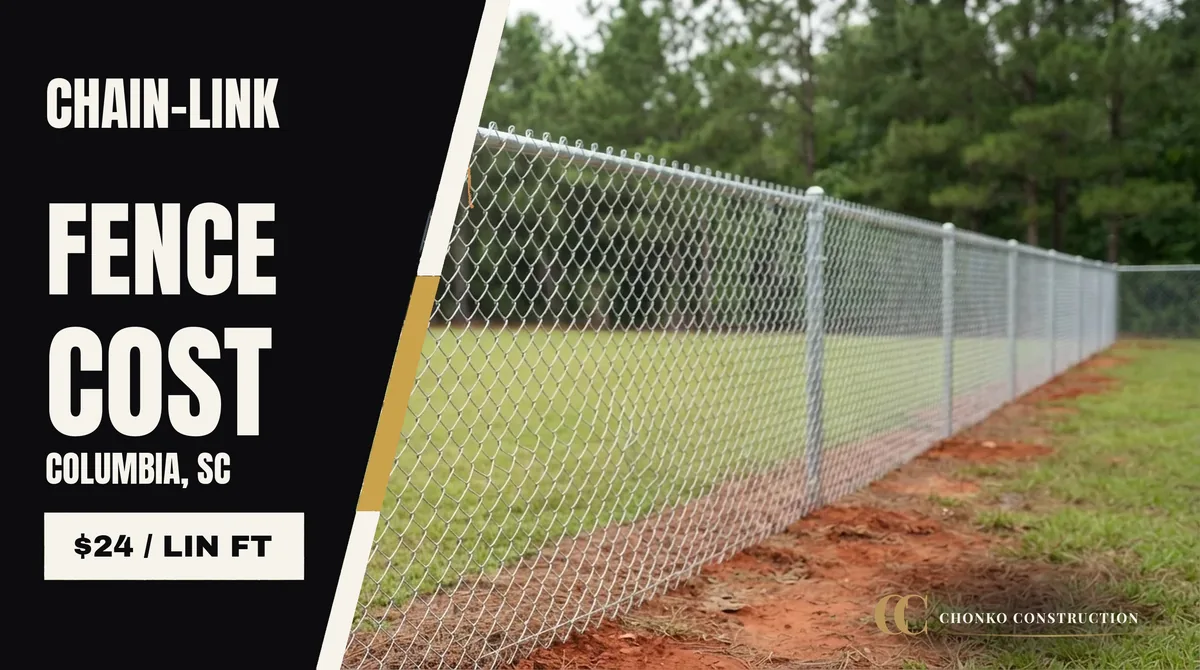
Chain-Link Fence Cost in Columbia, SC (2026)
The cheapest way to close in a yard, and where the money goes instead.
Read the guide arrow_forward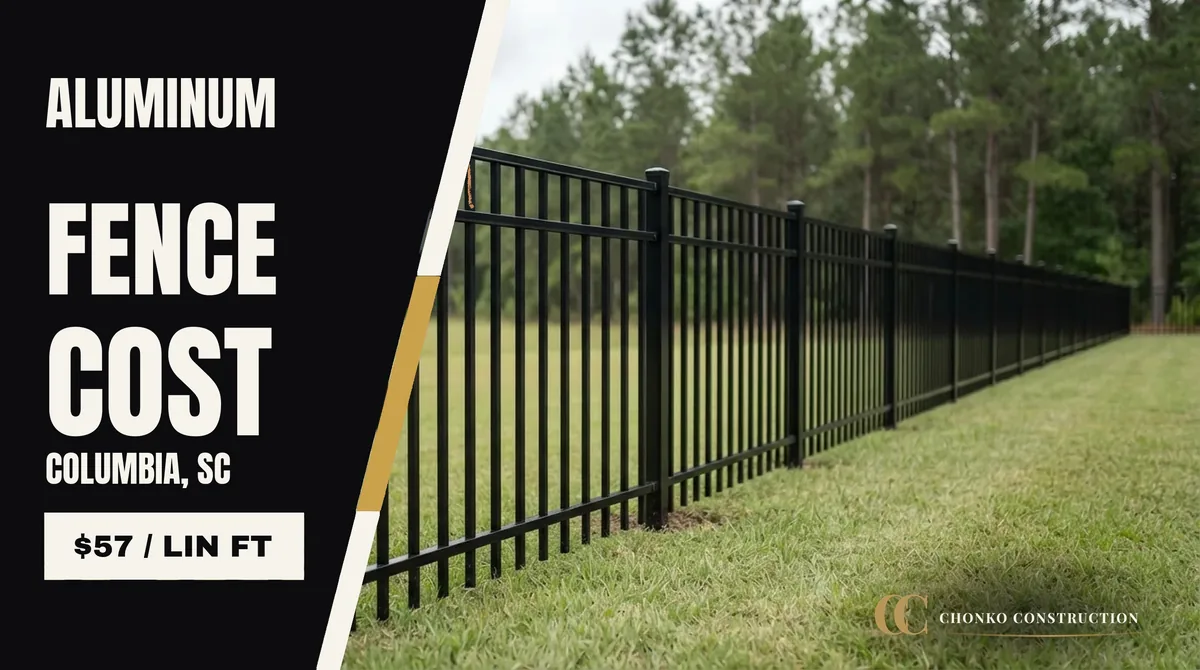
Aluminum Fence Cost in Columbia, SC (2026)
Ornamental, pool-code, and the one material that follows a slope without stepping.
Read the guide arrow_forward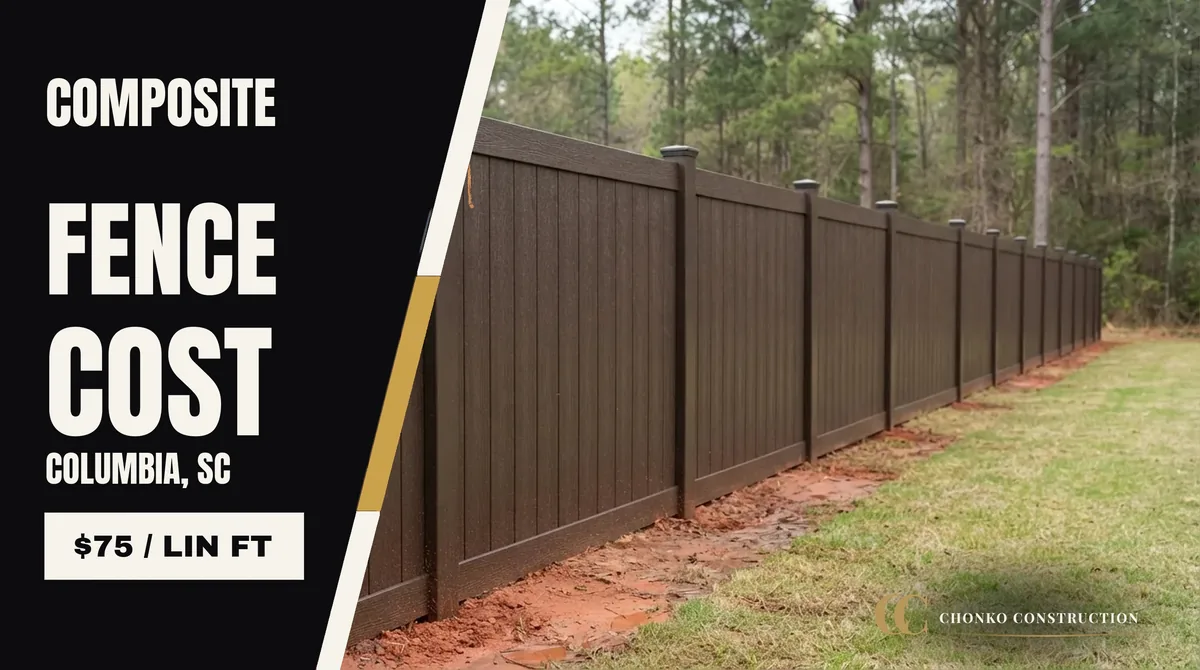
Composite Fence Cost in Columbia, SC (2026)
The stained-wood look that never gets stained. Three real brands, and that is all.
Read the guide arrow_forward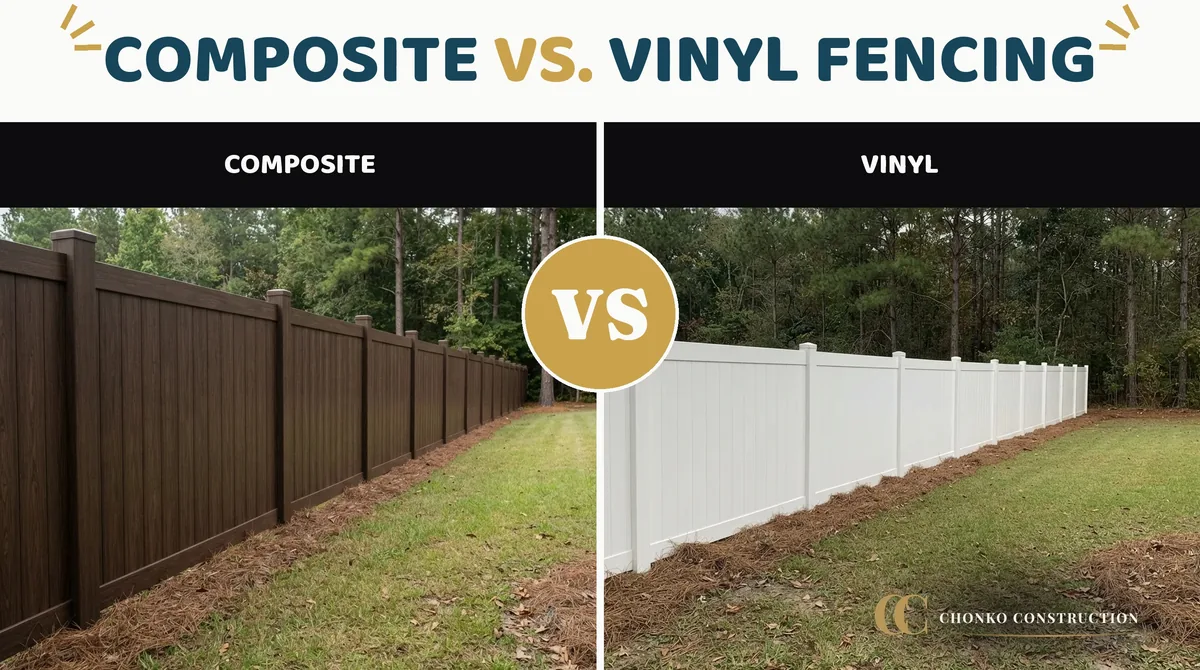
Composite vs. Vinyl Fencing in Columbia, SC: An Honest Comparison
The straight comparison, brand by brand, if those two are the shortlist.
Read the guide arrow_forwardEvery material we install, with what each one actually costs.
Frequently Asked Questions
How much does a vinyl fence cost in Columbia, SC?add
A vinyl fence starts at about $48 per linear foot installed, which puts a typical 150 to 300 foot yard starting around $7,200. Style, height, finish tier, gate count and the number of corners all move it up from there. It is a starting point, not a quote.
Is vinyl cheaper than wood in the long run?add
Often, yes. Vinyl costs more on day one and nothing after it. A wood fence is cheaper up front and asks for a wash and a re-seal every couple of years for as long as you own it. Over fifteen years the two land much closer together, and if the honest answer is that the wood fence would never get sealed, vinyl is the cheaper fence outright.
Does a vinyl fence turn yellow or get brittle?add
Quality vinyl is UV-stabilized and holds its color; the pigment runs through the material rather than sitting on the surface, so there is nothing to fade off or scratch through. What varies between products is wall thickness and rail reinforcement, and that is what separates a panel that stays rigid from one that flexes and sags across a bay.
How many vinyl fence styles are there?add
Nineteen in the Catalyst line we install, across privacy, semi-privacy, picket, ranch rail, and vinyl-and-aluminum hybrids. Most people picture one white privacy panel and are surprised by the board-on-board, the louvered, the lattice-top and the styles with an ornamental aluminum top section.
What does a vinyl fence look like on a sloped yard?add
A rigid panel cannot follow a grade the way a board fence can. On a slope, a vinyl run either steps down, which leaves a triangular gap under each panel, or it uses a rackable style built to angle with the ground. Which one your yard needs should be settled on the walk-through, before anything is ordered.
Do vinyl gates sag?add
A hollow gate with nothing in it will. A vinyl gate needs internal reinforcement, typically an aluminum or steel insert through the frame, plus hinges rated for the actual weight. A gate priced as one more panel with hardware on it is the part of a cheap vinyl quote that fails first.
Can a vinyl fence be repaired if a panel breaks?add
Usually yes, and more easily than wood, because the system is modular. A damaged panel or rail comes out of the routed posts and a matching one goes back in. The catch is matching: keep a note of the style and finish, because a fence installed years ago has to be matched to the same line.
Vinyl or composite for a privacy fence?add
Vinyl is lighter, less expensive, and available in far more styles and colors. Composite is a solid board instead of a hollow panel, so it carries real weight, blocks sound better, and reads as stained wood rather than as vinyl. Composite is the top of the material range. We laid the two out side by side in the composite vs. vinyl comparison.
Have a project in mind?
See the full scope and pricing, or book a free phone consultation. No estimate pressure.