

Cost Guide
Chain-Link Fence Cost in Columbia, SC (2026)
Chain-link starts at about $24 a linear foot installed in Columbia, so a typical 150 to 300 foot yard starts around $3,600. Where the money actually goes on the cheapest fence there is.
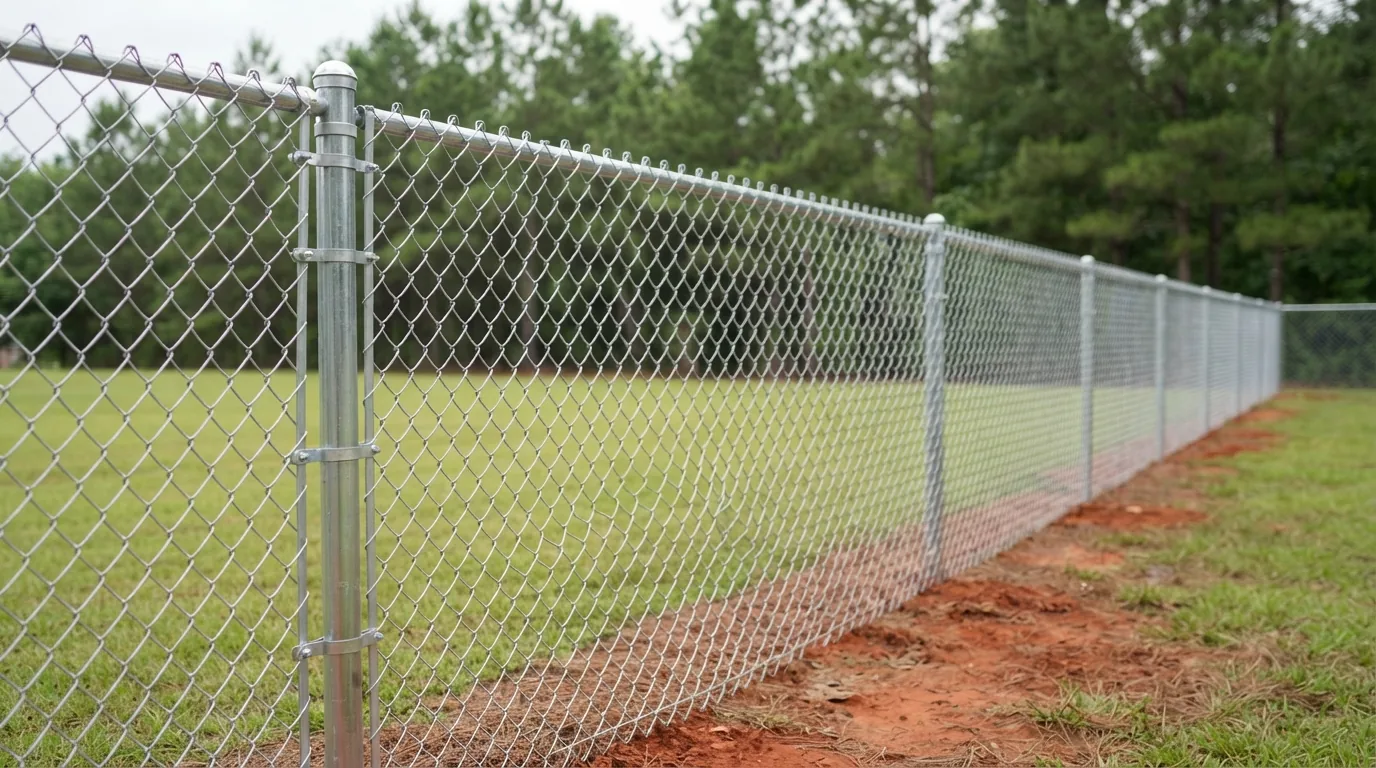
Chain-link starts at about $24 a linear foot installed in the Columbia area, so a typical 150 to 300 foot yard starts around $3,600. That is a starting point, not a quote.
It is the cheapest real fence you can build, and it is the one where the price is most sensitive to something people never think about: the shape of the yard.
Why the shape of the yard matters more here
A chain-link fence has two kinds of post, and they cost very different amounts.
Line posts are the ordinary ones in the middle of a straight run. They are lighter, they get set in a smaller hole, and they only have to hold the fabric up.
Terminal posts are the ones at every end, every corner, and both sides of every gate. They are heavier pipe in a bigger footing, because they are the posts the fabric gets stretched against. All the tension in the run lands on them.
So a straight 200-foot run along a back line is cheap. The same 200 feet wrapped around a yard with six corners and two gates is not, because you just added a lot of terminal posts. When one chain-link bid comes in well under another, this is often the difference: somebody priced terminal posts and somebody priced line posts everywhere.
Galvanized or black
Galvanized is the classic silver: zinc-coated steel, the lowest-cost option, and the one everybody pictures.
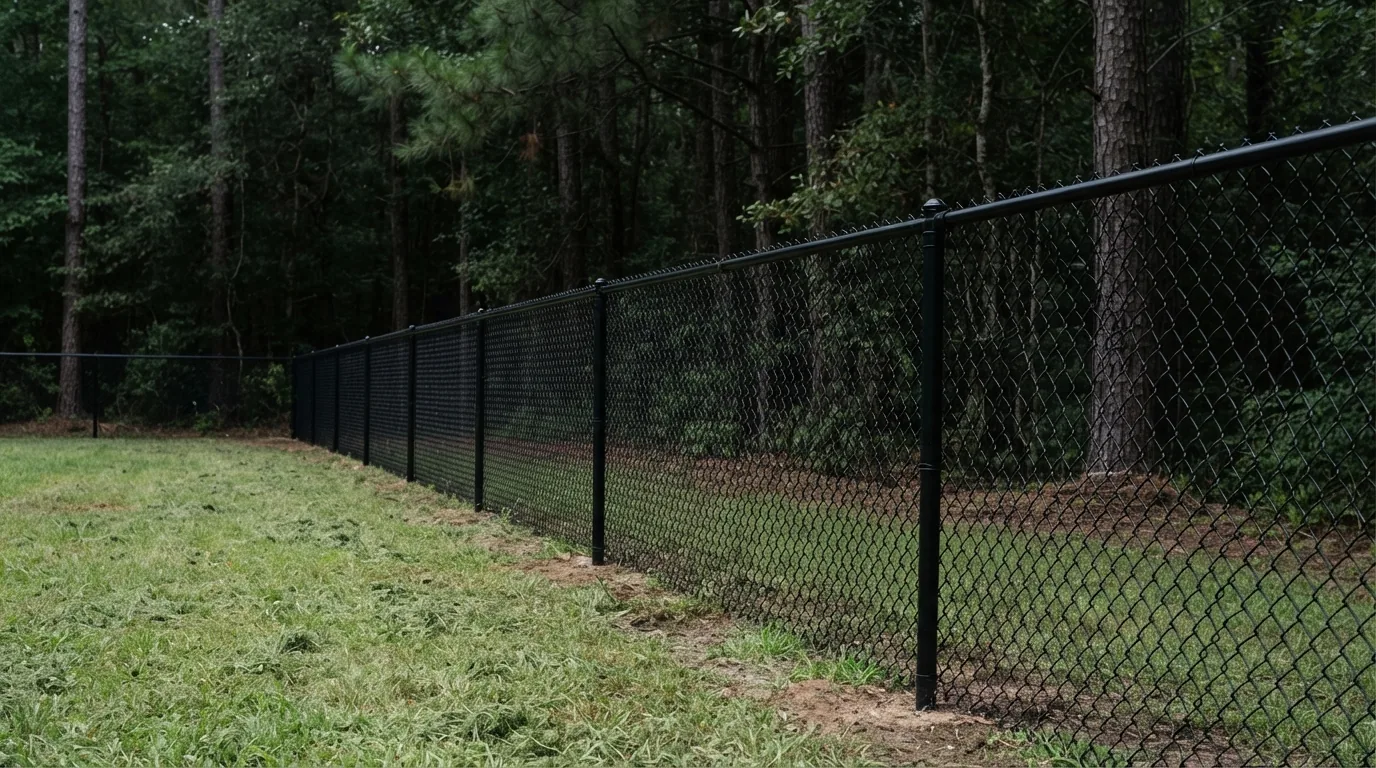
Black vinyl-coated is galvanized fabric with a bonded PVC coating over it. It costs more per foot and it buys two things. It looks dramatically better, because black mesh visually disappears against a tree line instead of catching the light, and the coating adds a second layer between the steel and the weather.
If the fence is going anywhere you will look at from the house, the coated version is usually worth the difference. If it is a back pasture line or a dog run behind the garage, galvanized does the same job.
What else moves the number
- Height. A four-foot yard fence, a six-foot dog run, and an eight-foot commercial enclosure are three different amounts of fabric and three different post sizes.
- Gauge. The wire thickness. Lighter gauge is the residential standard and the cheaper one; heavier gauge is what goes on a commercial perimeter or a kennel that takes abuse.
- Top rail. A horizontal pipe running along the top, which stiffens the whole line and keeps the fabric from being pushed over. Some low bids leave it off and substitute a top tension wire.
- Gates. Priced per gate. A walk gate is straightforward; a double drive gate needs heavy terminal posts on both sides.
- Privacy slats. Woven vertically through the mesh to screen the run. They add real cost per foot and they turn an open fence into something the wind can push on, which the posts have to be set for.
Gate costs
A gate is quoted per opening, not by the foot, and on chain-link it is where a surprising share of a small job's cost sits.
A chain-link gate is a welded pipe frame with the same fabric stretched inside it, so the gate itself is not expensive. What is expensive is what has to be standing on either side of it. Both gate posts are terminal posts, which means heavier pipe in a bigger footing than any line post on the property, and a wide or double opening steps that pipe up again. On a short run with one gate, those two posts can be a real fraction of the whole quote.
The rest of what sits in a gate price:
- Hinges sized to the leaf, not the lightest pair that fits the pipe. A gate that gets used daily eats undersized hinges.
- A fork latch, or a lockable latch if the gate needs to secure anything.
- A drop rod on a double, pinning the inactive leaf into a sleeve in the ground so the active leaf has something to latch to.
- Truss rods on a wide leaf. A wide pipe frame will sag under its own weight without one.
What moves the number: the width of the opening, the height, single or double, and whether it is a walk gate or something a vehicle has to fit through. A drive gate is the single most expensive part of most residential chain-link projects.
What a cheap chain-link bid leaves out
The material list is short, so the corners get cut in the same three places every time:
- Terminal posts sized as line posts. The fabric gets stretched against them. Undersized, they pull in, and the whole run goes slack.
- No concrete, or not enough. A post tapped into a hole and backfilled with dirt has nothing but loose soil resisting it, and the first real wind on a tight run walks it out of plumb.
- Tension bar and bands skipped at the ends. The fabric is supposed to be locked to the terminal post along its full height with a bar, not hooked on with wire ties. Skipping it is invisible on day one and obvious in year two.
Ask what size the terminal posts are and how the fabric attaches at the ends. The answers separate the bids fast.
Where chain-link is the right answer, and where it is not
It is the right answer when the job is to contain something for the least money: a dog run, a pet-safe back yard, a sport court, a pool equipment enclosure, a commercial perimeter. It goes up quickly, it asks nothing of you afterward, and it does not care about weather.
It is the wrong answer when the job is privacy or curb appeal. Slats help and they do not make it a privacy fence. If what you actually want is to not see the neighbor's yard, price wood or vinyl instead, and price them honestly against the years of upkeep, not just the day-one number.
It is also worth checking the HOA before you commit. A fair number of Columbia-area neighborhoods either restrict chain-link in a front or side yard or ban it outright, which is a separate question from whether the county wants a permit.
What an online number can and cannot tell you
A per-foot figure sorts chain-link against the other materials. It does not know how many corners your yard has, and on this material more than any other, the corners are the price.
The rest of the fence guides
Fence Cost in Columbia, SC (2026 Price Guide by Material)
The hub: all five materials side by side, and what moves a fence price.
Read the guide arrow_forward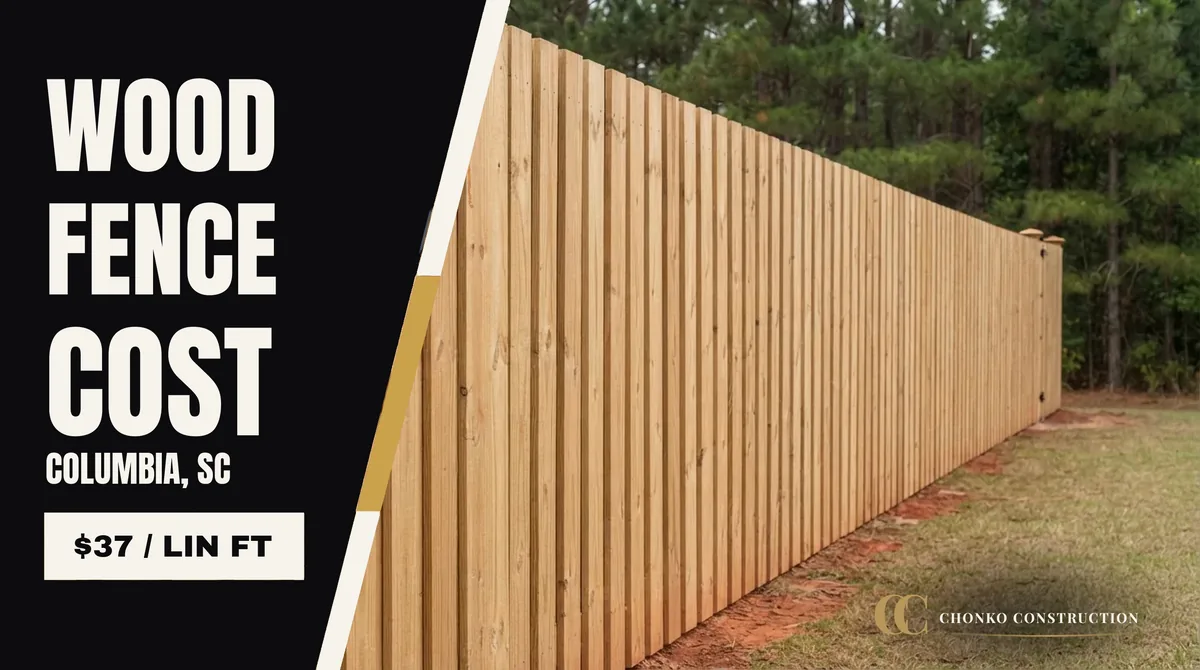
Wood Fence Cost in Columbia, SC (2026)
The Midlands default, and the ten different builds hiding behind the phrase.
Read the guide arrow_forward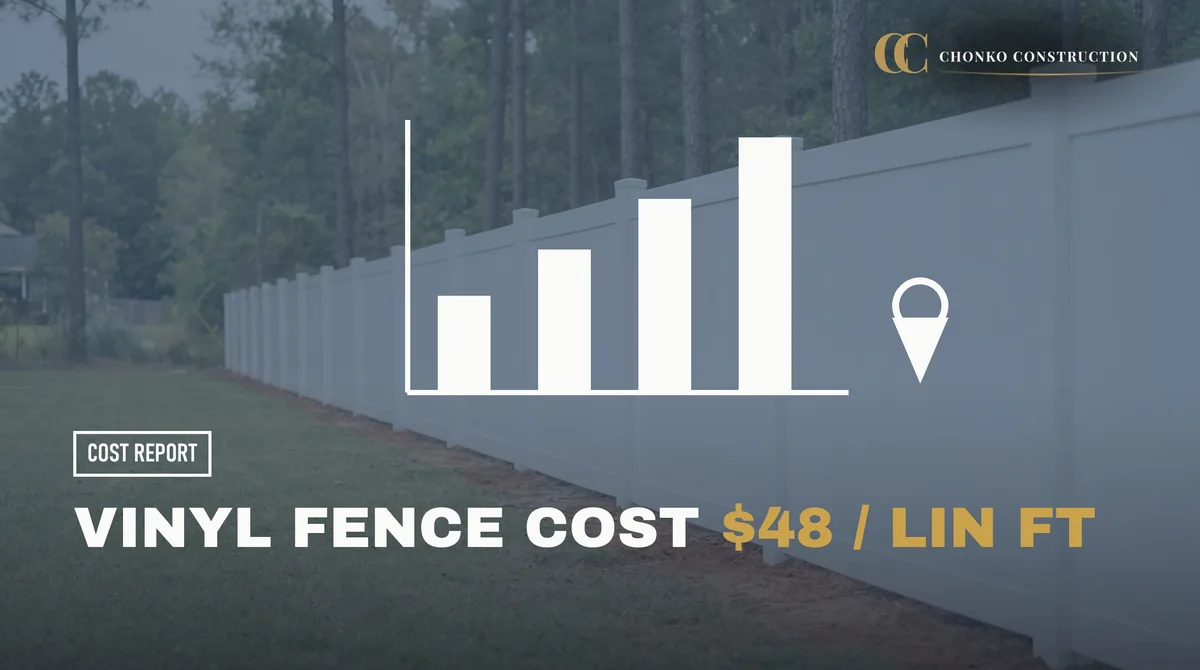
Vinyl Fence Cost in Columbia, SC (2026)
Wood's price without wood's maintenance, and the 19 styles available.
Read the guide arrow_forward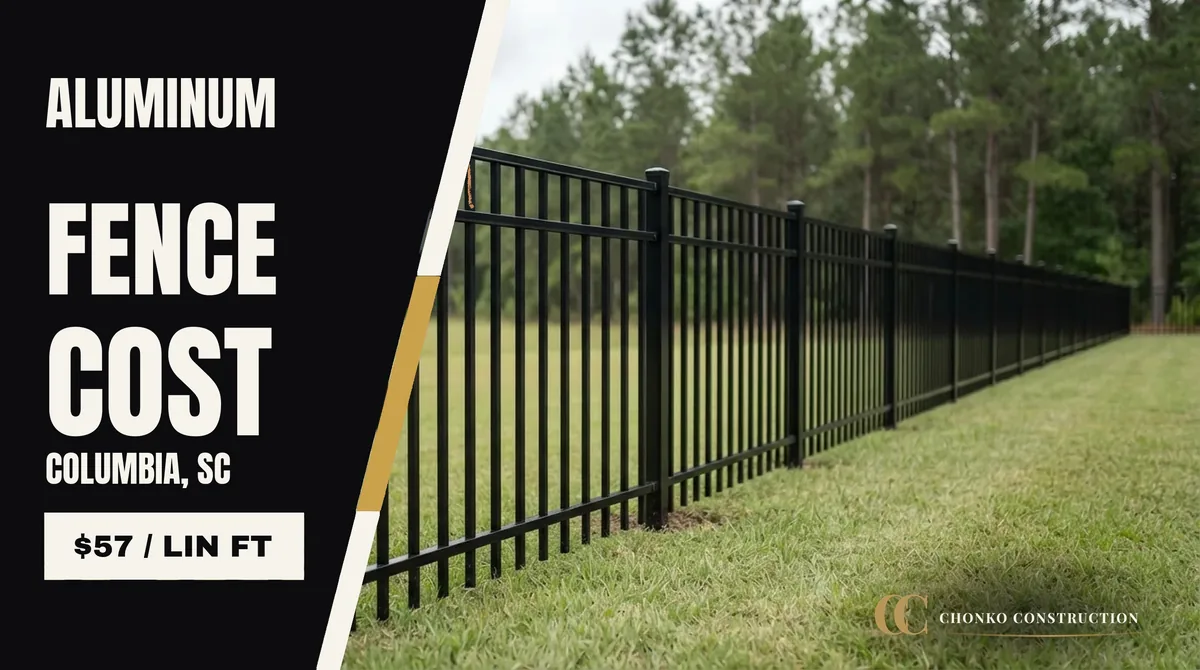
Aluminum Fence Cost in Columbia, SC (2026)
Ornamental, pool-code, and the one material that follows a slope without stepping.
Read the guide arrow_forward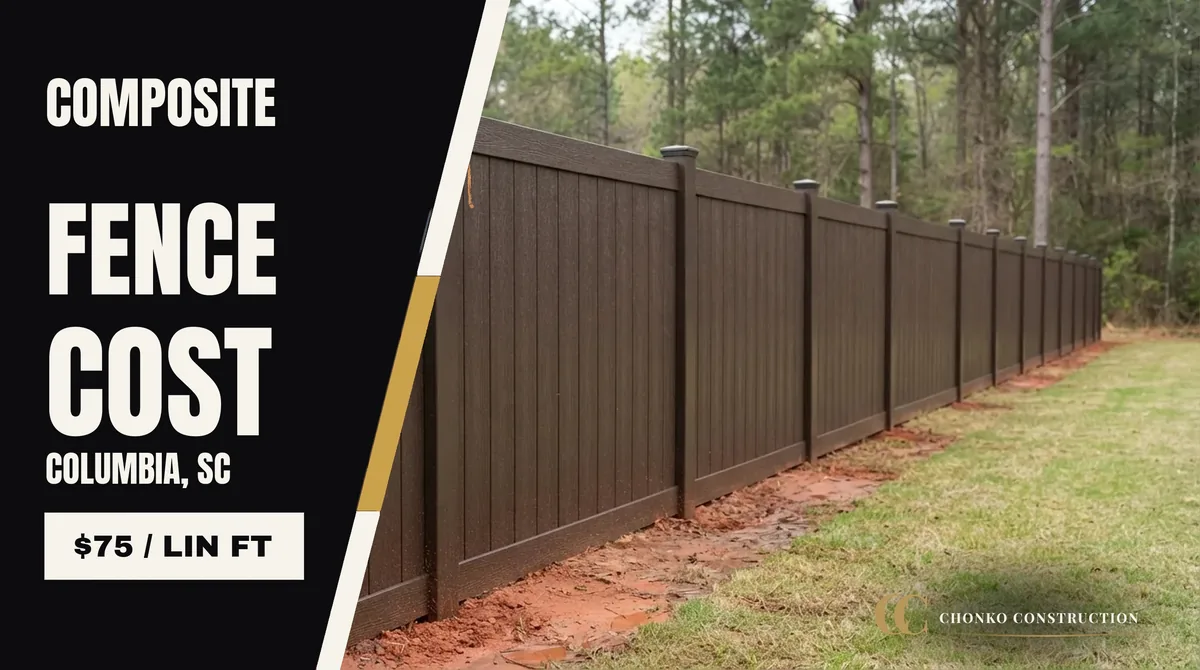
Composite Fence Cost in Columbia, SC (2026)
The stained-wood look that never gets stained. Three real brands, and that is all.
Read the guide arrow_forward
Do You Need a Permit to Build a Fence in Columbia, SC?
When a fence needs a permit here, and what the HOA gets a say in.
Read the guide arrow_forwardEvery material we install, with what each one actually costs.
Frequently Asked Questions
How much does a chain-link fence cost in Columbia, SC?add
Chain-link starts at about $24 per linear foot installed, which puts a typical 150 to 300 foot yard starting around $3,600. Height, gauge, whether the fabric is galvanized or black vinyl-coated, gate count, and the number of corners all move it up from there. It is a starting point, not a quote.
Why is chain-link the cheapest fence?add
There is very little material in it and it goes up fast. A run of fabric, a line post every six to ten feet, a top rail, and terminal posts at the ends. Compared to a wood fence, there are no boards, no rails to fasten board by board, and nothing to finish afterward.
Is black vinyl-coated chain-link worth the extra cost?add
If you are going to look at the fence, usually yes. Black mesh visually disappears against grass and a tree line where galvanized catches the light and reads as a hard silver object. The PVC coating also puts a second layer between the steel and the weather. On a back pasture line or a run behind the garage, galvanized does the same job for less.
Why did one chain-link quote come in so much lower?add
Usually one of three things: terminal posts sized as ordinary line posts, not enough concrete or none at all, or the fabric hooked to the end posts with wire instead of locked on with a tension bar and bands. All three are invisible the week it goes up. Terminal posts are the ones at every end, corner and gate, and they are what the whole run gets stretched against.
Does the shape of my yard change a chain-link price?add
More than on any other material. Every corner, every end and both sides of every gate need a terminal post, which is heavier pipe in a bigger footing than a line post. A straight 200-foot back line and 200 feet wrapped around a six-corner yard are not the same job even though they are the same footage.
Do privacy slats make chain-link a privacy fence?add
They screen it, they do not make it a privacy fence. Slats woven through the mesh add real cost per foot and they turn an open fence into something the wind pushes on, which means the posts have to be set for that load. If privacy is the actual goal, price a wood or vinyl fence against it before committing.
Can I put chain-link in my front yard?add
The county permit question and the HOA question are separate. A fair number of Columbia-area neighborhoods either restrict chain-link in front and side yards or prohibit it entirely, regardless of what the jurisdiction allows. Check the covenants before the material decision, not after.
How long does a chain-link fence last?add
Decades, if the posts were set properly. It is the lowest-maintenance fence there is: no painting, no sealing, nothing seasonal. What fails first is almost always a post that was not set deep enough or in enough concrete, or a gate whose hardware was undersized for its weight.
Have a project in mind?
See the full scope and pricing, or book a free phone consultation. No estimate pressure.